Midnight Hackathon Projects Demonstrate Private Web Data and Credential Verification
Two projects presented after Hack Buenos Aires demonstrated how Midnight applications can work with real-world information while limiting exposure of private data. One connects cryptographically proven HTTPS data to Compact contracts, while KEEP uses mobile credentials that remain under the holder’s control.
By SongMarketCap
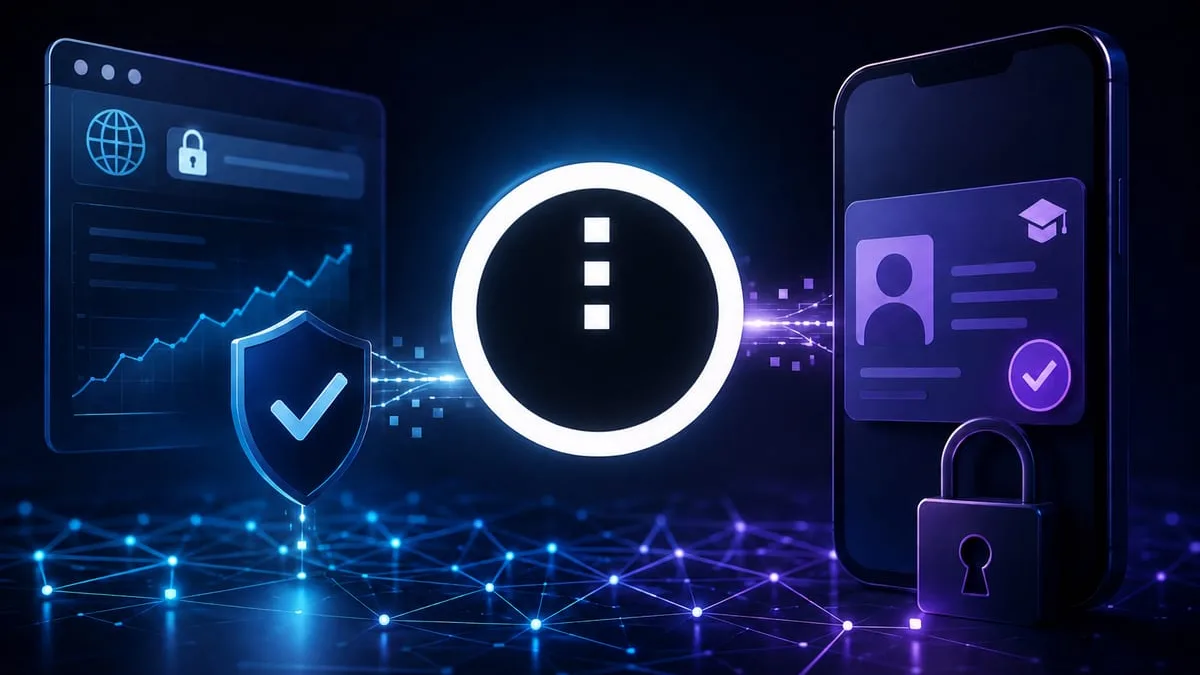
Developers from the Midnight hackathon in Buenos Aires presented two working privacy prototypes built around external data and digital credentials.
The first combines ZK Fetch and Reclaim attestations with Midnight Compact to establish where web data originated. KEEP takes a different approach through Ward, a mobile application designed to issue and validate credentials without transferring the holder’s full personal record.
ZK Fetch Brings Proven Web Data Into Compact
The first project addresses a common problem when smart contracts rely on information retrieved from external APIs.
HTTPS secures communication between a client and a server, but the contract receiving that information was not part of the original connection. The developers therefore used ZK Fetch and Reclaim Protocol to create cryptographic evidence that the HTTPS interaction occurred with the claimed source.
Reclaim’s proof system and Midnight Compact were not directly compatible, so the team added a notary layer between them. Notaries check the proof and sign it, while a Schnorr signature implementation inside Compact requires confirmation from at least two notaries before the information can be accepted as contract input.
The architecture was demonstrated with Strava data. Two accounts submitted running results of approximately 3.5 kilometers and 15 kilometers, allowing the application to determine a winner without making the broader dataset public.
The team said the external proof process took around three to four seconds, followed by the normal time required for a Midnight transaction. The Compact implementation remains an MVP and is planned for further refactoring.
KEEP Stores Credentials on the Holder’s Device
KEEP applies privacy to credentials issued by institutions such as universities, schools or public bodies.
Its Ward mobile application supports both holder and verifier roles. Instead of distributing personal records across multiple systems, the credential remains on the user’s phone and the holder can disclose only the information required for a specific check.
The system uses a Merkle tree for selective disclosure, allowing one element of a credential to be revealed while preserving cryptographic integrity. The developers also incorporated Schnorr signatures and Capacity Exchange for sponsored transactions intended to reduce the blockchain complexity visible to end users.
In the demo, one phone acted as the verifier and displayed a QR challenge, while a second phone held the credential. After the holder scanned the challenge, the process ran through Midnight and returned confirmation that the credential was valid.
The team reported a processing time of roughly 20 seconds. The verifier received the result without receiving the holder’s complete credential record.
Two Privacy Prototypes Target Different Data Problems
The two projects address different sources of information.
The ZK Fetch implementation focuses on data coming from existing web services, giving Compact contracts a method to establish that an external claim came from the expected HTTPS source.
KEEP focuses on credentials issued directly to individuals, allowing the holder to retain the record locally and disclose only what a verifier needs.
Both remain hackathon-stage implementations. The KEEP team said its 24-hour build could not be made fully decentralized and currently uses a Capacity Exchange node that is centralized to some degree. According to the developers, that node does not possess the holder key required to sign the user’s Midnight transaction.
The demonstrations leave Midnight with two distinct working prototypes: one can pass proven HTTPS information into a Compact contract, while the other can issue a credential to a mobile device and confirm a claim without handing the verifier the complete personal record.