Agentic Multipass Presents Private AI Agent Credentials on Midnight
Alex Pestchanker’s prototype is designed to give AI agents verifiable identities while allowing selected information to remain private. Mandates, spending limits, and agent certification are part of the project’s broader direction.
By SongMarketCap
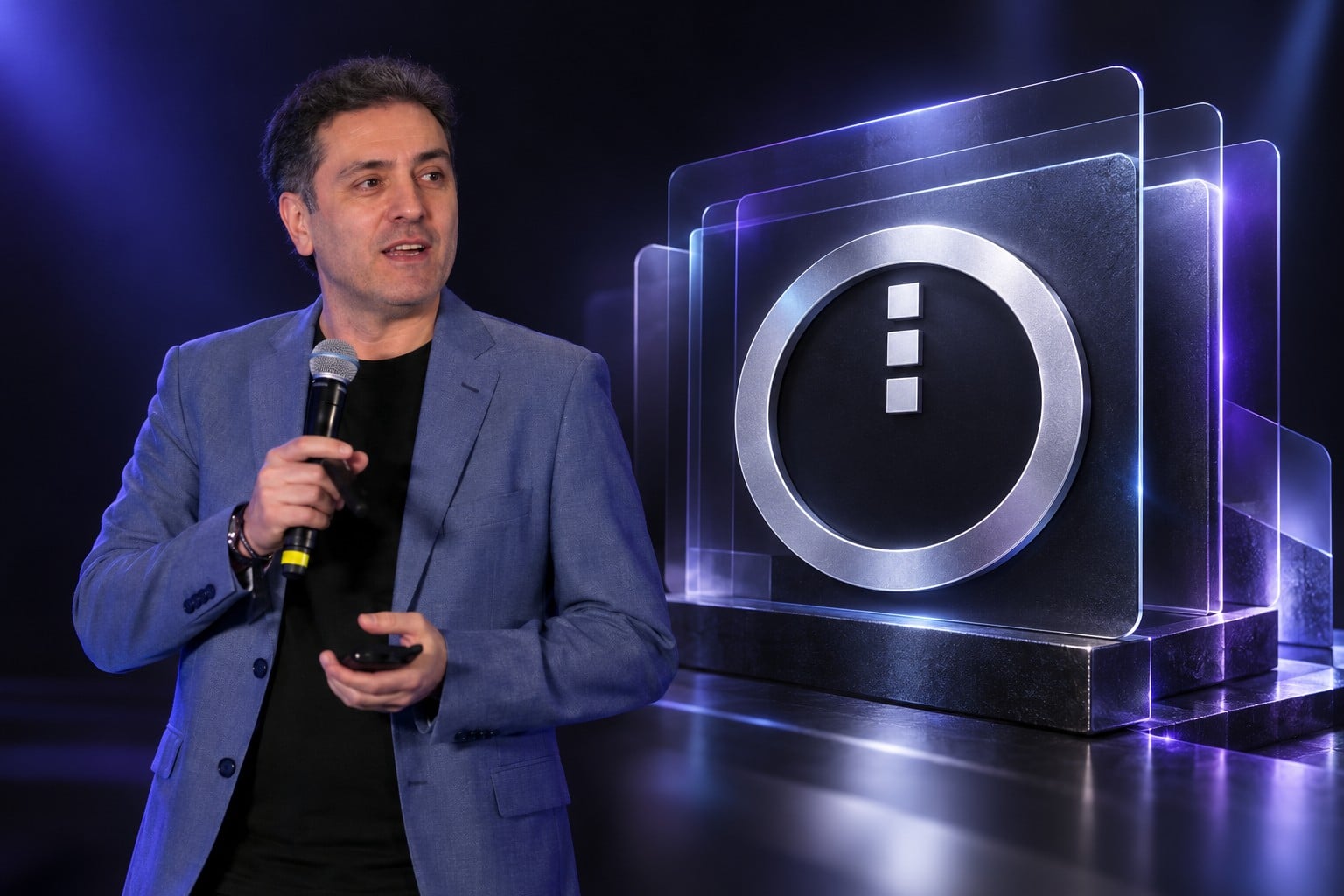
Alex Pestchanker presented Agentic Multipass at Midnight LIVE, introducing a prototype for verifying the identity and authority of AI agents. The project uses Midnight’s privacy technology to support credentials that agents could present when interacting with other systems. Pestchanker described the application as a minimum viable product connected to the 1AM wallet, with credential issuance and a centralized registry for verification.
Agentic Multipass Defines Six Elements of Agent Authority
The project addresses a problem that arises when an AI agent can access data, use tools, or execute transactions for a person or organization. According to Pestchanker, prompts, API keys, and policies can tell an agent what to do, but they do not by themselves provide another party with independently verifiable proof of who authorized an action. Agentic Multipass is intended to give agents a way to present information about their identity and authority to other agents or systems.
Pestchanker’s proposed framework identifies six elements: the agent’s identity, the person or organization controlling it, its mandate, its capabilities, its limits, and the current status of its authority. A mandate describes the task or intention assigned to the agent, while capabilities and limits define the tools it can use and restrictions such as spending thresholds. Status indicates whether an authorization remains valid or has been revoked. Together, those elements are intended to connect an agent’s activity with the instructions and permissions supplied by its owner.
How Midnight Supports Private Agent Credentials
In the model presented at Midnight LIVE, a person grants authority to an agent, which can then interact with the platform through Model Context Protocol, or MCP. The protocol connects AI applications with external tools and services. An agent can present a decentralized identifier and verifiable credential to another party, using a design aligned with World Wide Web Consortium standards. Pestchanker explained that zero-knowledge technology would allow selected claims to be verified without disclosing all the underlying information, such as the identity of the person or organization behind the agent.
The project’s public repository describes a research implementation with a 1AM wallet connection on Midnight Preprod, credential issuance, identity status, and proof-related functionality. It identifies dedicated credentials and proofs for mandates, capabilities, and limits as extensions to the current foundations. The repository also states that the implementation is intended for experimentation and is not hardened for production.
[NEWSBREAK]
Midnight Passport and Agent Certification Plans
During the discussion, Charles Hoskinson asked whether Pestchanker had spoken with the Midnight Passport team. Pestchanker replied that he had wanted to use Passport since his early work in Build Club, but it was not ready at the time. He plans to integrate it into Agentic Multipass and described the existing implementation as a proof of concept. Hoskinson also connected the discussion to insurance and to Midnight City’s proposed marketplace for agent skills.
Pestchanker outlined potential commercial services, including identity plans, credentials, verification APIs, and a certification model. Under the proposed model, agents could be tested against standards for a particular field and receive a credential if they pass. He suggested that certification could help document the steps an owner has taken to control an agent, while acknowledging that questions about responsibility for agent behavior remain unresolved. His next proposed identity step is to replace the current proof-of-concept approach with Midnight Passport.