Midnight’s Fahmi Syed Draws Line Between Privacy and Anonymity
Fahmi Syed said Midnight is designed to bring programmable privacy, selective disclosure and predictable transaction resources to blockchain applications, with potential use cases across institutions, identity and AI agents.
By SongMarketCap
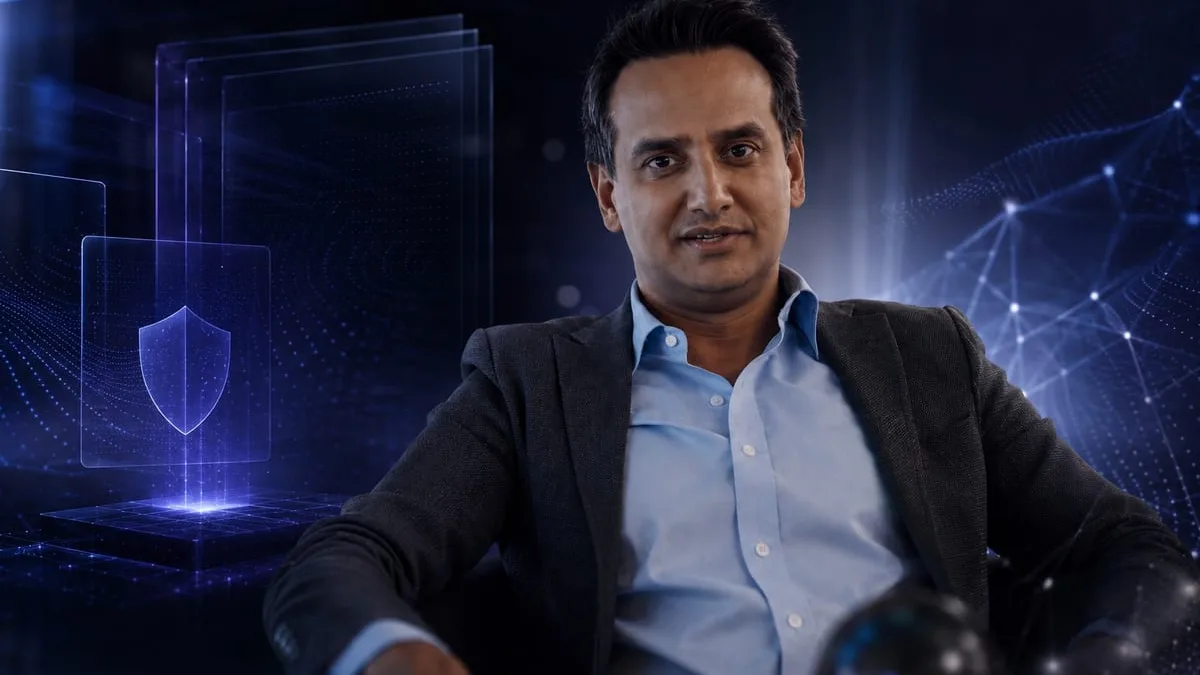
Midnight Foundation president Fahmi Syed said in a recent interview that blockchain adoption requires a clearer distinction between anonymity and privacy. He described Midnight as a privacy focused blockchain connected to the Cardano ecosystem, designed for applications that need protected user data, selective disclosure and predictable network resources.
Midnight Frames Privacy as Controlled Disclosure
Syed described Midnight as a fourth generation blockchain focused on protecting user data and metadata while allowing specific information to be disclosed when needed. He said privacy should not be understood as complete secrecy, but as control over what information is revealed, when it is revealed and to whom.
He used a banking example to explain what he called rational privacy. A person may be willing to say which bank they use, but would not normally disclose their bank account number. According to Syed, the same logic applies to digital systems and blockchain applications, where users need the ability to prove or share limited information without exposing their full data profile.
Syed said fully transparent blockchains create limitations for real world use because transaction data can remain public and permanent. Even when a user appears anonymous at first, blockchain analytics and AI systems can connect activity over time and reveal patterns that were not visible when the transactions occurred.
This privacy model is central to Midnight’s positioning. The network is designed to support applications that can use proof, access controls and compliance functions without exposing all underlying data to the public.
Midnight Positions Privacy Between Open Networks and Permissioned Systems
Syed contrasted Midnight with earlier privacy focused networks such as Monero and Zcash, where private value transfer is central to the design. He said that model can create concerns for regulators, exchanges and institutions because counterparties may not know who is using the network or whether activity is legitimate.
He also compared Midnight with private permissioned blockchain systems used by large financial institutions. Those systems may use blockchain technology, but access is controlled by the operator, which can decide who participates and who can view activity inside the system.
Midnight is positioned between those two models. Syed said the network is public and permissionless, allowing developers to build without the foundation acting as a gatekeeper. At the same time, applications, companies and institutions can create private domains inside the public network.
In that structure, protected environments can allow selected users or counterparties to interact with private data while still operating on broader blockchain infrastructure. Syed said those private domains could also communicate with each other privately, reducing isolated data silos while preserving controlled access.
For Cardano, Midnight adds a privacy focused execution environment around use cases that require selective disclosure, identity protection, institutional data handling and regulated application design. Developers can use Midnight to build applications where users do not need to expose all activity publicly in order to prove that a transaction, permission or condition is valid.
NIGHT and DUST Extend Midnight’s Privacy Design to AI Agents
Syed also discussed how privacy infrastructure could apply to AI agents. He said an AI agent should not automatically receive full access to a person’s bank account, credit card, shopping account or transport account in order to complete a task.
Instead, he described Midnight as a possible proof layer where an AI agent could show that it is authorized to act on behalf of a user without exposing all of the user’s underlying data. In one example, he separated shopping, payment and delivery into different proof based compartments, each with defined limits.
This structure would allow AI systems to operate with specific permissions rather than unrestricted access. Syed said this could reduce the risk of a single agent holding too much sensitive information or becoming too powerful inside a user’s digital life.
The interview also covered Midnight’s dual resource model. Syed said many blockchains use one token both as a capital asset and as the resource for transaction fees. In his view, that structure can make costs difficult to predict when network value rises.
Midnight separates those functions through $NIGHT and DUST. $NIGHT is the network’s main token, while DUST is the shielded network resource used for execution on Midnight. The model is designed to support predictable costs and allow applications to consume network resources without directly spending the capital asset itself.
Midnight’s NIGHT token launched in December 2025, while the network went live in late March 2026 through a phased rollout. The launch began with a federated model intended to support stability before broader decentralization.
Syed said the network is being opened carefully as applications prepare for wider deployment. His comments position Midnight as privacy infrastructure for blockchain systems that need selective disclosure, protected data and proof based access rather than full transparency or full anonymity.