Crypto Crow Reveals One Million NIGHT Position and Compares 2027–2028 Upside With ADA
Jason Appleton sold part of his ADA holdings to acquire approximately one million $NIGHT tokens. His new analysis compares market capitalization, supply growth and future utility across three market scenarios.
By SongMarketCap
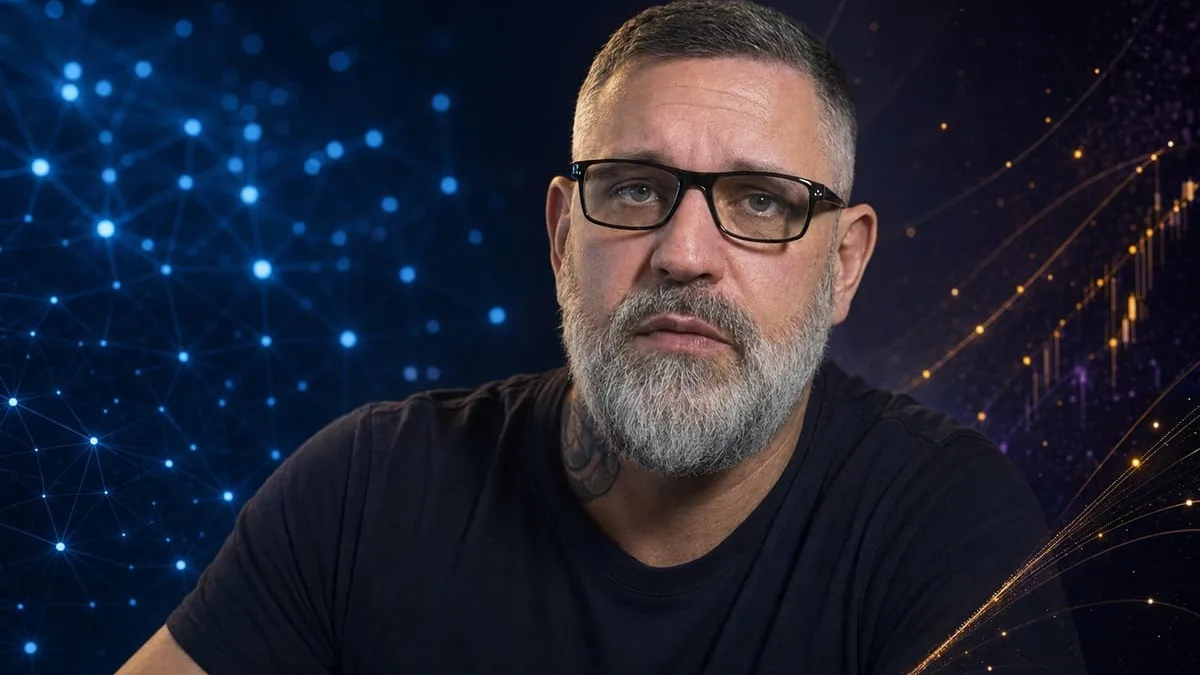
Jason Appleton, known as Crypto Crow, has disclosed that he holds approximately one million NIGHT tokens after moving part of his ADA position into Midnight’s native asset. The Cardano DRep and content creator also presented a broader market model for both assets through 2027 and 2028, including bearish, base and bullish scenarios.
Crypto Crow Details His One Million NIGHT Purchase
Appleton said the purchase did not represent a departure from Cardano. He continues to operate his stake pool, retained most of his ADA holdings and used part of the position to increase his exposure to Midnight.
The acquisition of approximately one million $NIGHT tokens cost close to $20,000, placing his average entry price below two cents per token. It is the first time he has publicly attached an approximate token count to the position, which he previously described only as a sizable allocation following the Wanchain bridge incident.
His comparison begins with the difference in market capitalization. Appleton used a valuation of approximately $344 million for NIGHT and around $6 billion for ADA at the time of his analysis.
Under that framework, increasing NIGHT’s market capitalization tenfold would require approximately $3 billion in additional valuation. A comparable tenfold expansion for ADA would require more than $50 billion.
Appleton described the difference as “denominator asymmetry.” An asset with a smaller starting valuation can produce a larger percentage move with less incoming capital. He also acknowledged that the same structure increases downside exposure because smaller assets generally have lower liquidity and can fall more sharply when demand contracts.
He connected the argument to Cardano’s 2020 and 2021 market cycle, when ADA moved from approximately two cents to more than three dollars before the activation of Alonzo smart contracts. Appleton used that period to illustrate how market-cycle demand can push token valuations beyond models based only on currently available products or network activity.
NIGHT is now entering its first complete market cycle following launch, while ADA has already traded through several bull and bear markets. Appleton’s thesis is that the difference in maturity, valuation and market awareness could allow Midnight’s token to produce a larger percentage return if the broader crypto market expands.
Three Market Scenarios Compare NIGHT and ADA
Appleton presented bearish, base and bullish scenarios developed through research and AI-assisted calculations. The ranges are his estimates and are not forecasts issued by Cardano, Midnight Foundation or the organizations developing either network.
In the bearish scenario, he placed ADA between $0.08 and $0.12, with NIGHT between $0.008 and $0.015. His base scenario positioned ADA between $0.35 and $0.55 and NIGHT between $0.06 and $0.12.
The bullish model placed ADA between $1 and $1.60, while NIGHT ranged from $0.25 to $0.50.
Appleton then presented a more aggressive personal projection than the model produced. He said market conditions comparable to the speculative peaks of 2017 and 2021 could move NIGHT into a range between $1 and $5. He identified $3 as his own target near the top of such a cycle.
That outcome would require a substantial expansion of the overall crypto market, increased Midnight network activity and stronger demand for NIGHT. At a total supply of 24 billion tokens, a $3 price would correspond to a fully diluted valuation of approximately $72 billion.
Supply growth forms another part of his comparison. Appleton estimated that ADA supply could expand by approximately 4% through the end of 2027, while the circulating supply of NIGHT could rise between 25% and 35%.
He estimated that this dilution would reduce the price effect of a tenfold increase in NIGHT’s market capitalization to approximately seven to 7.5 times. His dataset placed about 69% of the token supply in circulation, with a fully diluted valuation approximately 1.45 times the circulating market capitalization.
Appleton contrasted the absence of a traditional early venture capital unlock schedule with a different source of possible selling pressure. Many NIGHT tokens were distributed through Glacier Drop and Scavenger Mine, allowing recipients who did not purchase the asset to sell portions of their allocation as they become available.
According to the official NIGHT distribution information, distributed tokens are subject to a 450-day thawing period and become available in equal quarterly installments. The Lost-and-Found claim window remains open for five years from the Midnight genesis block for eligible participants who missed the initial claim periods.
Appleton expects selling pressure connected to thawing distributions to decline toward the end of 2026 and the beginning of 2027. He compared that supply structure with Cardano’s established staking system, where delegated ADA can earn rewards while remaining liquid inside user wallets.
Midnight Utility Depends on DUST and Cardano SPO Participation
Midnight is a privacy-enhancing Layer 1 and Cardano partner chain designed for applications that combine publicly verifiable blockchain state with protected data. Zero-knowledge proofs allow users and organizations to verify selected information without publishing the underlying records.
The network separates its transferable asset from the resource used to process transactions. NIGHT is the public native token, while DUST is the shielded, non-transferable and renewable resource consumed when users execute transactions and smart contracts.
Under Midnight’s documented DUST mechanics, one NIGHT can generate a maximum capacity of five DUST. Full capacity develops over one week, and the token continues regenerating DUST after the resource is consumed.
DUST cannot be transferred or traded like a conventional token. A NIGHT holder can, however, designate a different Midnight address to receive the generated capacity. This allows an application, developer or service provider to use DUST produced by tokens owned by another party.
Appleton included that capability in his investment thesis as a possible source of future revenue for large NIGHT holders. An application could cover network usage for its customers without requiring each user to acquire tokens, while a holder could provide the necessary DUST generation capacity under a separate leasing or payment agreement.
Midnight’s latest tokenomics and incentives whitepaper describes several possible capacity-market models. These include direct bilateral leasing, broker-managed arrangements, Babel Stations that abstract DUST from users and a future on-chain marketplace for unused capacity.
The roadmap separates those developments across two phases. Mōhalu is intended to broaden network participation by progressively bringing Cardano stake pool operators online as active Midnight block producers. The later Hua phase is expected to advance the on-chain DUST Capacity Exchange, cross-chain interoperability and hybrid applications.
The whitepaper also states that NIGHT rewards will eventually be distributed from the network Reserve to Midnight block producers. It does not currently define a general holder yield equivalent to Cardano’s existing delegation system.
Appleton’s million-token position therefore has two identifiable technical checkpoints. Mōhalu must expand block production beyond Midnight’s current federated operators, while Hua must advance the capacity marketplace that could turn unused DUST generation into a service for applications and users. Until those mechanisms become operational, the position provides exposure to NIGHT and generates personal DUST capacity, but it does not yet produce established staking income or revenue from an on-chain capacity exchange.