Charles Hoskinson Frames Midnight as Cardano’s Cross Chain Gateway for Privacy, AI Agents and Bitcoin DeFi
In an interview on The Breakdown with David Gokhshtein, Hoskinson positioned Midnight as a core Cardano partner chain built for privacy, identity, AI assisted crypto use, Bitcoin DeFi and open Web2.5 infrastructure.
By SongMarketCap
Updated:
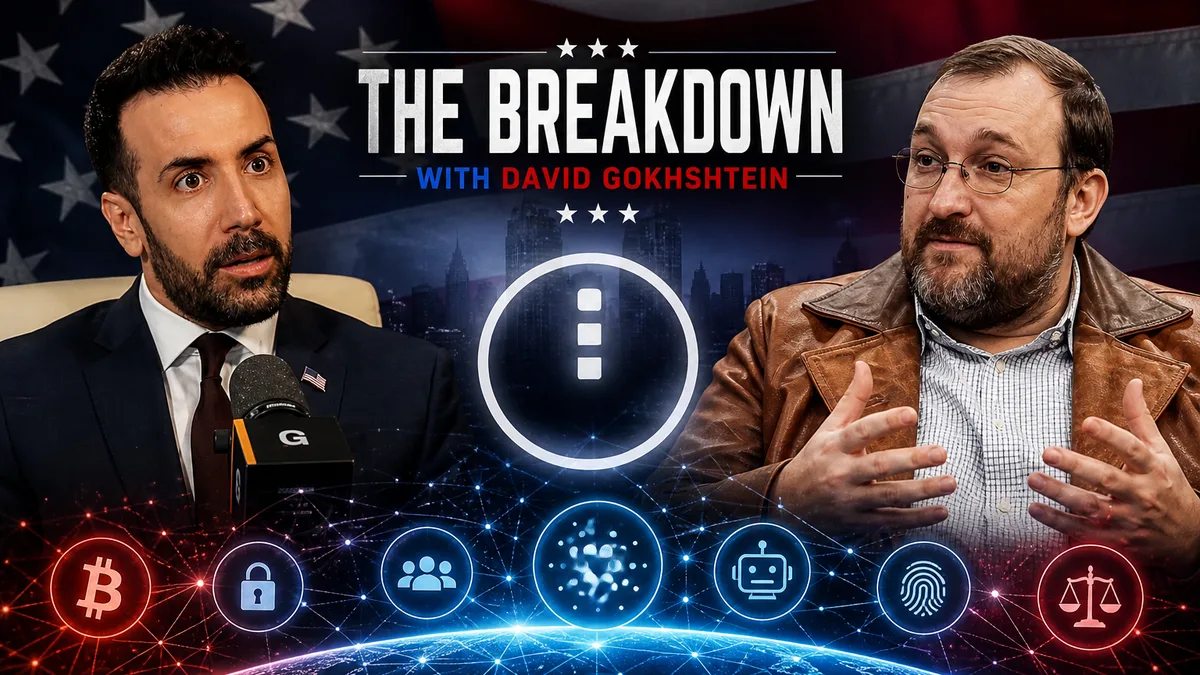
Charles Hoskinson used his appearance on The Breakdown with David Gokhshtein to make a broader case for Midnight’s role inside Cardano and across the wider crypto market. His message was clear, Midnight is not being built as another narrow privacy chain. It is being positioned as infrastructure for cross chain coordination, user controlled rules, smart compliance, AI agents and safer access to decentralized finance.
The interview matters because Hoskinson connected several themes that are usually discussed separately, privacy, identity, self custody, Bitcoin DeFi, AI manipulation, decentralized storage and governance. Together, they form a single argument,
crypto cannot reach the next stage if users still need centralized platforms to feel safe.
Midnight is presented as a response to that problem. Its goal is to keep users in control while moving technical complexity into the background.
Cardano Midnight and the Partner Chain Vision
Hoskinson said Midnight is difficult to categorize because it was designed to solve more than one problem. It combines privacy technology, cross chain functionality, account abstraction, chain abstraction and smart compliance. That wide scope makes the project harder to explain, but it also shows why he sees it as a strategic layer rather than a single use case product.
A major part of the interview focused on Midnight’s connection to Cardano. Hoskinson described Midnight as the first major realization of the partner chain model, where Cardano acts as the settlement layer while specialized networks extend the ecosystem into areas such as privacy, storage, AI and decentralized telecom infrastructure.
That distinction is important. Midnight is not being framed as separate from Cardano. It is designed to use Cardano’s security, liquidity and ecosystem infrastructure while adding a specialized coordination layer. If Midnight brings users, activity and applications into its network, Cardano also benefits through the shared architecture and future partner chain economics.
In that structure, $NIGHT and $DUST are not just isolated assets. They sit inside a broader model where specialized chains can bring new utility, incentives and users back toward the Cardano ecosystem.
AI Agents, Midnight City and the Web2.5 Fight
One of the strongest parts of the interview was Hoskinson’s focus on AI agents. He described a future where users do not manually manage every DeFi trade, bridge transaction or wallet action. Instead, they define what they want, set their personal rules, and an agent helps execute the task across multiple networks.
Midnight City is the early expression of that idea. Hoskinson described it as an environment where users can create, own and operate agents, eventually giving them wallets and limited delegation rights. The point is not to remove user control. The point is to make crypto usable without forcing every person to understand liquidity routing, smart contract risk and cross chain execution.
This connects directly to the Web2.5 debate. Hoskinson described Web2.5 as the hybrid world where traditional companies operate blockchain assets, tokens or applications. Exchanges, stablecoin issuers and companies building their own chains already show where this market is going. The open question is whether this infrastructure becomes controlled by closed federated systems or by open permissionless networks.
Midnight is being positioned on the open side of that fight. Hoskinson’s argument is that compliance, privacy and user safety do not have to require closed infrastructure. If Midnight can combine rule setting, identity, privacy and self custody, it could offer a different path from systems where a small group of companies controls access, data, liquidity and user experience.

That point became sharper when he discussed stablecoin freezes and platform control. Web2 gives companies direct control. Web2.5 reduces some friction but still leaves important choke points. Web3 is supposed to preserve user custody and user agency. Midnight’s challenge is to make that Web3 model practical enough for real users.
Identity, Bitcoin DeFi and Cardano Governance
The interview also moved into digital identity and AI manipulation. Hoskinson warned that the internet is moving from a world where people assume content is real until proven fake, to a world where people increasingly assume content is fake until verified. AI generated video calls, voice cloning and social engineering are already turning identity into an infrastructure problem.
This is where Midnight Passport becomes important in his framing. It is not only a wallet or compliance feature. It is part of a broader identity layer that could help users verify whether they are interacting with a real person, a real account or authentic content. That gives Midnight relevance beyond Cardano alone, because the same problem affects Bitcoin users, Ethereum users, creators, institutions and online communities.
Hoskinson also connected Midnight to Bitcoin DeFi. His described model keeps Bitcoin as the central asset, uses Cardano for programmable financial logic, and uses Midnight as the private coordination layer. The goal is to let Bitcoin users access financial activity without turning the experience into a confusing multi token environment. In that framing, Midnight does not compete with Bitcoin. It helps coordinate private activity around it.
The interview also included Monero, Zcash and Filecoin. Hoskinson spoke about privacy communities as potential collaborators rather than enemies, especially around liquidity, DeFi access, research and post quantum cryptography. Filecoin was described as an infrastructure partner for decentralized storage, including data that does not need to live directly on chain.
The final strategic layer was governance. Hoskinson argued that quantum computing could eventually force Bitcoin into difficult decisions around old wallets, lost coins and migration paths. His point was not only technical. It was political. Networks without clear governance may struggle when a major system level decision becomes unavoidable.
That is where Cardano becomes central to the argument. The interview on The Breakdown was not just a Midnight promotion cycle. It was Hoskinson’s attempt to frame Midnight as the operational layer that connects Cardano’s governance, privacy, identity and cross chain ambitions into one system. If that vision is executed, Midnight would not simply add another product to Cardano. It would give the ecosystem a stronger position in the next fight over who controls crypto’s user experience.