Charles Hoskinson Explains Wyoming Clinic Shutdown and Refocuses on Cardano and Midnight
Hoskinson’s video was mostly about healthcare, but its closing message gave Cardano and Midnight a clearer leadership signal after a costly real world experiment outside crypto.
By SongMarketCap
Updated:
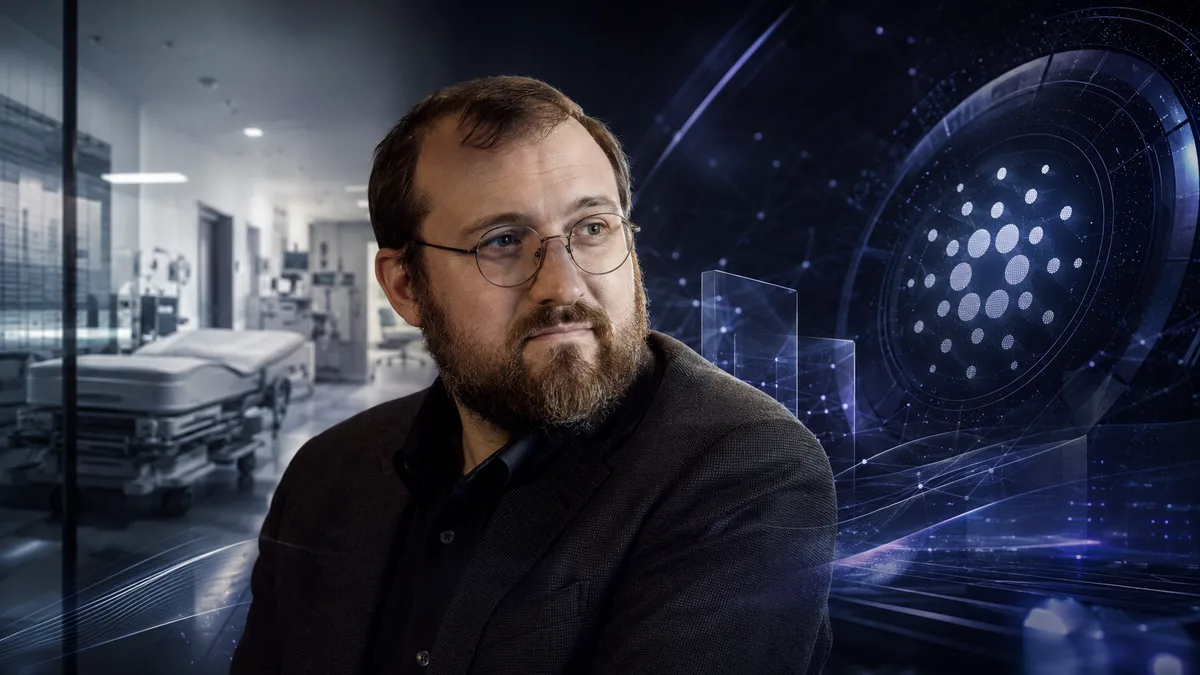
Charles Hoskinson has published a detailed video statement explaining why his family’s health clinic in Gillette, Wyoming, is shutting down after a multi year attempt to bring advanced medical care to a rural community. Most of the message focused on healthcare economics, operational losses, patient care and personal accountability. For the Cardano ecosystem, the relevant signal came near the end, when Hoskinson said his daily attention is now centered on getting Midnight adopted and helping Cardano regain a stronger position among leading crypto networks.
Why Hoskinson’s Wyoming Clinic Is Closing
Hoskinson framed the clinic as a family driven healthcare project, not a traditional venture backed business. He pointed to his family’s long history in medicine, including his father, brother, uncle and grandfather, and described the Gillette facility as an attempt to build a higher quality medical center in a market that had been underserved for years.
The clinic was not short of demand. According to Hoskinson, it reached roughly 22,000 patients in five years, a figure he presented as evidence that Gillette needed more medical capacity, not less. The facility brought in specialists across areas such as neurology, cardiology, nephrology, rheumatology and allergy care, while also investing in advanced diagnostic equipment.
The problem was the operating model. Hoskinson said monthly losses were reduced from about $4 million to around $1.7 million after several rounds of optimization, but that level of loss remained unsustainable. His explanation centered on the economics of primary care in the United States, where reimbursement levels, insurance rules, staffing costs and patient volume requirements can make independent clinics difficult to run, especially in rural markets.
A Healthcare Failure With Broader Business Lessons
The video was also a broader criticism of the American healthcare system. Hoskinson argued that smaller clinics operate inside a structure shaped by insurance companies, hospital systems, pharmaceutical economics and private equity. In that environment, providers can perform the work but still face uncertainty over whether services will be reimbursed, how much will be collected and whether the payment covers the actual cost of care.
He said some areas, including mental health, were structurally difficult because the cost of an appointment could exceed the reimbursement available to the clinic. He also contrasted independent clinics with larger hospital systems, which often have stronger billing power and more structural advantages.
Hoskinson did not present the closure only as a system failure. He acknowledged mistakes in execution, including scaling too quickly as demand grew. He also described how layoffs, restructuring and operational pressure damaged morale inside the organization. At the same time, he rejected the idea that the building’s design or medical equipment caused the shutdown, arguing that the decisive issue was operating expense, not the original capital investment.
What This Signals for Cardano and Midnight
The Cardano relevance is not that the video was mainly about crypto. It was not. The relevance is that Hoskinson used the closing section to define where his attention is going next. He said that every day he asks how to get Midnight adopted and how to bring Cardano back into the top 10, and then the top five, among crypto projects.
That matters because Midnight remains one of the most important strategic projects connected to the Cardano ecosystem. Its privacy focused infrastructure, token model and broader adoption path have become central to several of Hoskinson’s recent public comments. For holders and builders watching $NIGHT, the statement reinforces that Midnight is not being treated as a side project, but as a major execution priority.
The stronger reading is not that the clinic closure directly affects Cardano. It is that Hoskinson is drawing a clear boundary between projects where he can provide capital and projects where he believes he has direct strategic leverage. Running a rural healthcare clinic required daily operational involvement in a heavily regulated industry with limited pricing power. Cardano and Midnight sit closer to his core experience in software, networks, incentives and ecosystem development.
Hoskinson said he does not expect to return to running a conventional clinic soon, although he plans to continue work in regenerative medicine, stem cells, peptides, exosomes and related research areas. For Cardano, the more immediate point is focus. After Gillette, the question is no longer whether Hoskinson can fund ambitious real world projects. The sharper question is where his time creates the highest return, and his answer in this video points back to Midnight adoption, Cardano relevance and execution inside the ecosystem he knows best.