Aiken Plugin 2.0 Brings JetBrains IDE Support to Cardano Smart Contract Development
Aiken Plugin 2.0 expands Cardano smart contract development inside JetBrains IDEs with project setup, managed Aiken toolchains, semantic editor support, LSP diagnostics, runners and blueprint workflows.
By SongMarketCap
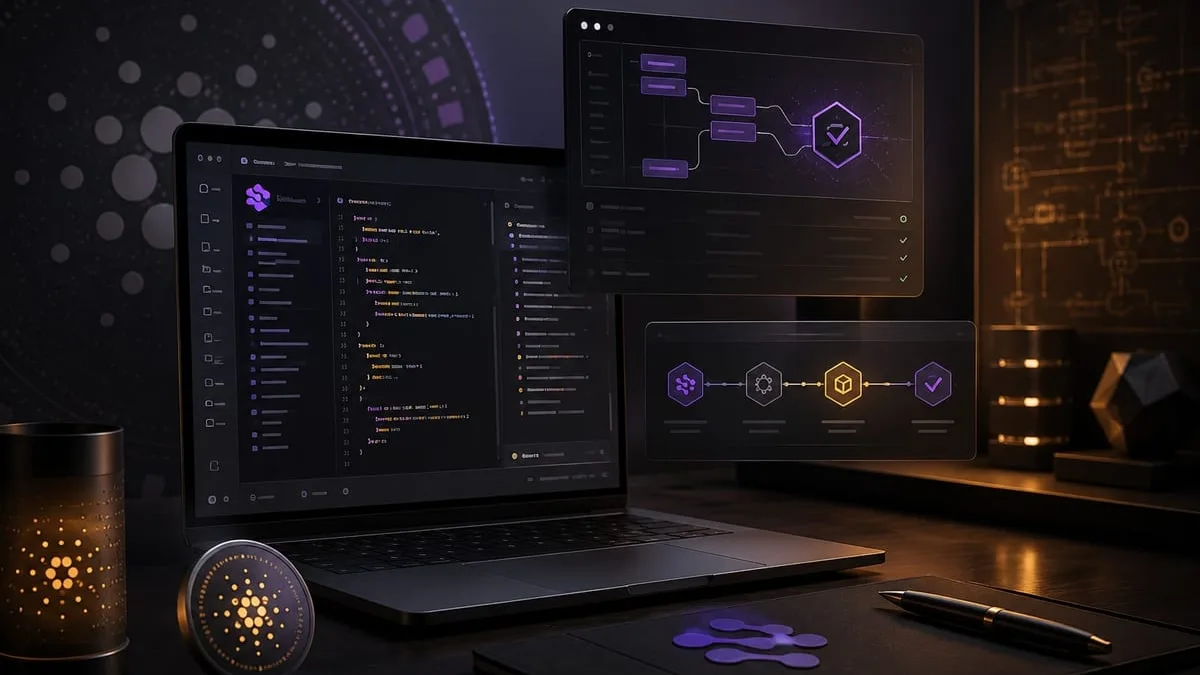
Cardano Community highlighted Aiken Plugin 2.0 after the MedusaLabs Cardano plugin update became available for IntelliJ based IDEs. The plugin is designed for developers working with Aiken, a modern programming language and toolkit for building Cardano smart contracts.
Aiken Plugin 2.0 Adds JetBrains Workflow for Cardano Developers
Aiken is a modern programming language and toolkit for developing smart contracts on the Cardano blockchain. Its official documentation describes Aiken as focused on robustness and developer experience, while the FAQ states that Aiken is designed for writing Cardano validators and compiles down to Untyped Plutus Core, the low level code executed by Cardano’s smart contract virtual machine.
Aiken Plugin 2.0 extends that workflow into JetBrains IDEs. The GitHub repository for the plugin says it provides project creation, managed Aiken toolchains, runners, semantic editor support, LSP diagnostics and blueprint workflows directly inside IntelliJ based IDEs.
The 2.0 changelog describes the release as a larger IDE workflow layer around Aiken, adding project creation, local toolchains, runners, blueprint parametrization, semantic completion, smarter navigation and refactoring, richer parameter info and a stronger regression suite.
Plugin Connects Aiken CLI, LSP and Native IDE Features
Aiken CLI remains the base tool for core development tasks. The plugin adds a JetBrains layer around it, including an Aiken entry in the IDE New Project wizard, project type selection, Aiken version selection, compatible standard library version selection, local or global toolchain mode and scaffold generation for Aiken project files.
The toolchain support includes project local Aiken installation through npm, global Aiken command support, version discovery through npm metadata and synchronization between the selected local toolchain version and the aiken.toml configuration file. The repository requirements list JDK 21, Node.js and npm for locally managed toolchains, and a global aiken command in PATH when using global toolchain mode.
Editor support includes .ak and .uplc file types, syntax highlighting, folding, breadcrumbs, formatting through aiken fmt, Aiken file templates, semantic completion, auto import support, navigation, rename, find usages, Go to Symbol and Structure View. LSP diagnostics, hover and code actions are provided by the Aiken language server, while quick fixes are surfaced inside the IDE.
Blueprint Workflows Move More Aiken Tasks Into the IDE
Aiken Plugin 2.0 adds a dedicated Aiken run configuration type with workflows for checks, blueprint builds, blueprint parametrization, artifact generation and artifact cleanup. The changelog says these workflows move several Aiken lifecycle tasks from terminal based commands into the IDE.
For aiken check, the plugin adds IDE integrated test output, grouped warnings and errors, and navigation from runner output back to source locations. For aiken build, it adds a build style output tree, clickable diagnostics and output nodes, and warning and error parsing for build output. Blueprint parametrization includes an IDE UI for applying parameters to blueprints, with support for nested parameter structures, constructors, lists, maps, options, byte arrays, integers, booleans and raw values.
The later 2.0.1 changelog describes a post release hotfix that added New Project Wizard support for non IDEA IntelliJ based IDEs such as RustRover, PyCharm and PhpStorm, fixed PATH handling when the IDE is launched from Toolbox, improved runner output coloring and improved compatibility with non Linux platforms.
The reviewed primary sources describe writing, testing, error checking, diagnostics, run configurations, semantic completion and blueprint workflows, but do not list a dedicated debugging feature as part of Aiken Plugin 2.0. The release adds IDE based workflows for creating Aiken projects, managing toolchains, running checks, building blueprints and working with Cardano smart contract code without relying only on terminal based steps.