Trivolve Seeks 9.6 Million ADA for Police Evidence System on Cardano
The proposed deployment would serve India’s Telangana state, with the Cardano Foundation administering funds. Seventy percent of revenue from an optional paid verification service would return to Cardano’s Treasury.
By SongMarketCap
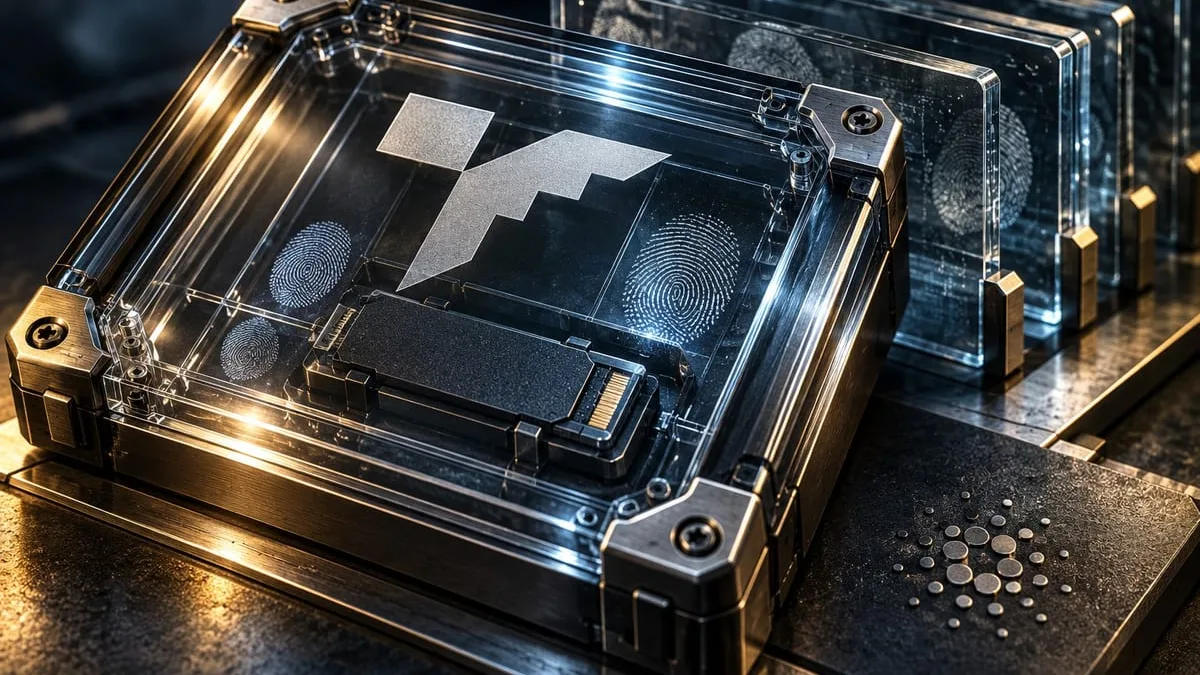
Trivolve Tech submitted a governance action on October 21 requesting 9.6 million ADA to develop its Police Force Management System, or PFMS. The 15-month proposal would use Cardano to record cryptographic fingerprints of police records, supporting checks on whether evidence has changed after registration. The withdrawal has not been approved.
PFMS Would Track Evidence Across Five Stages
The proposed system covers records collected before a crime, investigations, evidence storage, prosecution, and court proceedings. Its scope includes camera recordings, laboratory reports, investigative documents, and records of physical evidence transfers.
Original files and personal information would remain in the relevant institutional systems. Cardano would hold cryptographic fingerprints and supporting verification records, allowing an authorized party to compare a file against its previously registered state.
A matching fingerprint establishes that the checked content has not changed since registration. It does not independently establish whether the original information was accurate or lawfully collected.
Trivolve builds the proposal on its existing Forensic Management System, which it reports has recorded more than 156,000 mainnet transactions. PFMS would extend that approach across additional stages and adapt it to Telangana’s police infrastructure.
Foundation Oversight Would Govern Five Funding Tranches
The requested funding would be distributed through five payments. An initial 1.8 million ADA would be released when the administrator contract is signed, followed by two million ADA at months three, eight, and twelve, and a final 1.8 million ADA at month fifteen.
Payments after the initial tranche would require the Cardano Foundation and an independently appointed assessor to verify the corresponding deliverables. The assessor’s selection process and milestone findings would be published.
The month-twelve milestone requires completed security testing, mainnet deployment, acceptance of all five operational stages, and 100,000 transactions generated from live data sources. The core codebase would also be released under the Apache 2.0 license.
The Foundation would hold withdrawn funds in a multisignature wallet, with accepted milestones and subsequent payments visible through a public dashboard. Unspent funds would return to the Treasury.
[NEWSBREAK]
State Funding and Verification Revenue Would Support Operations
According to the proposal, Telangana would cover infrastructure, maintenance, and transaction costs. The state would pay transaction costs to Trivolve in fiat currency, which the company would convert into ADA without adding a margin.
An optional expedited verification service would generate additional revenue alongside the regular verification process. The proposed allocation sends 70% to the Treasury, 20% to maintenance of core Cardano libraries, and 10% to Trivolve. This arrangement does not guarantee recovery of the requested funding.
Trivolve projects at least 1.53 million mainnet transactions during the first year of operation. That forecast is separate from the transaction requirements used to assess development milestones.
The proposal states that agreements involving confidential state information have been reviewed by the Foundation but cannot be published. Public oversight would therefore rely on disclosed deliverables, independent assessments, and onchain records.
The final 1.8 million ADA payment would require evidence of at least 390,000 transactions from live sources across all five stages over three months, with continuous daily activity.