Gold That Earns Gold: How PAXGy Turns Bullion Lending Into Yield
Paxos Labs co-founder Chunda McCain explained how gold lending generates a return for PAXGy holders, while a new Aave listing allows users to borrow against the token.
By SongMarketCap
Updated:
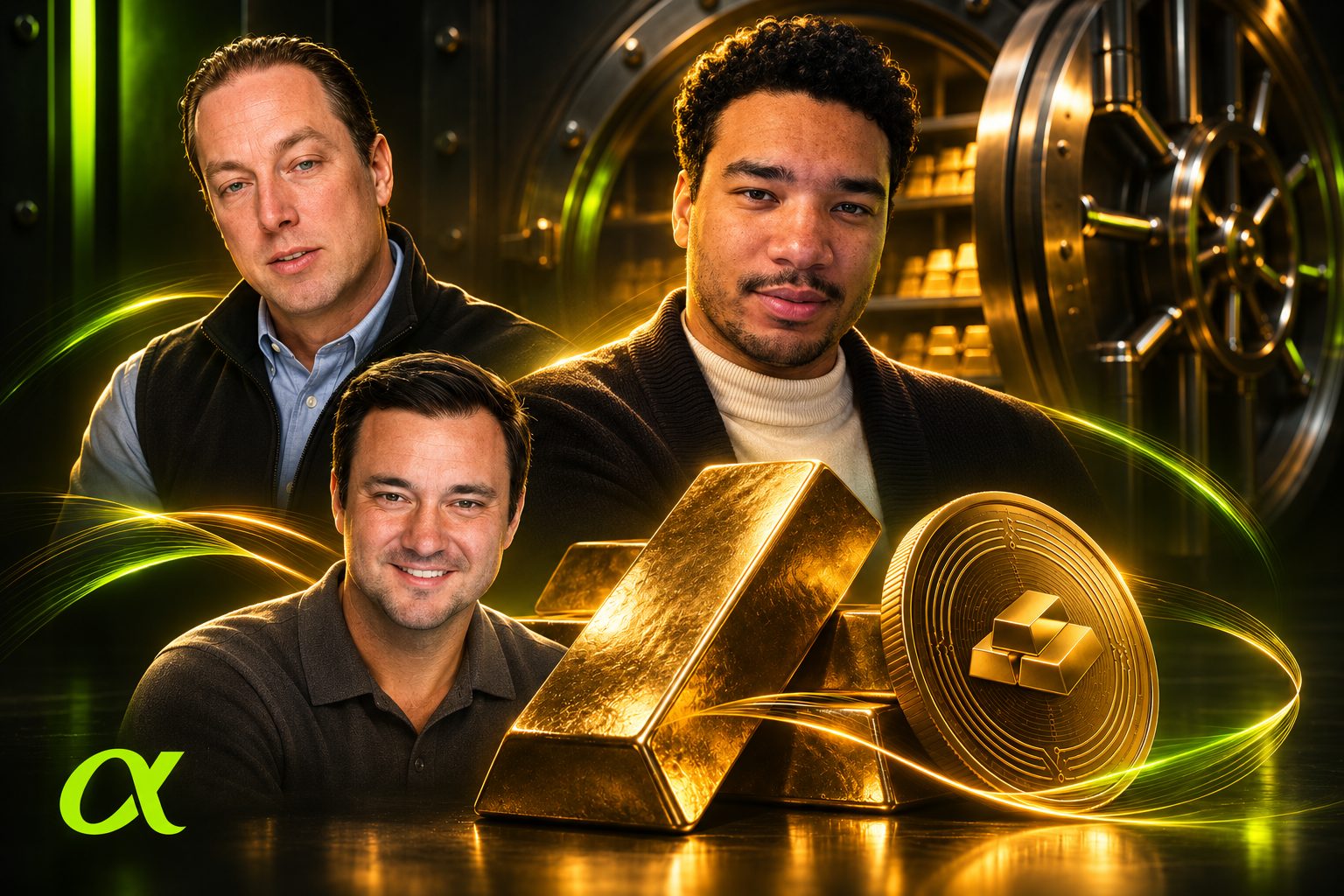
A gold bar can rise or fall in value, but it does not produce more gold while sitting in a vault. Paxos Labs has built a token designed to offer a return measured in the metal itself, drawing on a lending market used by businesses that work with physical gold.
PAXGy is backed by PAXG, Paxos’s tokenized gold asset. Part of the gold exposure behind PAXGy is used in institutional lending agreements, with the resulting income reflected in the amount of PAXG represented by each PAXGy token.
Paxos Labs co-founder Chunda McCain explained the model during Dose of Alpha LIVE with Alpha Growth’s Bryan Colligan and Eric Waisanen. The discussion covered why companies borrow gold, how tokenized gold can be used in decentralized finance and what happens when holders want to exit.
How Gold Lending Generates PAXGy’s Return
PAXG is a token issued by Paxos that represents physical gold held in institutional custody. Each PAXG represents one fine troy ounce of gold.
PAXGy is backed by PAXG but has a different exchange-rate structure. The number of PAXGy tokens in a holder’s wallet stays the same, while the quantity of PAXG represented by each token can change as income from gold lending accrues.
For example, if the PAXGy-to-PAXG exchange rate increases, a holder exchanging the same number of PAXGy tokens can receive more PAXG than before, subject to the terms and price of the chosen transaction.
Paxos Labs lends part of the reserves to institutional counterparties in the gold market. Another portion is held to meet redemptions. McCain explained that the model connects token holders with lending activity that has long existed in the physical gold industry.
The return is denominated in gold, so its effect on a position’s dollar value depends on the market price of the metal. A holder could gain exposure to more gold but still face a loss in dollar terms if the gold price falls sufficiently.
Paxos Labs also states that growth is not guaranteed. Losses in the underlying strategies or borrower defaults can lead to a downward adjustment in the PAXGy-to-PAXG exchange rate.
Why Companies Borrow Gold and How Aave Uses PAXGy
McCain described gold lending as a financing option for businesses whose inventories and revenues are tied to the metal.
A company that borrows cash to buy gold takes on an obligation denominated in money while its business remains exposed to the price of gold. Borrowing gold instead gives the company access to the material it uses, with the obligation also denominated in gold.
In McCain’s account, borrowers include businesses operating in the physical gold supply chain and gold financing markets. Income from lending to those counterparties supports the return associated with PAXGy.
The token can also be used in decentralized finance. On November 19, Paxos Labs announced that PAXGy had been listed on Aave as collateral in two markets. Holders can supply the token and borrow either the USDG stablecoin or PAXG, depending on the market.
According to Paxos Labs, the supplied PAXGy continues to accrue its underlying return while the loan is open. The borrowed asset and any interest must still be repaid, and a position can be liquidated if the value of its collateral falls below the lending protocol’s required threshold.
During the Alpha Growth conversation, Colligan and Waisanen also discussed the challenge of bringing tokenized gold into lending markets. They recalled work around a potential PAXG listing on Compound, where a central question was whether enough liquidity existed onchain to accommodate large transactions.
Liquidity matters when a protocol needs to sell collateral. If only a limited amount is available for trading, a large sale can move the market price and affect how much the protocol recovers. McCain suggested that the income associated with a yield-bearing gold token could help support the provision of onchain liquidity.
[NEWSBREAK]
Redemptions, Liquidity and Risks
McCain described different layers of liquidity within the reserves. Some assets are held available, while liquidity in lending positions can become accessible as agreements mature or are recalled.
He identified 30 days as the longest duration of the gold-lending activity he was describing and referred to shorter periods for some agreements. Those figures concern the underlying positions; they do not establish a waiting period for every holder.
A user can sell or swap PAXGy on a supported secondary market at the price available there. Direct redemption with the issuer is a separate process and is available to verified holders under the issuer’s eligibility requirements.
McCain also discussed potential physical gold delivery for certain business customers with a direct relationship to the service. He offered Hong Kong as an example of where an eligible customer could potentially receive gold locally. That example concerned qualifying business arrangements, not an automatic delivery option for every PAXGy holder.
PAXGy’s lending activity carries credit, counterparty and liquidity risks in addition to exposure to the price of gold. Paxos Labs states that collateral requirements can reduce the risk of borrower default but cannot eliminate it.
The company also limits access according to jurisdiction. In its Aave announcement, Paxos Labs stated that direct PAXGy minting and redemption are unavailable in certain markets, including the United States and the European Union.