Cardano Foundation Proposes Verifiable Seafood Records Ahead of FDA Rule
The Foundation outlined how Cardano could work alongside existing traceability systems as U.S. food businesses prepare for additional recordkeeping requirements.
By SongMarketCap
Updated:
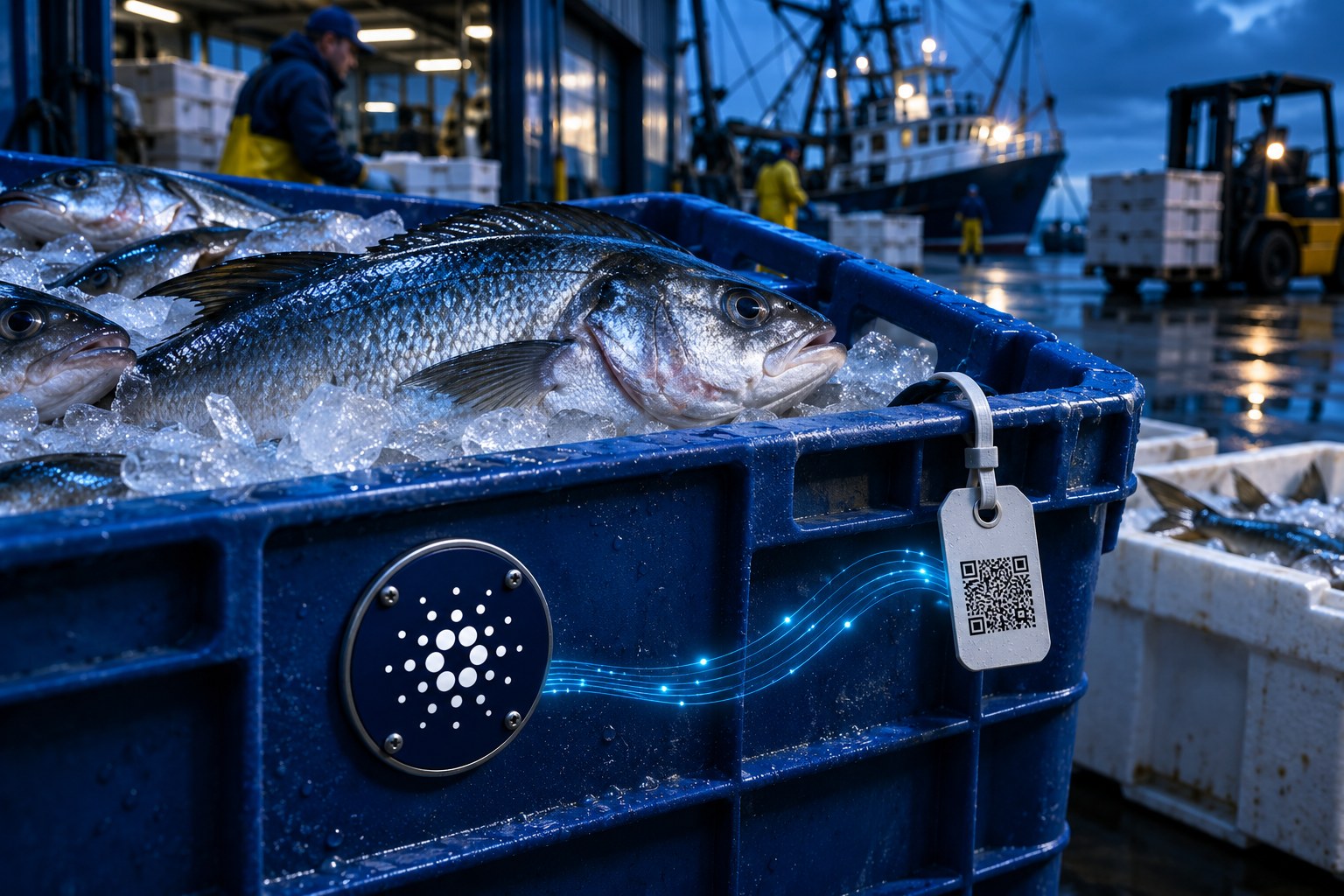
The Cardano Foundation has proposed using Cardano to anchor records of seafood moving through supply chains, linking the idea to the U.S. Food and Drug Administration’s Food Traceability Rule.
In November 23 posts, the Foundation identified landing, processing, shipping and receiving as events that could be recorded. It described Cardano as a way for buyers, importers and regulators to verify evidence independently alongside the traceability systems companies already use.
From Fishing Vessel to Buyer
Seafood can pass through several businesses before reaching a store. Fish may be received on land from a vessel, processed and packed, shipped to an importer, and then sent to a distributor or retailer.
Each step can create records identifying the product, its quantity and the businesses handling it. Those records may be held in different companies’ systems, while relevant information moves between supply chain partners.
The Cardano Foundation proposed anchoring seafood events on the blockchain to create records that reveal subsequent tampering. According to the Foundation, buyers, importers and regulators could independently verify the evidence without accessing a company’s internal systems.
One way to check a document is to compare it with a previously recorded digital fingerprint, known as a hash. If the document changes, a newly calculated fingerprint will differ from the original. Reviewing the document’s contents still requires access to the underlying information.
The Foundation’s announcement did not specify a technical implementation for individual seafood records. Its wider food and beverage work describes the use of Cardano for traceability and verification across supply chains.
What the FDA Requires
The FDA’s Food Traceability Rule establishes additional recordkeeping requirements for certain foods. The agency intends the information to help identify and remove potentially contaminated products more quickly during an investigation or recall.
Its Food Traceability List includes certain fresh and frozen fish, smoked fish, crustaceans and shellfish. The requirements apply to covered activities involving listed foods, with exemptions for some products and businesses.
Companies subject to the rule must maintain information for specified critical tracking events. Depending on their role, these can include the first land-based receiving of food from a fishing vessel, shipping, receiving and processing.
The required information varies by event and can include a product description, quantity, date, location and document references. A traceability lot code also links a food to a particular lot as it moves through the supply chain.
A company receiving fish from a vessel, for example, maintains the information required for that first land-based receiving event. Businesses that subsequently ship, receive or process the product maintain the records applicable to their own activities.
The rule covers U.S. and foreign businesses producing food for U.S. consumption when their activities fall within its scope. Covered information generally must be provided to the FDA within 24 hours of a request, or within another reasonable time agreed to by the agency.
[NEWSBREAK]
The Proposed 2028 Date and Cardano Food Projects
The original compliance date for the FDA rule was January 20, 2026. The agency has proposed extending it by 30 months to July 20, 2028.
Congress subsequently directed the FDA not to enforce the rule before July 20, 2028. The agency has stated that it intends to follow that directive. The proposed date applies to the Food Traceability Rule as a whole, including covered seafood products.
Food traceability is already part of the Cardano Foundation’s broader work with projects in the industry. One example is Open Food Chain, which uses Cardano to anchor evidence associated with food products, including claims supported by origin information and certificates.
Open Food Chain’s digital product passports can be accessed through a QR code on packaging. Depending on the product and available information, a shopper can explore details about its origin and the evidence behind a claim. The platform also distinguishes between public views and information intended for business partners or internal use.