Dr. Christina Yan Zhang Discusses Blockchain, AI Deepfakes and Tokenization in Cardano Foundation Podcast
The CEO of the Metaverse Institute and co-chair of the UN ITU task group on metaverse pre-standardization spoke about digital identity, AI-generated deepfakes, tokenization, global debt, institutional finance and the energy demands behind digital infrastructure.
By SongMarketCap
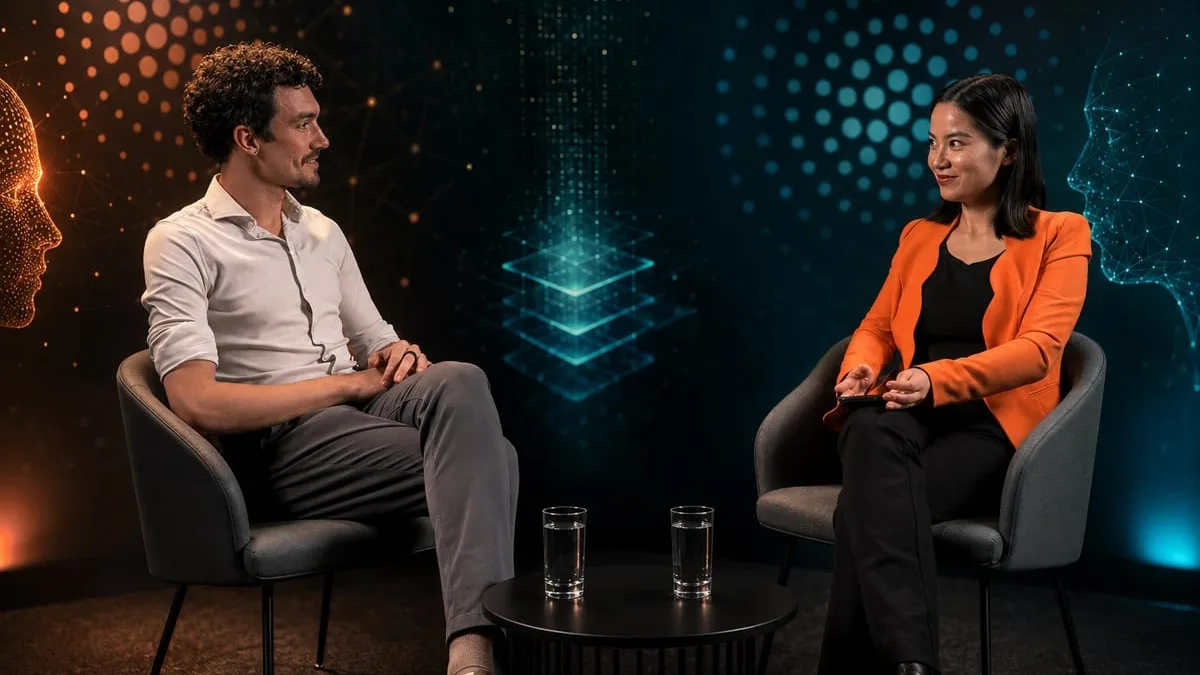
Dr. Christina Yan Zhang appeared on Let’s Talk Cardano, a podcast produced by the Cardano Foundation, for a conversation about blockchain, artificial intelligence and the infrastructure behind the digital world now being built.
Zhang introduced herself as CEO of the Metaverse Institute, based in the United Kingdom, and as co-chair of the United Nations International Telecommunication Union task group on metaverse pre-standardization. She said her work looks across frontier technologies including AI, digital twins, Web3, quantum, 5G and 6G, with a focus on building a people centered and planet friendly digital future.
Zhang Describes Her First Cardano Event and the Role of Digital Identity
Asked whether the Metaverse Institute already has a project on Cardano, Zhang said it does not yet, because this was the institute’s first time joining a Cardano event. She said the institute is looking forward to working with the Cardano community.
Zhang said she comes from an academic background and recognized Cardano’s rigorous academic and peer reviewed approach to its technology stack. She said that approach aligns with how the Metaverse Institute advises the United Nations, governments, investors, large corporations and nonprofit organizations on the effective use of frontier technologies across industries and regions.
The discussion then moved to blockchain use cases. Zhang said one of the major challenges and opportunities for blockchain, especially in the context of artificial general intelligence, is digital identity. She linked that issue to the rise of AI-generated deepfakes and the need to verify people and communications in an increasingly digital world.
Zhang said there were about half a million AI-generated deepfakes since 2022, while projections for 2025 pointed to more than eight million. She described that increase as a rapid escalation and said blockchain related technology could help address identity verification and trust.
She cited the case of Arup, the global engineering firm, where a Hong Kong based employee joined what appeared to be a video conference call with the group CFO and other senior leaders based in London. According to Zhang, the employee followed normal procedures and transferred 25 million dollars after receiving instructions during the call. She said the people on the call were not the real executives, but deepfake generated participants used to direct the transfer to a fake bank account.
Zhang also mentioned a case involving a former prime minister of Thailand, who she said received a phone call that appeared to come from the head of state of a neighboring ASEAN country. The caller allegedly requested a donation to a major project and provided bank details. Zhang said the message was checked by the relevant authorities and was found to be a deepfake voicemail.
She said such cases show why digital identity verification is becoming relevant not only for governments and large companies, but for individuals as well.
UN Pension Verification, Tokenization and Institutional Finance
Zhang also described a blockchain related identity case connected to the United Nations Joint Staff Pension Fund. She said the fund manages about 95 billion dollars across UN agencies and has more than 80,000 beneficiaries in over 190 countries.
According to Zhang, the fund faced a practical challenge in confirming whether beneficiaries were still alive when claiming pension payments. She said a system was developed using blockchain technology, biometrics, AI and geophysical location information to support scalable verification across many countries.
Zhang said the system was implemented in 2021, before generative AI deepfakes became a major public issue. She added that similar technology is now being examined for possible use in addressing deepfake related risks.
The conversation then shifted to tokenization. Zhang said she sees blockchain’s largest opportunity as going beyond traceability, verification and accountability, and into the provision of more liquidity to the world.
She said the global economy is valued at about 105 trillion dollars, while national government debt is about 97 trillion dollars. She connected that debt level with pandemic era government spending and with the need for further investment into physical and digital infrastructure around AI, quantum technology, digital twins, telecommunications, 5G and 6G.
Zhang said tokenization of real world assets and traditional financial assets could help provide additional liquidity. She cited a Standard Chartered estimate that the tokenization related economy could reach 30 trillion dollars by 2034.
She also discussed Project Agora, an initiative led by the Bank for International Settlements. According to Zhang, the project involves seven central banks and 41 private entities, including major financial institutions such as Mastercard, Visa, Swift, HSBC and Santander. She said the project is examining tokenized central bank deposits and commercial bank deposits within a unified platform for public private cooperation, including cross border settlements and payments.
Zhang said some African governments, including Ghana and Nigeria, have worked with blockchain companies on tokenizing national government debt and connecting it with crypto friendly investor pools. She said those models have been used to attract new liquidity for climate related needs and specific development sectors.
She also mentioned developments in the United States, including Nasdaq’s filing with the SEC to allow trading of tokenized shares alongside existing share trading. Zhang said Nasdaq handles roughly 11 billion shares per day, valued at more than 500 billion dollars.
Zhang also referred to HyperLiquid as a decentralized platform with large trading volume and a small staff. She said some publicly listed companies are piloting the trading of part of their shares through decentralized platforms. She described this as part of a convergence between traditional finance moving toward Web3 and decentralized platforms working with traditional financial institutions and investors.
AI Cycles, Energy Demand and the Global Digital Divide
Zhang said the discussion around AI should recognize that artificial intelligence is not a new technology. She said AI began in 1956, meaning the field has existed for nearly 70 years.
She said it takes time for industries to identify effective use cases and integrate new technologies into existing workflows. Zhang also referred to previous AI bubbles and AI winters, including periods in the 1980s and 1990s when expectations were high and funding later froze.
She said there are now renewed discussions about another AI bubble and a possible third AI winter. She referred to a report that said 95 percent of enterprise level generative AI adoption had not achieved the expected return on investment.
The conversation also covered the conditions needed for AI, blockchain and other frontier technologies to scale. Zhang said these technologies depend on electricity, while much of the world still faces energy poverty.
She said about 1.2 billion people either do not have access to electricity or have less than four hours of electricity per day. She said many of them are located in the Global South, especially in Africa.
Zhang said AI and other technologies are expected to drive a major increase in electricity consumption by 2030. She also discussed nuclear power, saying that more than 20 countries at COP28 supported a call to triple nuclear power capacity by 2050.
She referred to developments in China involving commercial molten salt nuclear power plants and said such technologies could support carbon emission free electricity for AI, blockchain and other technologies at scale.
Zhang ended the conversation by saying there are effective solutions if people and institutions work together. She said the goal is to identify practical ways to make technology work so that people can be healthy, happy and secure in the outcome.