Daedalus Adds Keystone Air-Gapped QR Support to Development Roadmap
Se7en Labs is working on Keystone hardware wallet support for Daedalus, with air-gapped QR signing included in the wallet’s funded development roadmap. The feature is not yet available, and no specific release date has been announced.
By SongMarketCap
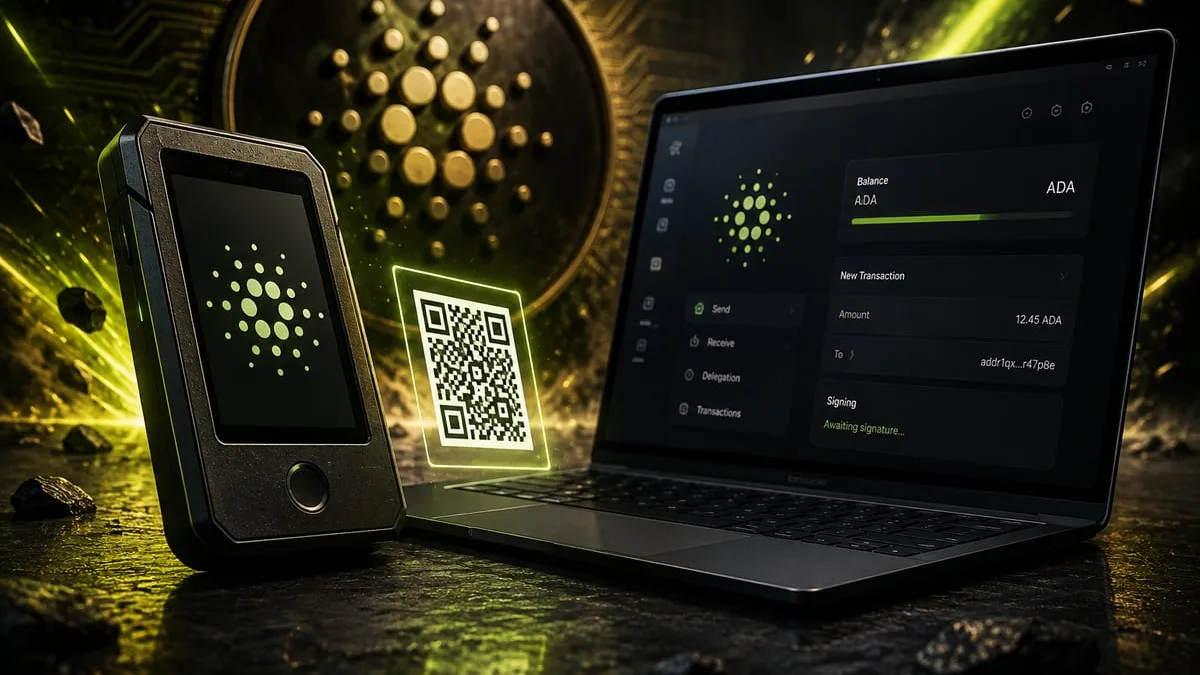
Se7en Labs is working on Keystone hardware wallet support for Cardano’s Daedalus wallet, according to a public statement from Adam Dean and the team’s ratified development proposal. The planned integration would bring air-gapped QR transaction signing to Daedalus, allowing hardware wallet users to authorize transactions without a USB or Bluetooth data connection between the signing device and their computer.
Keystone support is listed as a deliverable in the funded Se7en Labs proposal covering Daedalus maintenance and improvements for 2026 and 2027.
Keystone Support Is Already on the Daedalus Roadmap
The update surfaced publicly after Cardano DRep and Cardano Japan Council member Kyosuke Takatuki wrote that he had heard Se7en Labs was considering adding Keystone support to Daedalus.
Adam Dean responded directly in the thread:
“Not considering, in progress ☺️ Soon™️”
The integration is also included in the ratified Se7en Labs treasury proposal, which lists “Keystone air-gapped QR signing support within contract period” among the planned Daedalus improvements.
As of August 8, no public GitHub issue, pull request, commit or branch referencing Keystone had appeared in the Daedalus repository. The funded roadmap establishes Keystone support as a development deliverable, while Dean’s statement indicates that work is already underway.
No specific release date has been announced. The funded Se7en Labs maintenance and development period runs from September 1, 2026 through August 31, 2027.
Air-Gapped QR Signing Expands Daedalus Hardware Wallet Options
Keystone hardware wallets use an air-gapped architecture that can exchange transaction data through QR codes instead of maintaining a direct USB or Bluetooth data connection with an internet-connected computer.
Under the planned Daedalus integration, transactions could be prepared in the wallet and transferred to Keystone for offline signing. The signed transaction data could then be returned through the QR workflow before being submitted to the Cardano network.
That workflow is part of the planned integration and is not yet available in a released Daedalus version.
Daedalus already supports Ledger and Trezor hardware wallets. Keystone would expand those options with a signing model designed to remove the USB or Bluetooth data path from regular transaction authorization.
Keystone already supports Cardano (ADA) through multiple wallet applications, including Eternl, NuFi, VESPR and Begin, with integrations providing access to combinations of staking, DeFi and NFT functionality.
Se7en Labs Expands the Daedalus Development Roadmap
The Keystone work follows a broader change in how Daedalus is developed and maintained.
Input Output announced in June that Daedalus was moving to a specialist ownership model, with Se7en Labs taking responsibility for its roadmap. The team behind DripDropz had already been working on Daedalus under an Input Output contract before its subsequent treasury proposal was ratified.
The approximately 1.79 million ADA proposal covers Daedalus maintenance and improvements from September 2026 through August 2027. Keystone air-gapped QR signing is one of its planned deliverables, alongside additional hardware wallet work including Ledger Flex support.
Daedalus remains Cardano’s full-node desktop wallet, locally synchronizing and verifying the blockchain rather than operating through the remote backend model commonly used by light wallets.
The planned Keystone integration would leave that architecture intact while changing how users can authorize transactions. Daedalus would continue providing local full-node verification, while Keystone would add a physically separated QR signing path that does not require a direct data connection between the hardware wallet and the computer.