Crypto Crow on Cardano: Governance, Midnight and the Missing Marketing Layer
Long-time Cardano creator and DRep Jason Appleton, known as Crypto Crow, used an appearance on The Breakdown to discuss Cardano’s marketing problem, the timing of decentralized governance, Midnight and the role interoperability could play in the ecosystem’s future.
By SongMarketCap
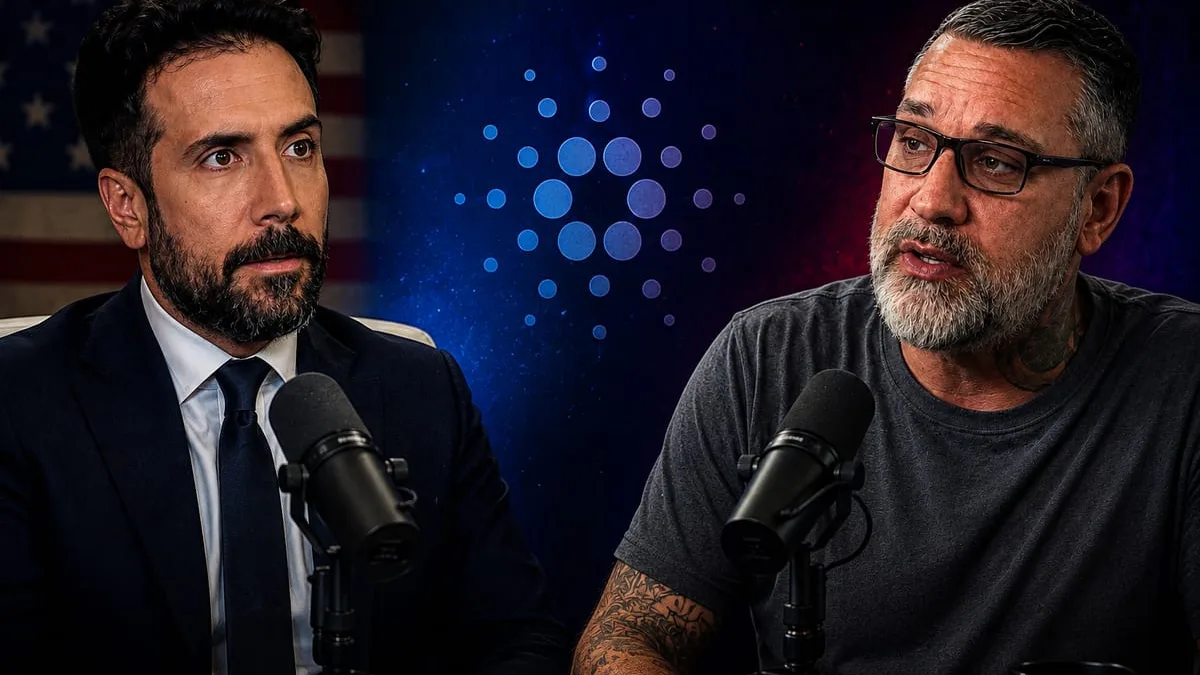
Jason Appleton, better known as Crypto Crow, joined The Breakdown for a wide-ranging discussion about Cardano and the direction of its ecosystem.
Appleton, who said during the interview that he is currently the fifth-largest DRep, addressed the persistent negative narratives surrounding Cardano, the ecosystem’s approach to marketing, the power held by DReps and the relationship between Cardano and Midnight. He also outlined why interoperability has remained central to his view of Cardano since he first covered the project in 2017.
Cardano’s Marketing Problem Goes Beyond Branding
Appleton attributed some of the negative sentiment surrounding Cardano to tribalism, paid narratives and influencers, while also acknowledging that having a founder so directly involved in public arguments can create additional material for critics.
He then turned to a problem inside the Cardano ecosystem: marketing.
Appleton said Cardano has historically focused heavily on building without allocating enough resources to bringing those products and applications to audiences outside the ecosystem.
He contrasted that approach with Solana. Despite making clear that he is not a Solana supporter, Appleton described the network as one of crypto’s strongest marketers.
“Marketing goes beyond just branding,” he said.
For Appleton, that includes helping builders, applications and decentralized applications secure the resources needed to attract users outside Cardano’s existing community. It can also involve initially funding relationships that may later develop beyond the original incentive.
He applied the same reasoning to creators who have spent years covering Cardano.
Appleton said people who educate audiences about the ecosystem, explain developments and help attract new users should be able to sustain those roles. He distinguished long-standing creators who understand and care about Cardano from people who arrive only because they see an immediate opportunity to get paid.
His argument was that an ecosystem cannot indefinitely rely on contributors working purely out of passion while directing resources primarily toward building.
Crypto Crow Says Cardano Governance Came Too Early
Appleton’s strongest criticism during the interview concerned the timing of Cardano’s decentralized governance system.
“The governance system for Cardano was kicked out way too early,” he said.
Appleton did not argue against decentralized governance. His criticism focused on when that transition happened and how much influence individual DReps can now hold.
“I’m the fifth largest DRep in the ecosystem, and I really shouldn’t be,” Appleton said, adding that he does not believe DReps should be as powerful as they currently are within the governance system.
He said the transition should have happened later, specifically after Leios had launched, Hydra had established itself and Cardano had reached what he described as a more solid position.
Appleton also connected some of the current friction to the relationship between governance and Charles Hoskinson.
He argued that Midnight operates differently because Hoskinson does not have to navigate the same DRep dynamics when making decisions about its development. On Cardano, Appleton said, proposals can become entangled with disagreements, personalities and reactions to Hoskinson himself.
During the broader discussion, The Breakdown host also referenced Hoskinson’s previous comments about Solana securing a relationship with SBI and the argument that a similar opportunity could have gone to Cardano if the ecosystem had been better coordinated.
Appleton responded that Cardano already has much of what it needs and that the ecosystem now has to act on those opportunities.
Midnight and Interoperability Shape Appleton’s Long-Term View
Appleton rejected the idea that Midnight takes something away from Cardano.
“It’s like giving Cardano steroids, in my opinion,” he said.
He argued that Midnight settles on Cardano and that its functionality can extend Cardano’s value as a Layer 1 network. He also pointed to Midnight as an environment where development can move without the same governance conflicts he described on Cardano.
His interest in Midnight extends beyond conventional blockchain metrics.
Appleton said he is increasingly less interested in debates centered on TVL and transactions per second and more interested in the infrastructure needed as artificial intelligence becomes more prevalent online.
He specifically identified digital identity as an area where Midnight could have a role. As AI-generated content and automated systems become harder to distinguish from real people, Appleton argued that the internet needs an identity layer capable of distinguishing AI and bots from humans.
“How are we going to build an identity layer that utilizes Midnight strengths across the globe?” he asked.
That idea fits into a broader view of Cardano that Appleton said has shaped his thinking since 2017.
Rather than defining success as Cardano defeating competing blockchains, he described a future in which Cardano provides functionality to other networks, specifically mentioning the possibility of bringing smart contract capabilities to Bitcoin, XRP and other chains that do not have them natively.
“Cardano wins through its interoperability and functionality,” Appleton said.
Looking two to four years ahead, Appleton said he wants to see Cardano’s DRep situation become more resolved, a significant marketing plan emerge and technologies including Leios and Hydra strengthen the network’s position.
His longer-term thesis remains the one that originally drew him to Cardano: infrastructure designed to work with other networks rather than operate in isolation.