Cardano Farm Data Project Reaches 100,000 Registrations in India
The 5am.earth initiative combines field records and satellite evidence to create reusable agricultural data. A proposed lending pilot would use those records to assess smallholder farmers for credit.
By SongMarketCap
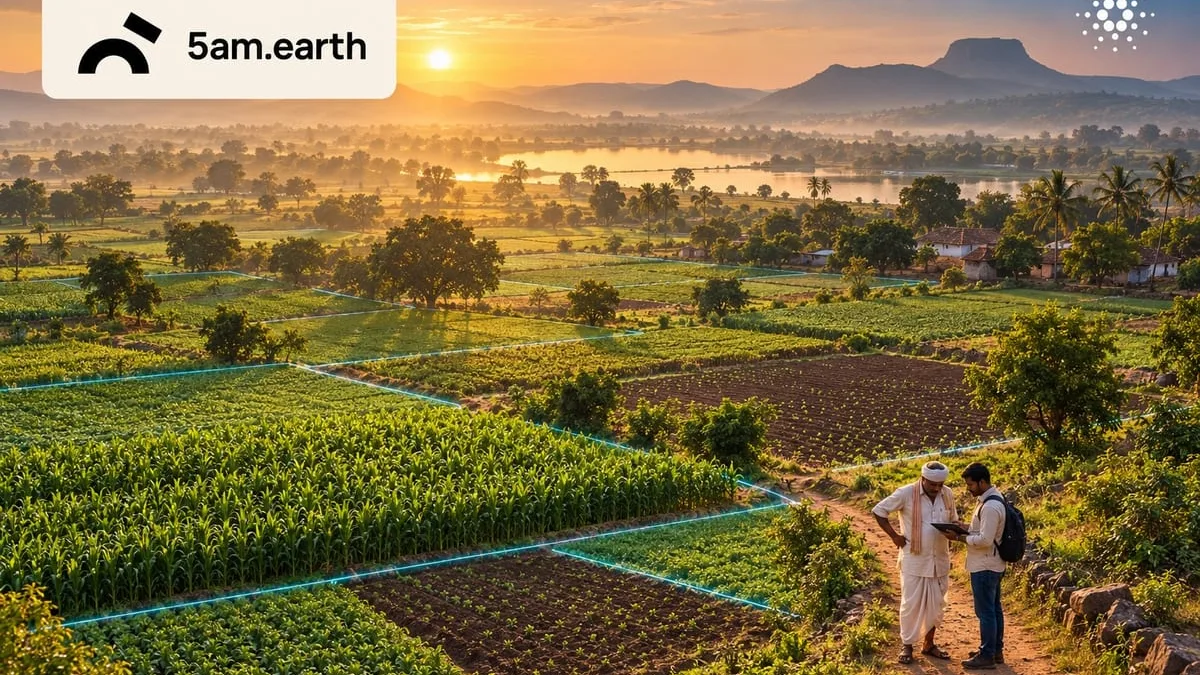
The Cardano Foundation announced on October 21 that 100,000 agricultural plots in India had been registered on Cardano through 5am.earth. Its updated case study reports more than 100,000 farms registered following mainnet deployment and initial field trials.
The project creates verifiable records of farmland, crop history, and agricultural practices that can support decisions across lending, insurance, produce purchasing, and government programs.
From Field Evidence to a Digital Farm Record
Registration begins with an Agri-Entrepreneur, a local service provider who records information about the farmer, field, and agricultural activity. Satellite imagery checks parcel boundaries against current observations and historical land data.
Identity and consent are attached to the evidence, establishing a traceable source. Farmers can then authorize the same record for another service or decision.
According to the Foundation’s case study, farm parcels receive decentralized identifiers linked to satellite-verified boundaries. Sustainability assessments incorporate 12 years of biomass and crop data, adding historical context to individual records.
Syngenta Foundation India, 5am.earth, AIQUANT, Anastasia Labs, and Andamio contributed to the implementation. Their work connects local information collection with digital identity, satellite verification, and records anchored on Cardano.
Reusing Agricultural Evidence Across Services
5am.earth identifies repeated verification as a cost that limits access to agricultural services. Banks, insurers, buyers, and public agencies often assess the same farmer separately, paying to collect information that remains isolated within each organization.
The platform is designed to let those organizations reuse evidence already gathered. A lender could examine field information when assessing an application, while a buyer could check records supporting a product’s origin. Government and nonprofit programs could use the same infrastructure to track participation.
According to 5am.earth, identities and information from multiple sources are anchored on Cardano for independent verification without exposing farmers’ personal data.
The process still depends on the quality of its underlying evidence. Field collection, satellite checks, and identity and consent procedures establish what enters the system. The blockchain provides a persistent record supporting subsequent verification.
[NEWSBREAK]
Seedstars Pilot Would Connect Records With Lending
The project’s Cardano treasury proposal describes a separate financial application involving Seedstars. Its proposed role includes using verified agricultural data for credit scoring, structuring loan offers, and returning repayment information to the records system.
The planned pilot covers 1,000 to 5,000 farmers. Initial loans for agricultural inputs and working capital would range from $100 to $500, with later amounts reaching $1,000. The registration milestone does not establish that these loans have already been disbursed.
To develop and expand the infrastructure, 5am.earth is seeking 10 million ADA over 18 months. The proposal specifies five million ADA upon approval, followed by payments of two million and three million ADA tied to milestones.
Under the lending design, a farm’s verified field history would support its initial credit assessment. Repayment records would then extend that history, giving subsequent assessments evidence of how the borrower handled earlier financing.