Scott Collen Outlines Midnight’s Growth Priorities
Midnight Foundation is prioritizing sustainable businesses and strategic funding while supporting development in private DeFi, AI agents, and digital identity. Scott Collen also addresses the NIGHT and DUST economic model, institutional interest, cross-chain opportunities, and unresolved liquidity challenges.
By SongMarketCap
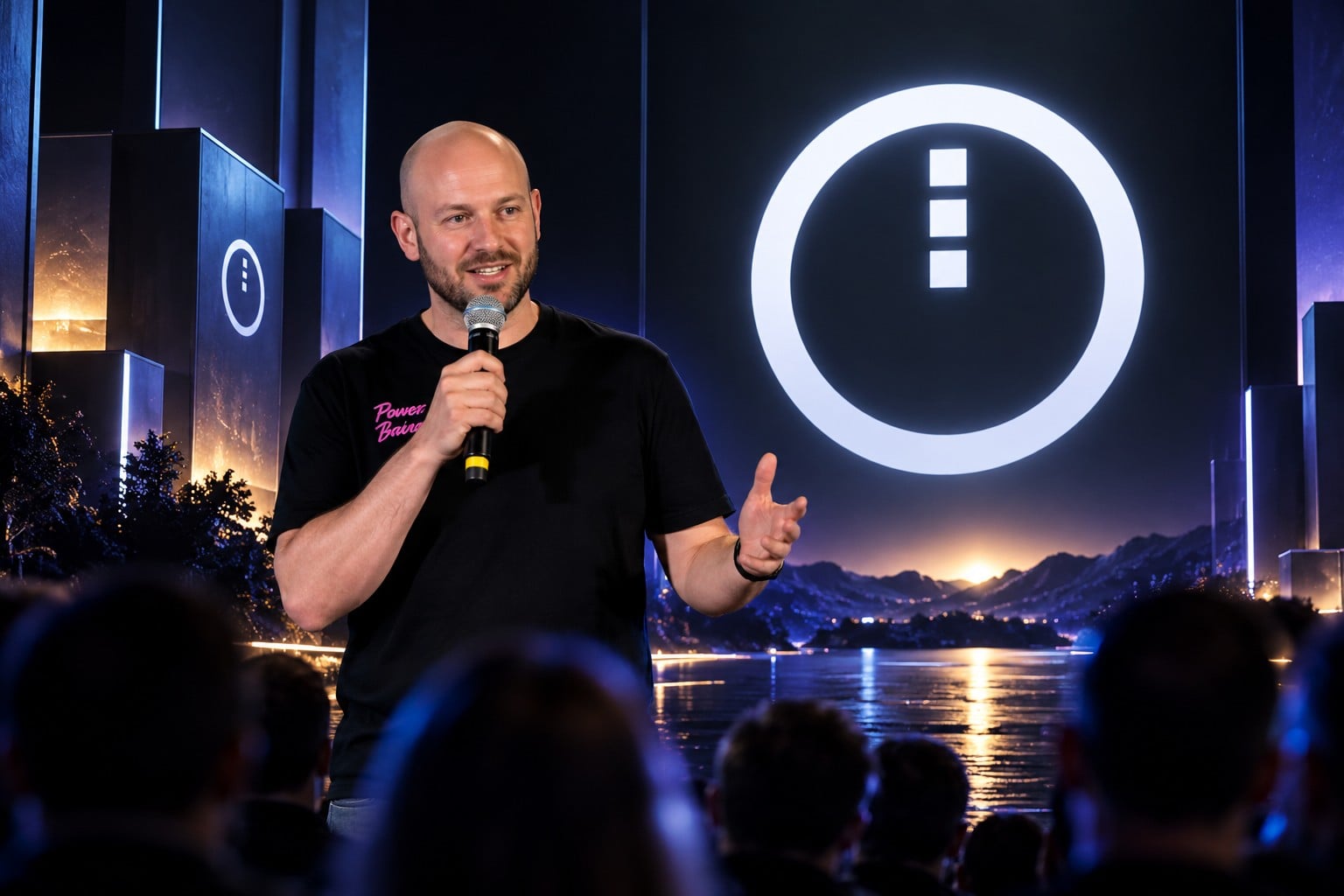
Scott Collen outlined Midnight Foundation's approach to funding, business sustainability, and ecosystem development during a Midnight LIVE keynote, arguing that a relatively small number of commercially successful applications could establish Midnight among the leading blockchain ecosystems.
Rather than reviewing individual projects, Collen addressed questions frequently raised by developers, including how the foundation allocates capital, why NIGHT and DUST matter for builders, and which applications are attracting development interest.
He also identified two challenges for the next three to six months: creating lasting liquidity and developing a community capable of supporting the network's growth.
Midnight Foundation Prioritizes Sustainable Businesses and Strategic Funding
Speaking at the Token event, Collen opened by thanking attendees for joining despite competing presentations, joking about losing his voice ahead of a karaoke session later that evening.
He then addressed one of the most common requests he receives at industry events: developers asking Midnight Foundation for funding.
Although the foundation has resources to support ecosystem development, Collen emphasized that capital must be allocated strategically. He contrasted the current environment with 2020 and 2021, when funding was considerably easier to obtain across the blockchain industry.
Midnight Foundation now evaluates how each investment can generate value beyond the amount committed.
"This means we say no a lot," Collen acknowledged.
He explained that rejecting a proposal does not necessarily reflect a negative assessment of its developers. Instead, the foundation may believe that the same resources could produce greater benefits elsewhere.
Collen also pointed to the financial backgrounds of several leadership team members, including individuals with hedge fund experience, as one reason for the emphasis on economic returns and capital efficiency. However, he stressed that the foundation remains open to creative funding arrangements.
The broader objective is to support applications capable of becoming sustainable businesses.
According to Collen, even leading blockchain networks have relatively few application companies generating more than $1 million in annual revenue. Infrastructure providers, auditors, and other specialized service businesses may be exceptions.
He offered a specific benchmark for what commercial success on Midnight could look like.
If 20 to 25 businesses built on Midnight each generated between $1 million and $2 million in annual recurring revenue (ARR) within a year, Collen believes the network could rank among the leading blockchain ecosystems.
That scenario would represent approximately $20 million to $50 million in combined annual recurring revenue across those businesses.
It was presented as Collen's assessment of a possible outcome, not a formal revenue target or confirmed foundation commitment.
He acknowledged that blockchain has repeatedly been described as an emerging industry, recalling that he made similar observations in 2017. Nevertheless, he believes significant commercial opportunities remain.
Not every application will succeed, and some anticipated developments may never materialize. Still, Collen pointed to growing interest from development teams, including those attending the event and others participating remotely.
Midnight Foundation wants to support businesses capable of converting that interest into sustainable economic activity.
NIGHT, DUST, Private DeFi, and AI Agents Shape Midnight's Development Opportunities
Collen next addressed the relationship between NIGHT and DUST, describing it as an unusual economic tradeoff for the ecosystem.
DUST provides the resources required for transactions and computation on Midnight, allowing developers to offer network interactions without the conventional experience of paying separate transaction fees.
Collen characterized the model as particularly attractive for builders, encouraging them to use the available transaction and computational resources extensively.
However, he acknowledged that it differs from the fee-generating models of networks such as Ethereum.
He jokingly admitted feeling occasional envy toward ecosystems that collect substantial transaction fees, while emphasizing that Midnight's approach is intended to attract developers and encourage application development.
The foundation supports that tradeoff because reducing the cost burden for builders can make the network more accessible.
Collen then identified three areas attracting particular development interest.
Private decentralized finance was the first.
He argued that users do not necessarily want their financial activities exposed publicly, highlighting private borrowing and lending, asset swaps, and transactions as potential applications.
Midnight's privacy capabilities are intended to enable financial interactions in which sensitive details do not have to be disclosed to everyone observing the blockchain.
Collen indicated that Carmel, Dave, and their team would explore related developments during subsequent presentations.
AI agents and digital identity represented the second area.
Although he joked about the constant attention surrounding AI agents, Collen described autonomous systems as part of the future of digital infrastructure.
Developers are exploring agents that use blockchain infrastructure to execute tasks, alongside systems that incorporate digital identity solutions to manage their activities.
Collen argued that privacy remains insufficiently addressed across the broader crypto AI agent ecosystem.
As autonomous systems gain the ability to conduct transactions and perform business functions, managing identity, access, and confidential information becomes increasingly relevant.
He sees significant opportunities for Midnight's identity capabilities within this emerging market.
As an example, Collen described a team he had recently encountered that had developed a concept for placing an autonomous agent inside an actual company structure.
According to his account, the system involved an automated company with a license, allowing the agent to trade privately.
He found the concept particularly interesting, although he did not identify the team or provide details about commercial availability.
Individual sovereignty was the third development area.
Collen connected this category to Bitcoin's original motivations, including opposition to centralized government control and traditional banking structures.
While blockchain technology has evolved, he argued that the underlying desire for greater individual freedom remains relevant.
He referenced Charles Hoskinson's emphasis on freedom of association, commerce, and expression.
According to Collen, Midnight offers infrastructure for applications designed to preserve those freedoms through privacy and greater individual control over digital activities.
He indicated that developers are already exploring applications addressing these principles.
Together, the three areas reflect Midnight's focus on confidential financial activity, autonomous systems, digital identity, and individual sovereignty.
[NEWSBREAK]
Institutional Interest and Cross-Chain Privacy Could Help Address Midnight's Liquidity Challenge
Collen concluded by discussing two unresolved challenges he expects Midnight to face over the next three to six months.
The first is creating sticky liquidity, meaning capital that remains available within the ecosystem rather than continuously moving between networks in search of temporary financial incentives.
Collen acknowledged that the foundation has not yet established a complete solution.
"I don't have the good answers for it yet," he admitted.
He argued that the earlier period of aggressive competition through exceptionally high yields has changed, while real-world assets (RWAs) and other financial models are creating new opportunities.
Collen also reported considerable institutional interest in minting assets using Midnight's privacy capabilities.
He suggested that institutional activity could contribute to liquidity development, although he did not identify specific institutions, disclose capital commitments, or announce new integrations.
To illustrate the difficulty of competing for capital, Collen referenced an example he had heard about a larger enterprise-oriented blockchain network reportedly preparing to offer a 9% yield on USDC.
He treated the offer as a temporary incentive rather than a sustainable long-term return.
In a humorous remark, Collen encouraged users to take advantage of such opportunities while they remained available, suggesting they could return to Midnight for private trading once the incentives expired.
The example highlighted an important distinction between attracting capital through temporary rewards and providing services that users continue to need after those rewards disappear.
Collen also discussed cross-chain opportunities being developed around Midnight.
Under the approach he described, users could maintain privacy on Midnight while accessing financial opportunities available on other blockchain networks.
This would allow developers to combine Midnight's confidentiality features with external financial services and liquidity.
The foundation is working toward such capabilities, but Collen did not announce a specific production deployment or availability date.
His second challenge concerned community development.
Collen referenced Nightforce and the broader network of Midnight advocates, emphasizing the importance of reaching new audiences while cultivating a recognizable culture around the blockchain.
He compared community development with building organizational culture inside a company, arguing that maintaining a shared identity becomes even more difficult as participation expands.
The foundation wants to attract substantially more participants and advocates, but Collen acknowledged that scaling community involvement presents organizational and cultural challenges.
He invited developers and community members to contribute ideas for addressing both liquidity and community growth.
Collen also encouraged participants to report problems that Midnight Foundation or its leadership might not yet recognize.
He emphasized that repeated feedback from different community members can lead the organization to reconsider decisions and adjust its approach.
The keynote concluded with Collen handing the presentation over to Colman and Tom, who were expected to discuss what developers can already build on Midnight and which capabilities are coming next.
Collen's immediate priorities were therefore not presented as a new funding program or a completed liquidity solution. The foundation is continuing to evaluate projects based on their potential contribution to ecosystem value while seeking practical approaches to retaining capital and expanding community participation.
Developers and community members were specifically encouraged to bring forward proposals and concerns in those two areas, with Collen committing to consider recurring feedback as Midnight's ecosystem develops.