Hoskinsonov sljedeći ulog: Midnight
In an All In Crypto interview, the Cardano founder explained what he considers finished on Cardano and what he wants to build next on Midnight, from private banking to a marketplace where AI agents pay one another.
By SongMarketCap
Updated:
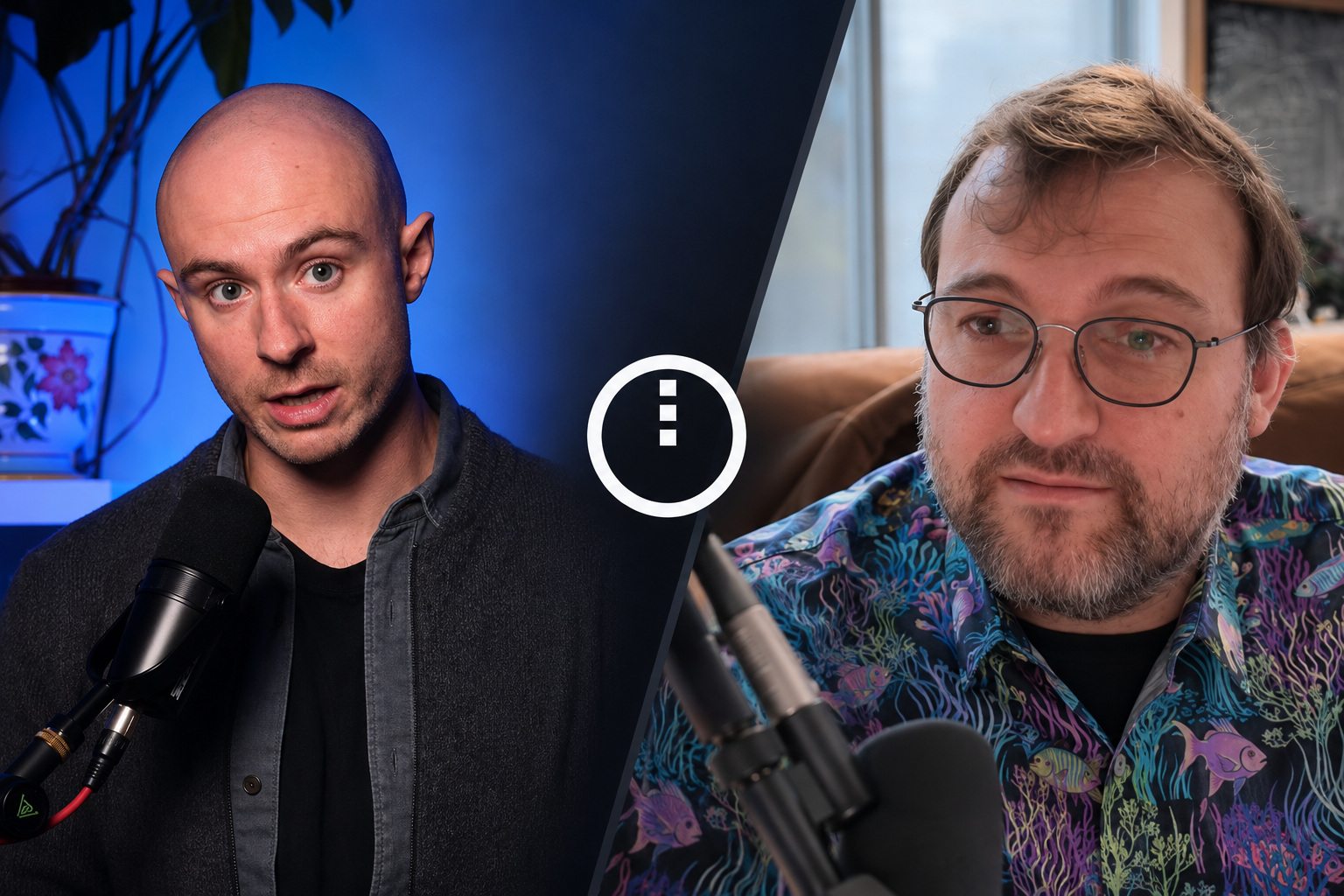
When Rupert Pickering asked whether Midnight was overshadowing Cardano, Charles Hoskinson pointed to a Japanese crypto exchange. According to Hoskinson, S.BLOX had never traded ADA before it decided to list NIGHT. Because NIGHT is a Cardano-native asset, he explained, the exchange added both. He offered the listing as a concrete example of how a project with its own network could expand Cardano’s reach.
In the November 26 interview, Hoskinson defended handing more of Cardano’s development to independent teams and outlined what he wants Midnight to do for banks, blockchain applications, and AI agents operating across networks.
What Hoskinson Meant by Finishing Cardano
Hoskinson was referring to the original roadmap that took Cardano through Byron, Shelley, Goguen, Basho, and Voltaire. He described its final milestone as an ecosystem in which the community could direct the network’s development. In his account, completing that milestone meant transferring responsibilities that Input Output had previously held to other organizations and development teams.
He traced part of that transition to Intersect. Once it was established, Input Output began contracting out work it had previously handled internally. Hoskinson described two rounds of treasury funding as part of a process that gave independent teams more responsibility. He also pointed to multiple Cardano node implementations, including ones written in Haskell, Go, and Rust.
Pickering pressed him on whether his attention had shifted to Midnight. Hoskinson framed his work there as an application of the partner-chain model he had advocated before Cardano launched. He argued that a project can build its own network and still bring users and businesses into Cardano through its assets and integrations.
What Banks Could Do After Tokenizing Deposits
Hoskinson described Monument Bank’s savings product as the first phase of a longer relationship. Midnight’s published scope provides for up to £250 million in deposits to be represented on the network during that phase. Monument continues to hold the deposits in pounds sterling, with tokens on Midnight representing them.
Pickering asked what institutions could do with tokenized assets once they were on a blockchain. Hoskinson described a model in which Midnight could connect institutions to applications and liquidity on other networks while letting each bank set the conditions for access. For Monument, that would mean deciding which functions its customers can use and when to introduce them.
Hoskinson compared his approach to a VPN. In his example, people would go through Midnight for added privacy and then use an application on the network where it already operates. Midnight has previously described Ethereum functions through its SIG Network integration, including Uniswap swaps and Aave deposits, as well as an expansion to Solana. Its October network update identified TRON as the next target for Nightmode, with deployment planned for December.
A user moving from TRON to Ethereum typically has a task to complete once the funds arrive. Hoskinson wants the user’s instructions to carry through each step. One design he outlined would attach a cryptographic proof to a transaction so an application could verify a fact about another network, such as whether an asset exists there.
He described how zero-knowledge proofs could work alongside two other privacy technologies. Multi-party computation lets participants perform a calculation together while protecting their individual inputs. Trusted execution environments isolate sensitive operations from the rest of the host system. Hoskinson pointed to cloud providers as potential suppliers of the hardware for those operations.
That raised a broader question about who controls data when an individual relies on a large provider. Hoskinson argued that users should have technical guarantees about how their information is handled and tools to hold providers to those commitments. He also envisioned AI agents handling privacy tools in the background that users might find difficult to configure themselves.
[NEWSBREAK]
Why Midnight City Gives AI Agents Somewhere to Live
In Midnight City, users create agents that continue to interact after their owners log off. When Pickering asked whether the project could help solve artificial general intelligence, Hoskinson answered that it addressed a different problem. He wants to give agents a persistent environment in which they can find tasks, develop relationships, and learn how to work with one another. The team is also exploring ways for users to follow events as they unfold across the city.
That is where Hoskinson wants to test a market for specialized skills. He gave the example of a user asking about a new Aston Martin. The user’s agent finds another agent with expertise in cars, makes a small payment, and brings back an answer. The specialist’s owner could charge for the work while keeping the underlying skill private. Hoskinson identified agent-assisted trading as an early use case for the proposed marketplace.
He described a later market for computing capacity. Data centers could offer spare capacity for inference, the process of running a trained AI model to complete a task. Agents could then buy both the expertise a job requires and the computing time to run it.
The interview also covered Midnight Suburbs, a program that would give token communities areas within the simulation. Hoskinson reported that work to onboard HOSKY had begun and set a goal of adding five to ten communities per quarter. He described possible uses for their tokens, including buying items and changing how agents look or interact. He also outlined a role for Midnight Passport, which would connect digital identities and wallets and let users delegate specific permissions to agents.
What Hoskinson Plans to Reveal on December 15
Hoskinson traced Midnight’s progress from its initial phase with a limited group of operators through several network upgrades. He also recalled the Glacier Drop, which extended NIGHT distribution across eight ecosystems. He described the next phase as a move toward putting more of Midnight’s privacy and proof technology to work in applications.
Asked about the Midnight Foundation’s role, Hoskinson pointed to its work on the roadmap. He recalled that the foundation’s chief technology officer decided to spend a month in Colorado to work directly with the development team.
Looking toward 2030, Hoskinson outlined a broader ambition. He wants Midnight to connect blockchains with existing financial infrastructure. He also argued that AI could lower the cost of rewriting software for competing platforms, weakening some of the advantages established companies hold. He expects agents to become users of cryptocurrencies in their own right as they buy information, hire other agents, and pay for computing capacity.
Hoskinson identified December 15 as the date for presenting Midnight’s full roadmap. He said the presentation would cover how Midnight intends to connect to other networks, how it plans to use trusted execution environments and multi-party computation, and what comes next for Midnight City as it admits more users from its waitlist.