World Mobile Reports 67 Petabytes of Pakistan Data Traffic in October
The company reports that traffic tripled year over year as its AirNode count approximately doubled. Its Pakistan network now includes more than 167,000 AirNodes across five cities.
By SongMarketCap
Updated:
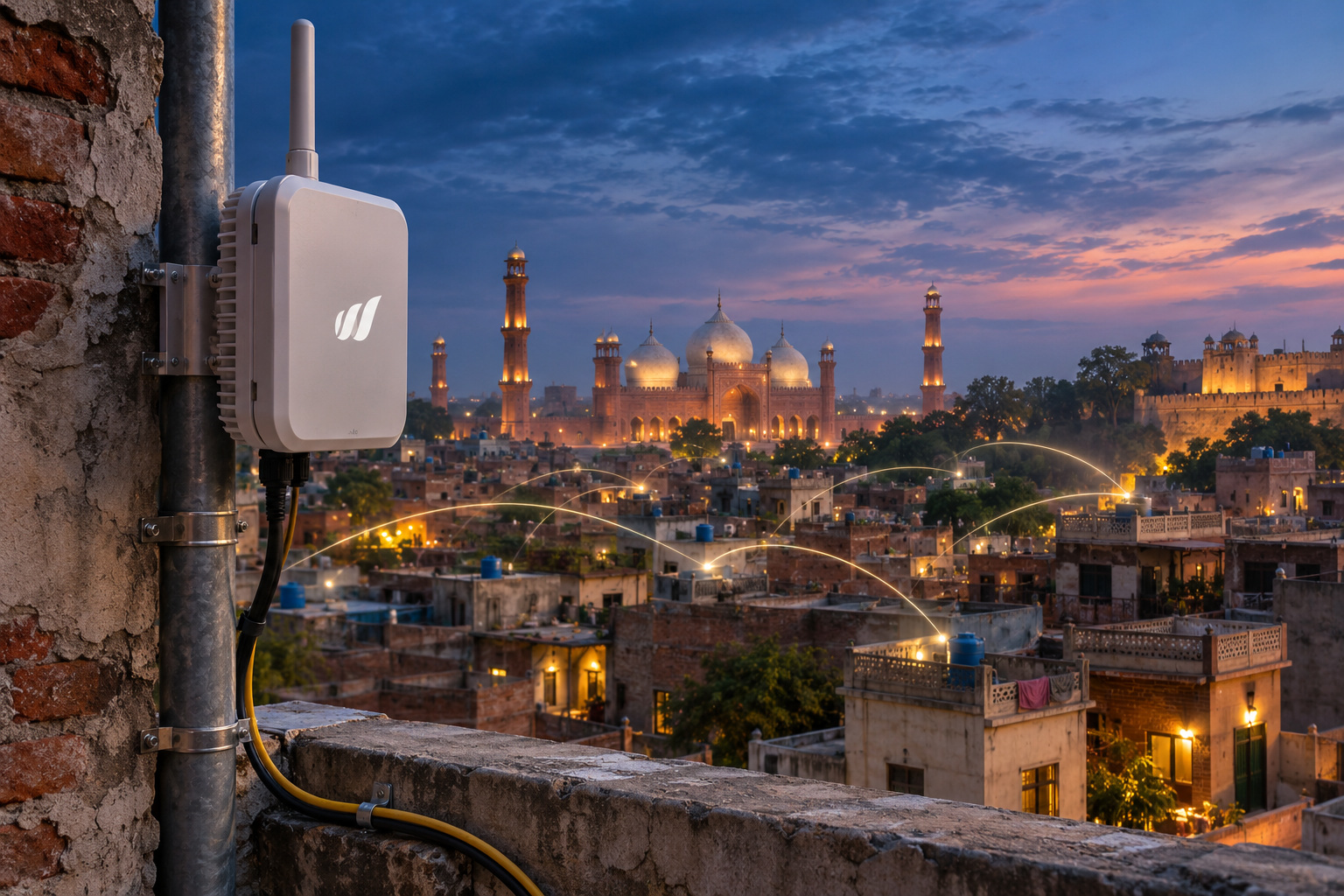
World Mobile’s Pakistan network carried 67 petabytes of data in October 2026, according to the company. Traffic was three times higher than in October 2025, while the number of AirNodes approximately doubled over the same period.
The company reports more than 167,000 AirNodes across Lahore, Islamabad, Rawalpindi, Faisalabad and Multan. It also states that the Pakistan network has carried more than 800 petabytes since December 2024.
The figures provide a view of both the network’s size and the data moving through it. They come from World Mobile’s own updates and have not been accompanied by a city-by-city breakdown of traffic.
From Fiber to a Home Connection
World Mobile’s Pakistan deployment combines existing telecommunications infrastructure with devices owned by AirNode operators. The company works with WorldCall, a local broadband and cable operator, to bring capacity into neighborhoods.
A connection begins on Pakistan’s wider fiber backbone before reaching WorldCall’s local network. From there, an EmberNode in a street cabinet or fiber enclosure distributes capacity downstream to Spark AirNodes and other connected equipment.
Spark AirNodes provide the local Wi-Fi connection used by subscribers. According to World Mobile, households and businesses buy an internet subscription that can connect phones, laptops and televisions. The company also reports that public Wi-Fi is available in some areas where Spark devices are deployed close together.
WorldCall’s engineering teams install and maintain the hardware in the field. AirNode operators own the devices and can follow their status, traffic and compensation through World Mobile’s dashboard. World Mobile manages the operator platform and compensation process.
The two types of equipment have different roles. An EmberNode carries traffic through the distribution layer, while a Spark AirNode provides access closer to the subscriber. World Mobile’s latest update did not disclose how many of the more than 167,000 AirNodes belonged to each category.
Traffic Grew Faster Than the AirNode Count
World Mobile’s October comparison shows a threefold increase in data traffic alongside an approximately twofold increase in the number of AirNodes.
If both comparisons cover the same network and period, the figures imply higher average traffic per AirNode than a year earlier. The company did not publish the underlying device counts for both months in its short update, so a precise average cannot be calculated from that announcement.
The company’s 67-petabyte figure supplies the October 2026 total missing from the earlier update. World Mobile did not give an exact October 2025 volume alongside it. The threefold comparison implies a figure of roughly 22 petabytes, though that is an estimate derived from the rounded growth multiple.
The number of AirNodes also does not establish how many were active throughout October. World Mobile’s update did not provide that figure or a count of subscribers for the period.
The company has described individual uses of the infrastructure. At Faith Junior Academy in Pakistan, World Mobile and WorldCall installed a Spark AirNode connected through WorldCall’s fiber network. The school also received tablets containing the Giggle Academy educational application.
That example describes one location on a network serving five named cities. The published traffic total covers the broader Pakistan deployment rather than that individual connection.
[NEWSBREAK]
How AirNode Operators Are Compensated
World Mobile lists different compensation arrangements for Spark AirNodes and EmberNodes.
For Spark, its Pakistan product page lists $1.70 per active AirNode per month. The company describes EmberNode compensation as variable and connected to verified traffic carried by the device.
A planning example on the platform uses approximately 800 gigabytes of monthly traffic per EmberNode. World Mobile presents the resulting payment as illustrative and states that actual compensation depends on network usage and other conditions.
The company’s October traffic announcement does not establish the average return received by existing operators. Calculating that figure would require additional information, including the number of each device type and the distribution of traffic across EmberNodes.
World Mobile is also known in the Cardano community for WMTX. In its explanation of the Pakistan network, the company stated that network usage is planned to settle on World Mobile Chain in the future. Its October update did not quantify a direct effect of Pakistan traffic on WMTX.
For now, the reported October volume and the more than 167,000 AirNodes provide two measures of the company’s Pakistan operation. World Mobile’s latest figures place those devices across Lahore, Islamabad, Rawalpindi, Faisalabad and Multan.