What Can a Buyer Verify About Cocoa From a Nigerian Farm?
In Nigeria, Palmyra connects cocoa purchases to mapped farms and anchors approved records to Cardano. For a European buyer, the test comes when beans from several growers end up in the same shipment.
By SongMarketCap
Updated:
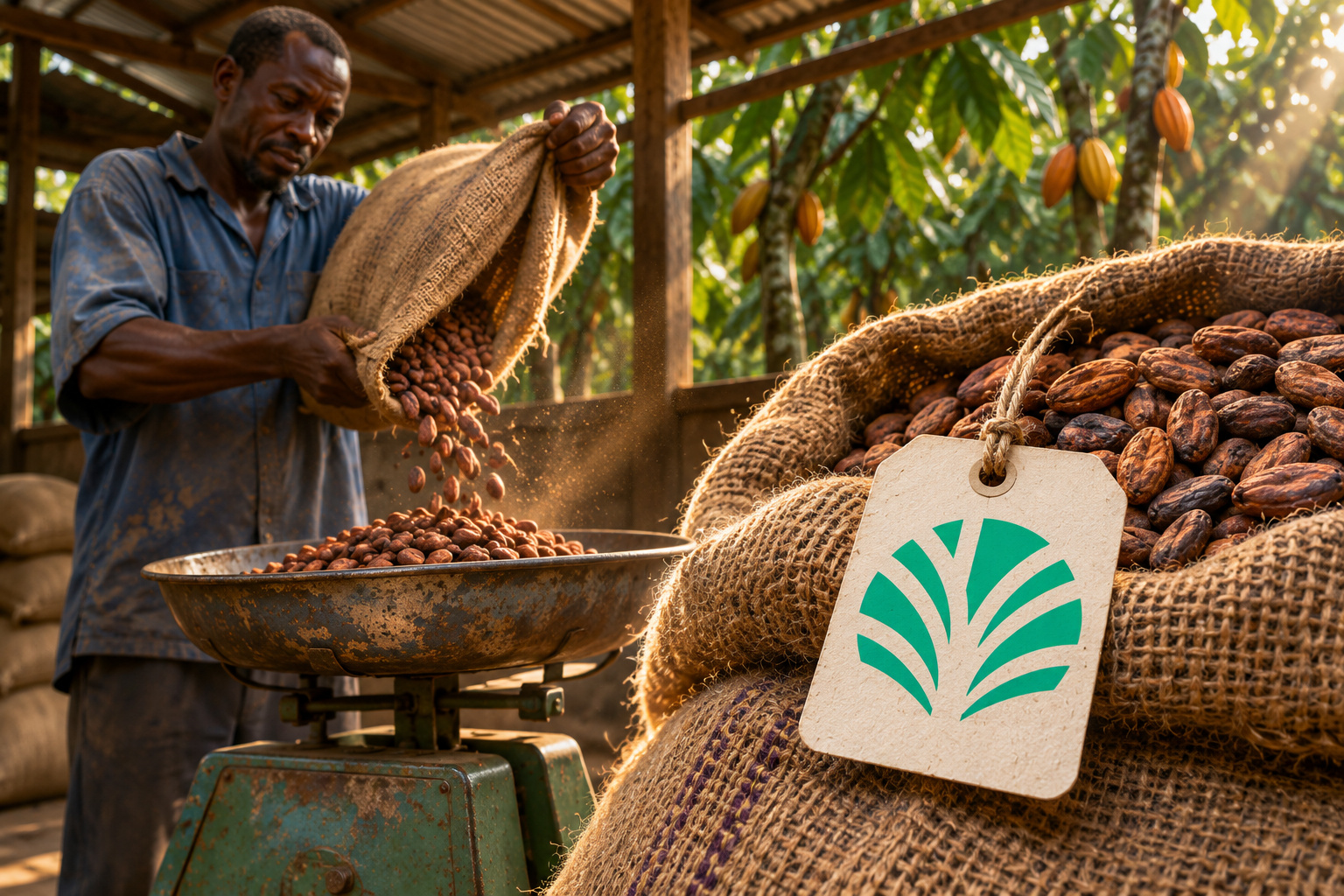
Mangrove, a producer in Boki in Nigeria’s Cross River State, offers cocoa mass through Palmyra for use in chocolate manufacturing. By the time a buyer receives a block, the beans have been fermented, roasted and ground together. Their origins are no longer visible in the product. To trace a batch back to the farms that supplied it, buyers can request Mangrove’s records of its origin, processing and handling.
One of those records begins at the scale. When a grower delivers cocoa to a licensed local buying agent, both confirm the weight and price in Palmyra’s system. The entry links the purchase to the grower and a mapped farm. Even after the beans enter a larger batch, it preserves how much cocoa the farmer delivered and the price both parties accepted.
At the Scale in Boki
In May 2025, Mangrove Agro-Allied and the Boki local government invited Palmyra to meet growers and licensed buyers already trading in the area. Palmyra reports that its field teams registered more than 1,500 smallholder cocoa growers in Nigeria in person. They checked identities, collected production details and recorded GPS coordinates and land use on individual plots.
That work gave the project a count of participating farmers. The volume of cocoa traded comes from their deliveries. In its Project Catalyst proposal, the team set a target of 10,000 cocoa farmers for a second pilot in Cross River. Its longer-term goal of reaching up to 50,000 farmers also includes growers of coffee and oil palm.
How Cardano Keeps Track When Cocoa Lots Are Combined
Two lots can travel in the same shipping container and still arrive in separate bags. Once a processor grinds beans from both lots into a single batch of cocoa mass, the individual beans can no longer be distinguished. Winter Protocol, developed by zenGate, records those two events differently.
An aggregation record identifies lots grouped for storage or transport. A transformation record links the ingredients used in processing to the product made from them. The container record can tell a chocolate maker which bags traveled together. To establish which beans went into a particular block of cocoa mass, the buyer needs the processor’s record linking those lots to the finished batch.
Palmyra Pro gives cooperatives tools to log deliveries, drying, batch creation and transfers between handlers. The platform anchors approved records to Cardano so a processor, buyer or auditor can later check a document against the record approved at the time. The accuracy of the original weight still depends on the scale and the people who witnessed the weighing.
[NEWSBREAK]
Why One Bag Can Affect an Entire Shipment
The EU Deforestation Regulation begins applying to medium and large operators on December 30, 2026. An importer placing cocoa on the EU market for the first time must establish that it was legally produced and that the land where it grew was not deforested after December 31, 2020. If a shipment contains cocoa from several plots, the importer must identify the location of every one.
A cooperative can combine cocoa from several documented farms and retain the link to each plot. But if someone empties a bag of unknown origin into the batch, the other growers’ records can account for only part of its contents. Under the European Commission’s guidance, that mixture cannot be placed on the EU market.
For a buyer considering Mangrove’s cocoa mass, the inquiry starts with the batch on offer. Its listing makes farm-origin records, fermentation and processing logs, and custody documents available on request. Working back from the finished block, the buyer can identify which deliveries supplied the processor. The importer can then check the land-use history of the specific plots that supplied the cocoa in that order.