Petrobras Uses Cardano for Verifiable Training Records as Brazil Program Expands
Petrobras is using an NFC-based Proof of Attendance system that records mandatory training events on Cardano. The implementation is now part of a wider Cardano Foundation push connecting enterprise use, universities and blockchain education across Brazil.
By SongMarketCap
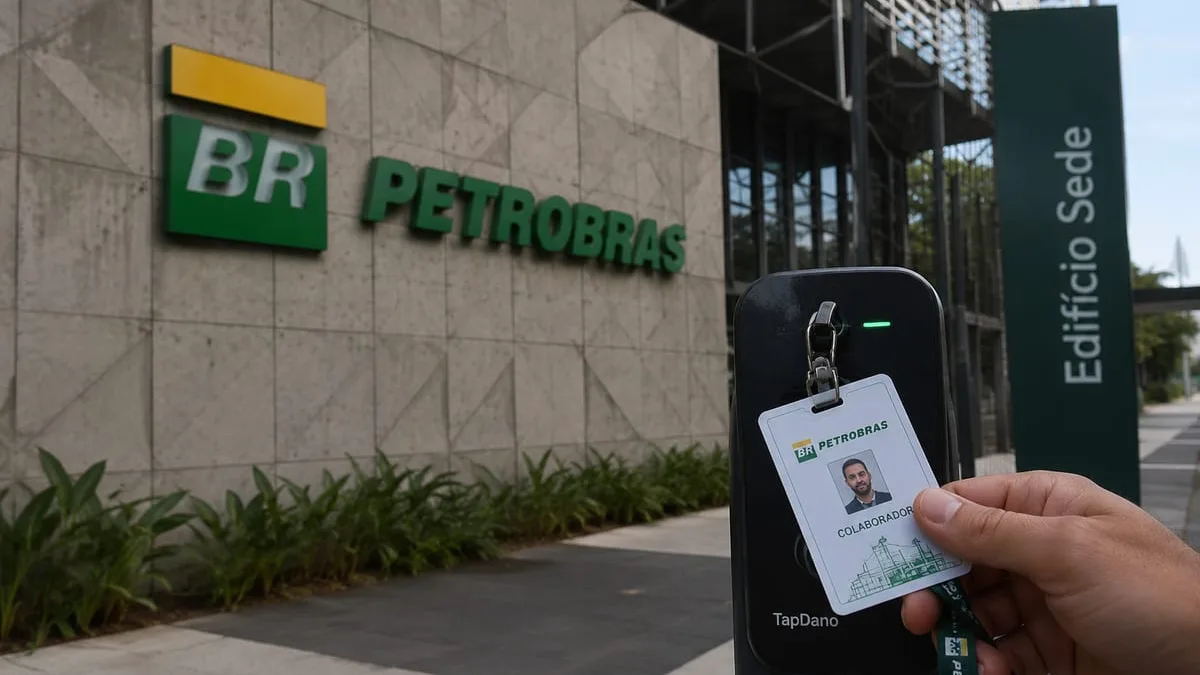
Petrobras is using Cardano to create verifiable records for mandatory employee training, applying the blockchain to a corporate compliance process rather than a financial product. The deployment combines NFC cards, cryptographic signatures and Cardano’s public ledger, while the Cardano Foundation is expanding its institutional work in Brazil through Petrobras, universities and education programs.
Petrobras Records Training Attendance on Cardano
Mandatory training at Petrobras supports areas including safety, operational readiness and regulatory compliance, where reliable attendance records can be required for audits and internal governance.
The Proof of Attendance system links employees to anonymized NFC cards enabled by TapDano. Authorized instructors define valid training sessions, while employees tap their cards when entering and leaving. Each attendance event is cryptographically signed, validated and recorded on Cardano with an immutable timestamp.
Petrobras and approved third parties can independently verify those records without relying on a single intermediary. Employees receive confirmation of recorded attendance, while instructors and Petrobras receive daily summaries.
According to the Cardano Foundation case study, capturing multiple interactions during each session provides up to 400% more verifiable attendance data than manual methods. The Foundation describes the implementation as a validated proof of concept demonstrating Cardano’s feasibility as a low-cost, high-integrity ledger for enterprise operational processes.
Marcelo A. F. Curi, Blockchain Solution Architect at Petrobras, said the public blockchain enabled a new standard of transparency and accountability around Proof of Attendance.
Cardano on the Road Moves From Petrobras to Brasília
The enterprise implementation is now being connected with a broader institutional program in Brazil.
Petrobras headquarters hosted the first stop of Cardano on the Road, a Cardano Foundation initiative bringing industry, academia and government into the same regional program. The Foundation said its blockchain training work with the Petrobras team dates back to 2023.
A week later, the initiative moved to Brasília, where the University of Brasília and PUC-Rio joined the Cardano Summer School in partnership with the UZH Blockchain Center. According to the Foundation, Brazil became the third country in the program after Switzerland and South Africa, with four scholarships planned for Latin American students.
The Brasília connection builds on an existing relationship with the University of Brasília. In May, the Foundation and UnB launched the first Cardano-focused development lab in Latin America, covering blockchain alongside artificial intelligence, IoT, digital identity and potential public-sector applications.
Cardano Builds a Broader Institutional Base in Brazil
Petrobras gives the Foundation a Brazilian enterprise reference built around a defined operational problem: creating attendance records that are independently verifiable, auditable and resistant to alteration.
That work now sits alongside additional institutional programs. In June, the Cardano Foundation entered a multi-year partnership with SENAI São Paulo covering blockchain education, research, industrial proof-of-concept projects and enterprise applications. The program includes training for 130 professionals across SENAI’s research, development and education functions.
The scope of the Petrobras implementation remains specific. The published case study describes a validated Proof of Attendance project, not a company-wide migration of Petrobras systems to Cardano.
What has expanded is the environment around that deployment. Petrobras provides an enterprise compliance use case, UnB and PUC-Rio extend the academic pipeline, and SENAI connects blockchain education with Brazilian industrial R&D. Cardano’s role inside Petrobras is therefore narrow but operational: physical attendance events are converted into cryptographically verifiable records on a public blockchain, providing a concrete reference that the Foundation can now carry into its wider work with Brazilian institutions.