Paris Blockchain Week Opens With a Clear Institutional Message, Cardano Included in a More Regulation-Driven Crypto Agenda
The opening of Paris Blockchain Week 2026 and the keynote from France’s minister for digital affairs made one point clear: Europe wants the next phase of crypto to be defined by regulation, tokenization and institutional credibility, with Cardano named among the event’s key partners.
By SongMarketCap
Updated:
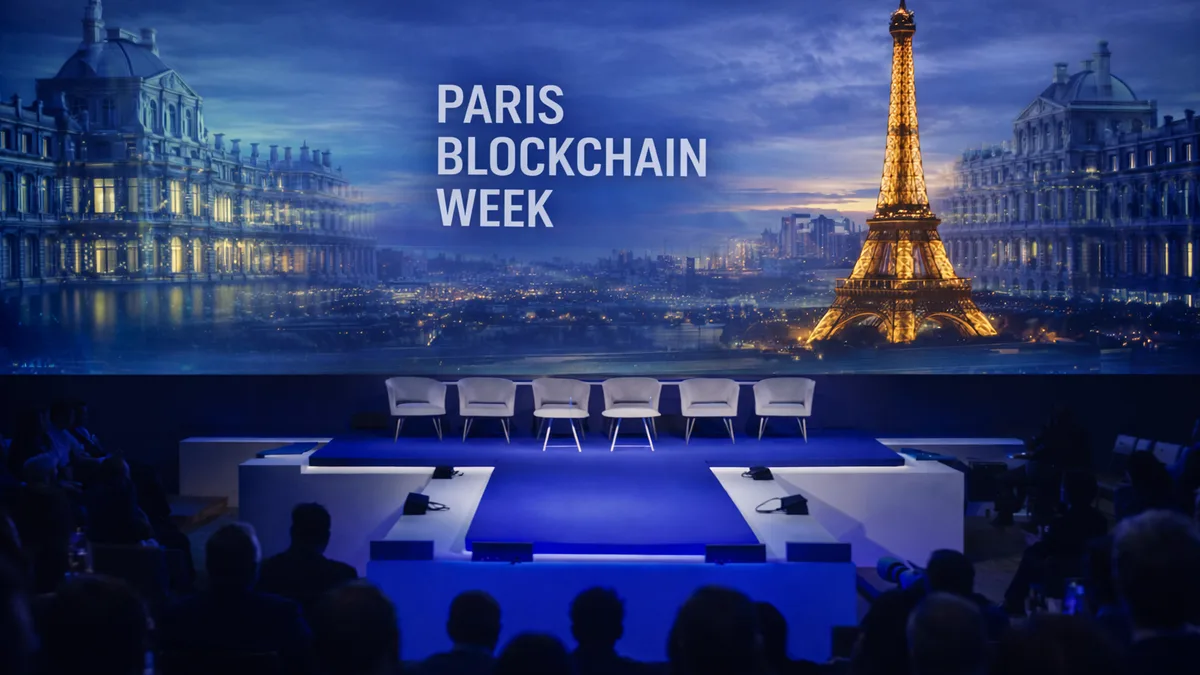
Paris Blockchain Week sets the tone around infrastructure, not hype
Paris Blockchain Week 2026 opened with a message that felt noticeably different from the tone that dominated many crypto conferences in earlier cycles. Organizers framed the event not as another gathering built around noise and speculation, but as a space where digital assets, traditional finance and institutional capital are increasingly starting to overlap. In that opening framing, stablecoins were presented as real payment rails, capital as increasingly programmable, and blockchain as part of a broader financial infrastructure shift already underway.
That matters because opening remarks at major events often reveal what kind of market the industry wants to project to institutions, regulators and large financial players. In Paris, the emphasis was not on memes, short term momentum or retail cycle excitement. It was on financial architecture, regulatory direction and the practical systems that may shape the next stage of adoption.
Within that framing, organizers singled out four partners, Bybit, Cardano, Ripple and OKX. That does not mean Cardano was a substantive topic of the opening block, and it would be inaccurate to claim otherwise. But it does mean Cardano was visibly present at the start of a conference that deliberately positioned itself around institutional relevance rather than crypto spectacle.
France uses the stage to push regulation, tokenization and compliant DeFi
The more substantial policy message came from France’s minister for artificial intelligence and digital affairs, who used the stage to argue that digital assets and tokenization should now be understood as part of the new infrastructure of global finance. Her speech was less about abstract innovation and more about state positioning, regulatory confidence and market design.
She stressed that France was among the early jurisdictions to implement the European crypto framework and presented regulation not as a brake on the sector, but as a mechanism for trust, investor protection and long term expansion. That is an important distinction. In this view, the goal is not to slow the market down, but to make it investable, scalable and usable within a more serious institutional setting.
Her remarks also made clear that Paris wants to position itself as a European hub for compliant decentralized finance and tokenization. The underlying message was that France sees a competitive opening here: if tokenized funds, tokenized debt and regulated digital asset infrastructure are going to become more important in the years ahead, then Paris wants to be one of the places where that buildout happens.

Why Cardano’s presence matters in this setting
For Cardano readers, the key takeaway from this opening block is not that Cardano dominated the discussion. It did not. The more important point is that Cardano was present among the highlighted partners in a conference environment that is now being framed around regulation, tokenization and institutional market development.
That context matters because it shows where the center of gravity is moving. The opening message from Paris Blockchain Week was that the next phase of the industry will be built less around cycle narratives and more around infrastructure that institutions can actually use. For Cardano, being present in that setting is more meaningful than a superficial event mention, because it places the project inside a conversation increasingly shaped by regulatory clarity, financial interoperability and long term market structure.
This does not turn the opening session into a Cardano-specific story. But it does offer a useful signal about the kind of market environment in which Cardano and other major blockchain projects are now trying to compete. The direction presented in Paris was clear: Europe wants the next chapter of crypto to look more regulated, more tokenized and far more institutional than the last one.