Open Food Chain Dey Use Cardano for Food Claims Under New EU Rules
Roundtable wey go happen October 15 with the Cardano Foundation go check how food companies fit back up sustainability claims under EU new consumer protection rules.
By SongMarketCap
Updated:
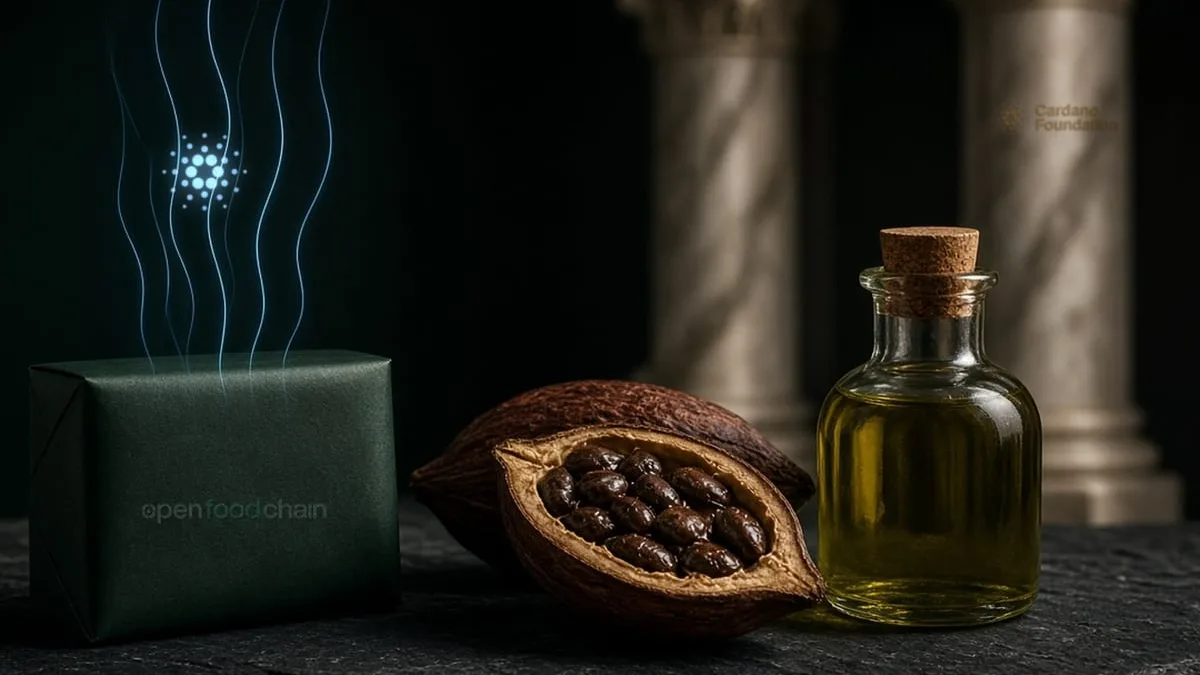
Open Food Chain and the Cardano Foundation go gather people wey dey work for food industry on October 15 to discuss which kind sustainability evidence fit stand well for regulatory check. The closed online session dey follow the September 27 start of the EU Empowering Consumers for the Green Transition rules, wey dem dey call EmpCo. Open Food Chain dey use Cardano to anchor certificates and validated supply chain claims, and dem dey connect am to product passports wey shoppers fit open with QR codes.
EU Green Claims Rules and the Limits of QR Codes
Directive (EU) 2024/825 don strengthen consumer protection across different sectors. E no allow generic environmental claims like “green” or “eco” if the trader no fit show recognized excellent environmental performance wey relate to the claim. E still ban sustainability labels wey no get qualifying certification scheme or public authority support, and claims say product get neutral, reduced or positive greenhouse gas impact wey just base on emissions offsetting.
Under the directive, if person state the claim clearly and make am show well for the same place wey the claim dey, e fit turn the claim to specific instead of generic. The Commission September 22 guidance talk say the explanation suppose dey next to, or even inside, the claim. QR code wey link go evidence no fit on e own replace the explanation wey dem require make e show for the packaging.
But for claims about future environmental performance, QR code fit give access to the implementation plan and the independent expert findings. Existing stock still dey under the rules, and terms wey dem dey use legally under EU organic production law still allowed. EmpCo different from the Green Claims Directive wey dem propose, and that one never pass.
How Open Food Chain Anchors Food Evidence on Cardano
Open Food Chain na Amsterdam-based food traceability platform. Their digital product passports dey link each product and batch to certificates, supplier evidence and origin records, so that shoppers fit follow the supply chain reach the participating farms.
For their September 30 case study, the Cardano Foundation describe how certificates and validated claims, including deforestation-free sourcing, dey anchored for Cardano and dey connect to “view on blockchain” option. The passports dey bring supporting documents inside the same product experience as the claims wey dey the packaging.
The platform dey identify each claim scope, review status and the organization wey responsible. Evidence fit be as customer declare am, fit base on certificate, or third party fit review am. Open Food Chain talk say passport no dey make claim legal on e own; na the brand still hold responsibility.
Brands and shoppers no need to buy or hold ADA. Network transaction fees dey paid in ADA for back of the interface.
October 15 Roundtable on Food Sustainability Evidence
Marieke de Ruyter de Wildt, Open Food Chain founder and CEO, go lead the session wey dem title “From Claim to Proof: What is Possible in Practice.” E go run from 14:00 to 15:00 UTC, wey be the same as 10:00 to 11:00 a.m. ET. Na by invitation only and under the Chatham House Rule.
The event be part of research program with Vrije Universiteit Amsterdam, Kraft Heinz and Interfood, co-funded through TKI Agri & Food. E build on the Foundation earlier case study of the platform, wey Cardano News cover on October 4.
Participants go check which evidence fit hold when regulator request am, wetin farms, auditors and brands fit already verify, and how proof fit be validated once and reused.
Participants go first receive the findings. The discussion go focus on how to connect certificates and supplier records to the exact product claims wey dem support, so that the same evidence fit dey inspected across the supply chain.