OKX and ICE Plan 24/7 Tokenized US Stock Trading
OKXICE go use Uniswap v4 pools for X Layer to trade tokenized stocks against stablecoins. Verified wallets go fit get access through non-transferable credentials, and the securities must preserve the rights wey dey attach to their underlying shares.
By SongMarketCap
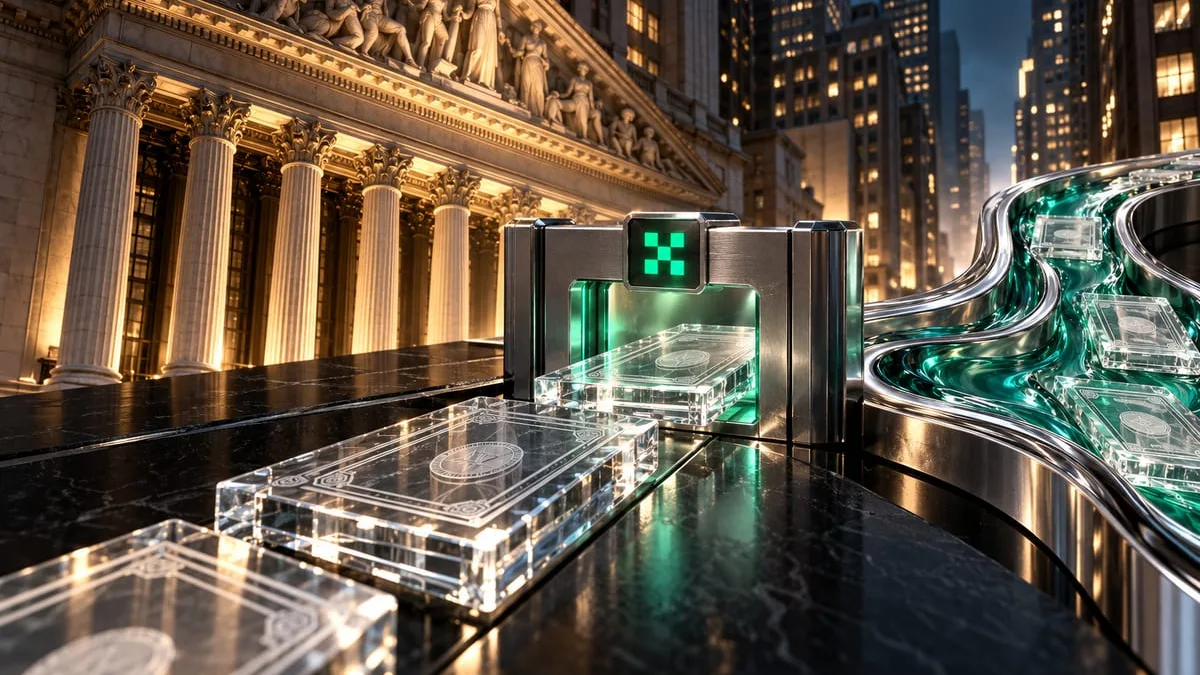
OKXICE, the joint venture wey dey between crypto exchange OKX and Intercontinental Exchange, don notify the US Securities and Exchange Commission on October 4 about plans to start round-the-clock tokenized stock trading.
Their first list cover more than 60 US stock symbols, including Apple, Microsoft and Nvidia. The proposed venue join automated trading with on-chain access controls, one related area of development for Cardano’s CIP-113 programmable token framework.
OKXICE Uses the SEC’s Innovation Exemption
ICE, the owner of the New York Stock Exchange, announce its investment for OKX for March. The companies explain say dem go cooperate for regulated markets, digital asset infrastructure, clearing and risk management, including planned access to tokenized equities.
OKXICE notice follow the SEC September 17 Innovation Exemption. The temporary framework allow qualifying venues to trade tokenized US stocks through permissioned automated market makers and liquidity pools under conditional exemption from the statutory definition of an exchange.
The framework require the same shareholder rights, public and auditable smart contracts, and limits on trading volume and stock symbols. Venues must also honor trading halts for the underlying stock primary exchange. The exemption go run for five years and e still dey under its operating conditions.
Uniswap v4 Pools Require Verified Wallets
Trading go happen through Uniswap v4 liquidity pools wey dem deploy for X Layer.
OKXICE custom smart contract extension, the TSV Hook, go enforce access requirements. The venue go use pools instead of order book and e no go hold participants assets for custody.
Participants go complete identity, anti-money laundering, sanctions and wallet checks. Dem go still need approved account with the tokenization provider. Once dem approve, their wallet go receive non-transferable soulbound token wey go confirm eligibility.
The interface and pool contracts go check that credential before any trading and liquidity action. Dem fit revoke access if participant lose eligibility or come under restrictions.
Each stock go trade against USDC, USDG or USDT. For third-party tokenization, the notice describe underlying shares wey dem hold one-for-one through registered broker-dealer, with token holders entitled to the corresponding shareholder rights.
Cardano CIP-113 and Token Transfer Controls
Cardano CIP-113 give issuers framework to define how programmable tokens fit take mint, burn and transfer. Rules fit require verified recipients, check sanctions restrictions or limit transfers according to asset specific requirements.
The difference na about wetin the transaction dey check. OKXICE pool contracts dey verify whether wallet fit trade or provide liquidity for its venue. With CIP-113, token-specific scripts dey check whether transfer meet the issuer rules. Wallets and applications wey dey handle those tokens must construct transactions wey satisfy the required checks.
The Cardano Foundation don release open-source platform and reference implementations for testing issuance, transfers and application integrations.
Those tools address the token behavior, while securities venue still need arrangements for underlying shares, shareholder rights and market access.
Issuer objections don already affect OKXICE proposed offering. Their notice record formal objection from Cerebras Systems, wey no dey the initial stock list.
Under the SEC framework, venue no fit offer third-party tokenized version of issuer stock if the issuer object. Because of that, Cerebras still remain outside the proposed lineup even though the platform get planned technical support for tokenized equities.