Midnight Unveils Private Finance Framework at TOKEN2049
Fahmi Syed presented Nightmode, Collateral Warehouse, Offer Files, and Midnight Passport as parts of a shared architecture for private onchain finance involving users and AI agents.
By SongMarketCap
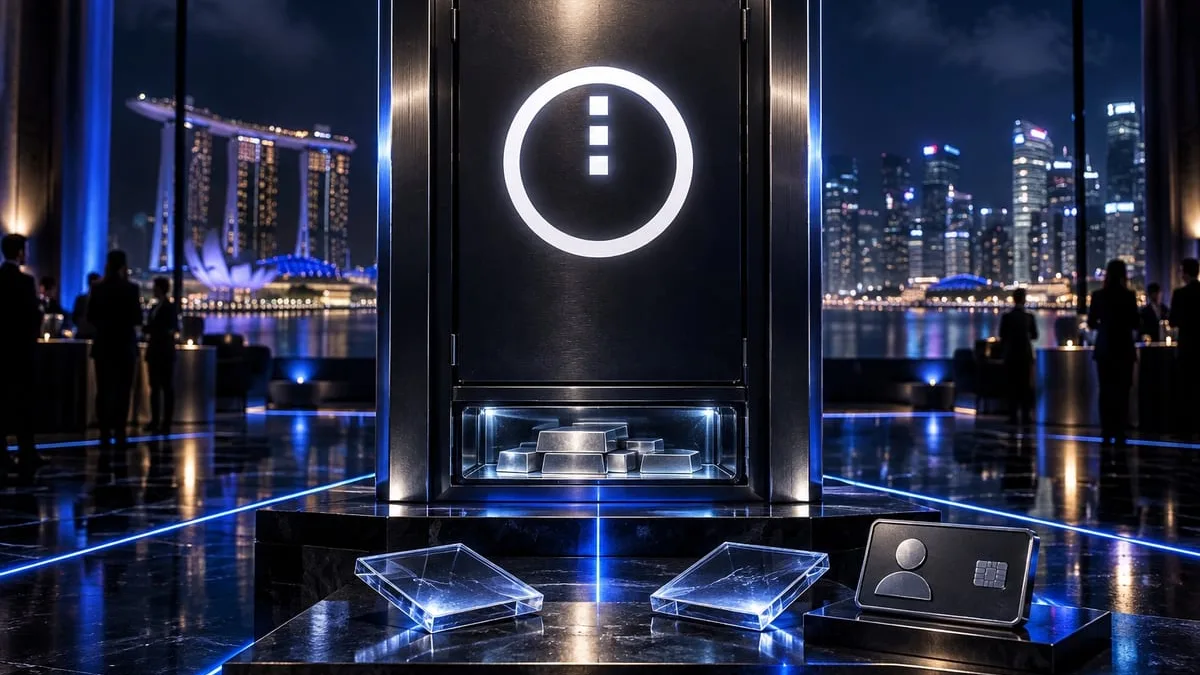
Midnight presented a shared architecture for private onchain finance at TOKEN2049 in Singapore on October 7. Fahmi Syed, president of the Midnight Foundation, outlined four components during his keynote on the Bit Digital Stage at Marina Bay Sands, bringing chain connectivity, asset custody, trading, and identity into the same framework.
Midnight is a blockchain for applications with programmable privacy within the wider Cardano ecosystem. Its technology allows applications to verify specific facts without publicly exposing all the underlying data, supporting financial services that need to protect sensitive information.
Four Components in Midnight’s Private Finance Framework
The presentation carried the headline “Unlocking the future of onchain finance,” alongside the prominent message “Private. Cross-chain. Always on.” The stage slide assigned a specific role to each component.
On the slide, Nightmode connects the chains and Collateral Warehouse holds the assets. Offer Files makes assets tradeable, while Midnight Passport provides identity for users and their agents.
After the keynote, Midnight’s official account repeated the four names and described the network as “The privacy layer for every chain.”
Midnight Passport and Private Asset Custody
The previously documented October Passport demo uses passkeys for account access without a seed phrase. Earlier demonstrations at Consensus Miami also outlined selective disclosure, allowing users to share the identity information needed for a verification while keeping other personal details private.
Collateral Warehouse also appeared in Midnight’s earlier Consensus Miami presentations. Syed described a private vault concept for assets across different blockchains, while the project’s blog connected it with collateral markets such as repos and derivatives. Its stated purpose was to manage collateral without publicly exposing financial positions.
The earlier blog identifies automated pledge-and-release mechanics and margin management as intended uses. Those functions concern how collateral is committed, adjusted, and released as financial obligations change. Midnight’s stated aim is to support that process while allowing participants to keep proprietary positions out of public view.
Offer Files and Identity for AI Agents
In earlier technical documentation, Sebastien Guillemot described Offer Files as cryptographically proven trading offers that can be shared as text.
The recipient can merge that offer with a matching counteroffer without further coordination with its author. Settlement is atomic, meaning both sides of the exchange execute or neither does. The recipient cannot rewrite a proven offer’s terms, and the merged transaction must satisfy Midnight’s balance rules before it can settle. Private offers expose the net terms of the exchange while keeping the owner’s identity and individual input and output amounts hidden.
An offer can be sent through a chat, attached as a file, or hosted behind a web link. Guillemot’s design keeps the creation and distribution of offers offchain, with Midnight used when a matching offer is executed. This avoids recording every unfilled trading intention as a separate blockchain transaction.
His earlier reference design uses Celestia as a data-availability layer for publishing offers, which multiple exchanges and marketplaces can read. Midnight handles settlement. This separates the distribution of trading offers from the application that displays them: different interfaces could surface the same liquidity instead of keeping offers confined to one venue.
A September 29 experiment had already demonstrated agents trading shielded tokens on Midnight’s preproduction network through Offer Files, without a dedicated swap contract or an onchain order book.
The TOKEN2049 slide explicitly included agents in Passport’s identity role. In his subsequent post, Syed identified protecting identity, money, and data as the focus for the future of onchain and agentic finance.