Midnight Monitoring Agent Detects Validator Failure in One Minute
A production monitoring system detected a stopped validator, notified the responsible operators and confirmed its return to service. The demonstration also outlined potential Cardano applications covering governance activity and hard fork coordination.
By SongMarketCap
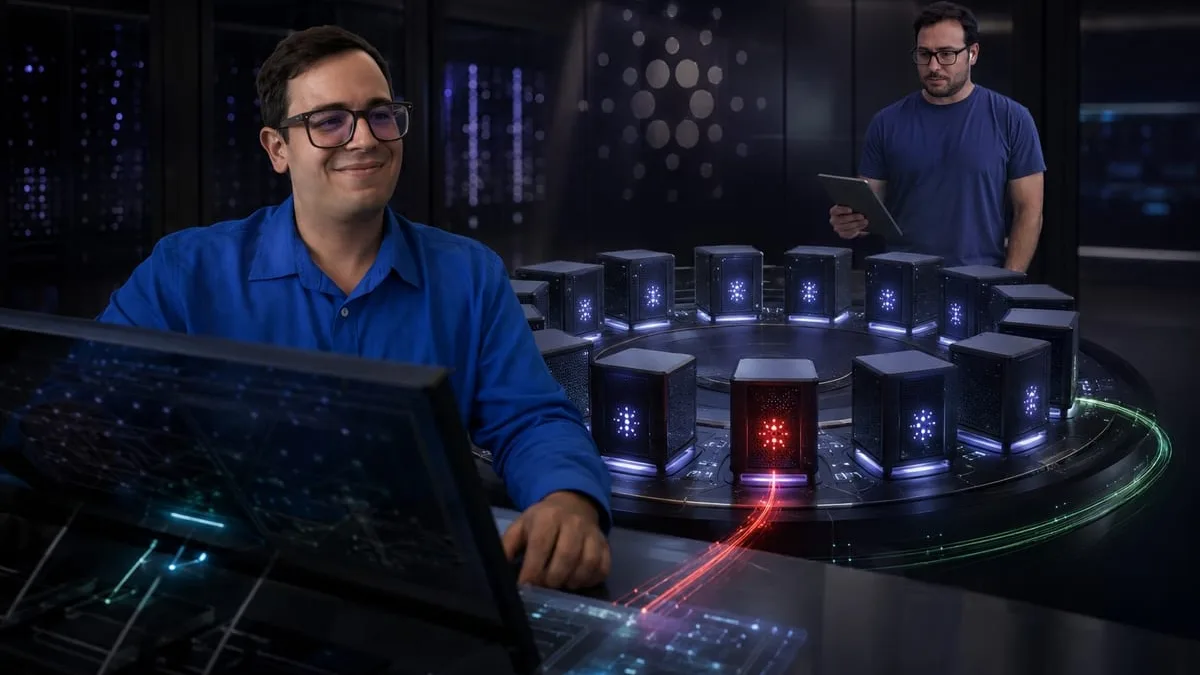
Midnight developer relations representative Stevan Lohja demonstrated the monitoring infrastructure during the September 2 Fireside Dev Hang. After one of 13 validators was deliberately stopped, the agent reported a critical event within approximately one minute and identified how many blocks the node had fallen behind. Its recovery was automatically confirmed during the following minute.
Monitoring Agent Connects Incidents With Operators
Conventional telemetry can identify a failing validator or server, but that information alone does not determine who operates it or who should respond.
The monitoring architecture uses a roster that maps validators to their operators. When predefined conditions are met, it identifies the affected infrastructure, determines the severity of the event, tags the responsible people and attaches the relevant operational procedure.
During the live test, the agent reported that the validator was no longer providing data and classified the event as critical. The notification stated how many blocks the node was behind and referenced the runbook containing the response steps.
Once the validator restarted, a second message marked the incident as resolved. The demonstration produced a mean time to acknowledgement of approximately one minute.
Critical Alerts Do Not Depend on the AI Model
The architecture separates deterministic incident detection from the language model.
Monitoring rules track predefined conditions, including a missing validator, finality problems, chain divergence and an insufficient number of connected peers. Time thresholds prevent ordinary short-lived network changes from immediately generating critical alerts.
Deterministic logic decides whether an event qualifies as an incident, assigns its severity and selects the recipients. Critical notifications can therefore continue operating if the language model becomes unavailable or produces an invalid response.
A small, locally hosted model converts the underlying technical data into a readable message. It explains the event, identifies the affected infrastructure and connects the notification with the appropriate response procedure.
Lohja estimated the demonstrated configuration’s infrastructure cost at approximately $56 per month. The model runs locally on a CPU, avoiding a separate commercial inference charge. Terraform is used to manage the deployment, while public infrastructure templates are planned for a later release.
Potential Cardano Use Cases Cover Governance and Hard Forks
The production deployment currently monitors Midnight validator infrastructure. Cardano applications discussed during the session remain proposed extensions rather than active services.
One use case would involve identifying inactive DReps, retired stake pools and delegations that remain assigned to operators who no longer participate in the network. An agent could connect those records with verified contact information and initiate a status check.
The same approach could monitor governance proposals, deadlines and voting thresholds. It could identify active stake pools that have not voted and notify their operators, subject to reliable contact records and safeguards against contacting the wrong recipients.
Hard fork coordination provides another potential application. An agent could track software adoption, compare activity across old and upgraded chains and identify peers that remain on an earlier version.
Expanding the current deployment to Cardano would require governance data, verified operator records and monitoring rules designed specifically for DReps, stake pools and network upgrades.