Midnight Messenger Tests iPhone and Android Apps
The private messaging project is preparing a closed beta with registration that requires no phone number or crypto wallet. Midnight verifies digital identity while conversations stay off the blockchain.
By SongMarketCap
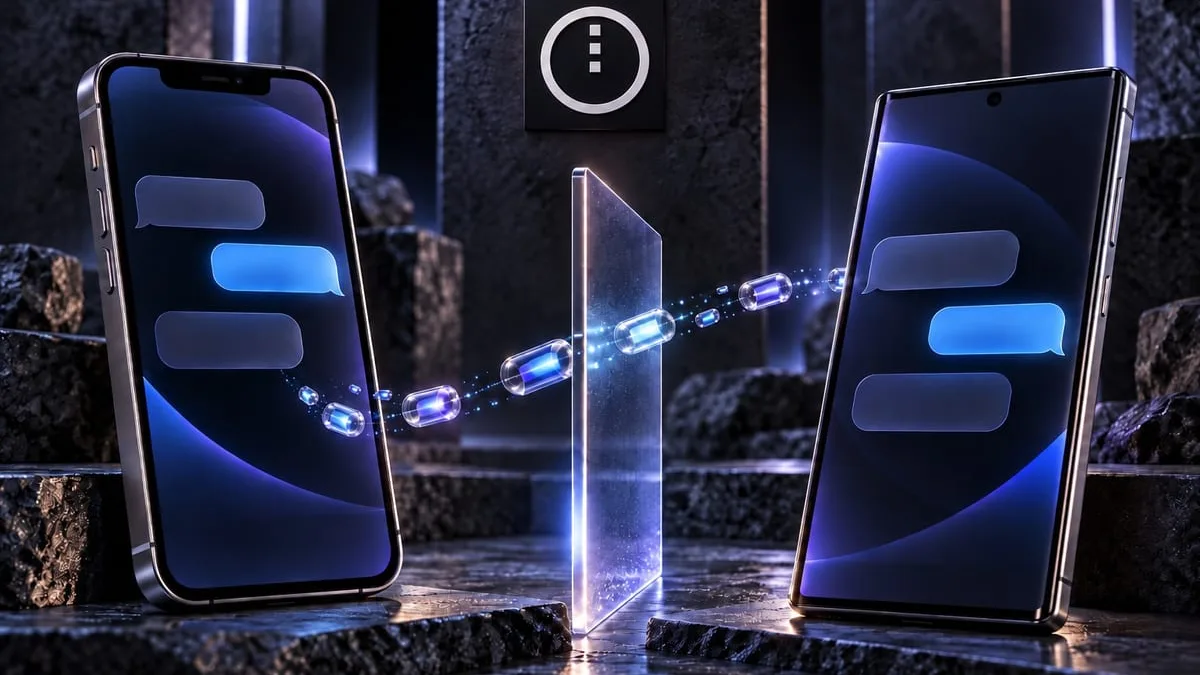
Midnight Messenger is internally testing native iPhone and Android applications, its development team announced on September 29. Alongside a demonstration of two phones exchanging messages, the team outlined new relay authentication and plans for a closed beta with external testers. The application currently uses Midnight’s Preprod test environment.
Signing Up Without a Phone Number or Wallet
Midnight Messenger lets users connect through usernames for private conversations. An independent team develops the application, and its website credits Enigma Stake Pool, linking the project to Cardano’s operator community. In the project’s forum discussion, the Midnight Foundation clarified that it does not own or maintain the application’s code.
According to the product description, the device automatically creates a cryptographic identity. Users then choose a name through which others can find them, without providing a phone number, email address, or wallet connection. The directory stores a cryptographic hash of the username and supports exact-match lookups.
Midnight uses DUST for network fees. During registration, a sponsor supplies the required DUST and submits the prepared transaction, allowing users to join without first acquiring cryptocurrency.
Identity recovery relies on a 24-word phrase. The project describes this as a way to restore an identity on a new phone, while seamless synchronization across multiple active devices remains on the roadmap. The team cannot recover a lost phrase on the user’s behalf.
Midnight Verifies Identity, MLS Protects Conversations
Midnight, a Cardano partner blockchain, verifies that a user controls a registered cryptographic key. This establishes a messaging identity without checking a government ID or real name.
The blockchain holds a cryptographic identity record, its status, and a public key. Messages and contacts are handled separately. The team published two September 20 registrations that Midnight Explorer displays as successful registerIdentity calls on Preprod.
Conversations use Messaging Layer Security, or MLS, a standardized protocol for end-to-end encryption. According to the application’s documentation, messages are encrypted on the device before transmission. Relay servers forward the encrypted content and temporarily hold it when the recipient is offline.
A separate component, the prover, generates the zero-knowledge proof used to establish control of an identity. Producing that proof requires secret inputs. When an external server performs the calculation, it processes those inputs, so this step depends on trust in its operator. The technical paper describes proving either on the device or through a service run by the same operator as the sponsor, with a planned move to fully local proof generation.
Relay Authentication and Independent Operators
The latest version adds authentication to relay connections. The server sends a one-time challenge that the application signs with its identity key, then checks access to the conversation. The team reports that this process requires no separate user accounts on the relay.
A relay can still observe when a particular pair of keys exchanges data. Project documentation states that temporarily stored messages are deleted after collection, while uncollected messages expire after seven days.
No date has been announced for the closed beta. The web version continues to support bug discovery, and a full independent security audit is planned before a public mainnet launch.
The team is also preparing to bring independent relay operators into the network. Its roadmap calls for applications to select servers and switch when one becomes unavailable, extending message delivery beyond infrastructure maintained by the Messenger’s developers.