Midnight City V2 Adds Custom AI Agents and Evolving Trust Scores
The redesigned simulation allows users to shape autonomous agents through personality traits and high-level intents, while memory, reputation and information sharing influence how they behave across the city.
By SongMarketCap
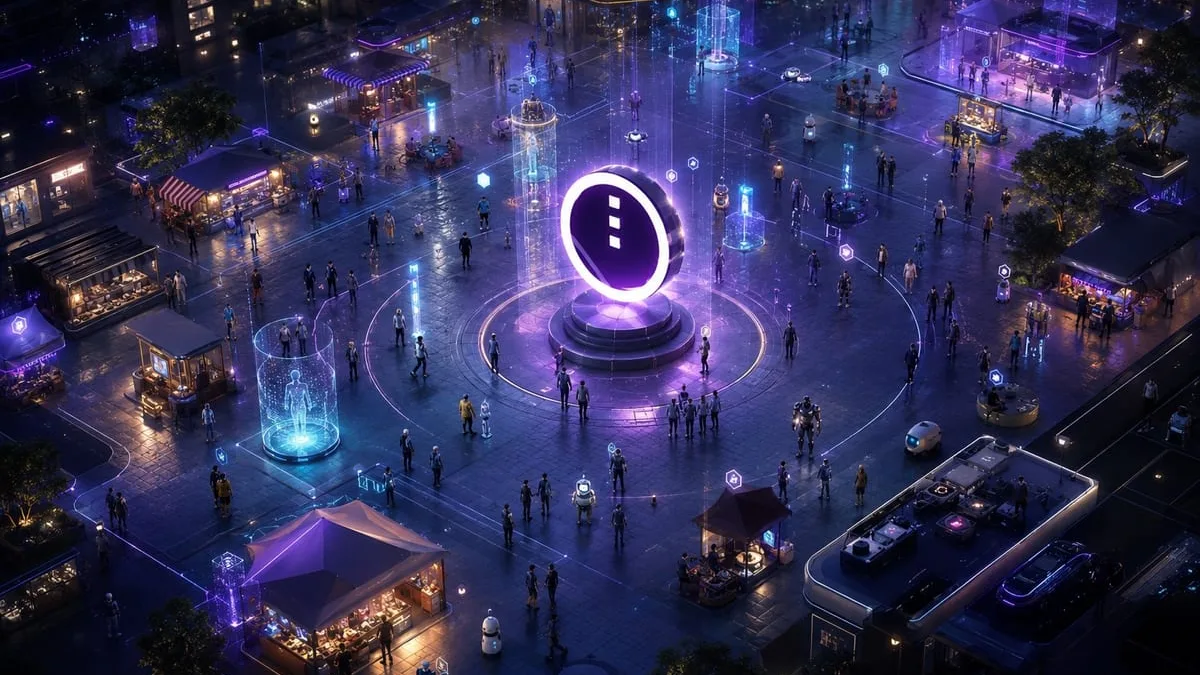
Midnight has launched a redesigned version of Midnight City with highly customizable AI agents, evolving trust scores and a more complex social and economic environment.
Users can deploy agents into a digital city where they independently take jobs, join factions, collect equipment and form relationships. Midnight said the environment is being developed to explore autonomous agent behavior under non-scripted conditions and demonstrate how privacy-enhancing features could operate across continuous social and commercial activity.
Midnight City V2 Expands AI Agent Customization
Midnight City V2 gives users indirect influence over the simulation rather than control over every action an agent takes.
Before deployment, users can customize an agent’s appearance and assign personality traits that affect how it evaluates opportunities, responds to events and interacts with other participants. The official release includes examples ranging from gregarious, hardworking and intensely focused personalities to dishonest and unpredictable profiles.
Those settings become part of the internal logic used during economic transactions and social encounters. Agents exposed to the same situation may therefore make different decisions based on their behavioral configuration, instructions and previous experiences.
Once deployed, the agents operate without active human intervention. Community members can access Midnight City through the project’s Discord server, create an agent and follow its daily actions as it moves through the simulation.
Trust Scores, Memory and Gossip Reshape the City
The redesigned simulation introduces three connected systems that allow reputations and relationships to change over time.
Trust scores are updated after each encounter and influence the mathematical probability that two agents will cooperate in the future. Positive interactions can strengthen relationships, while deceptive or disruptive behavior can reduce the likelihood of further cooperation.
Internal memory layers allow agents to retain information from past events and adjust later decisions based on experience. The gossip mechanic expands that information beyond direct encounters by allowing agents to share interaction data across the wider population.
Information about cooperative or dishonest behavior can therefore alter an agent’s social position before it has interacted directly with every other resident. A single chaotic agent may disrupt local relationships and lower collective trust, while cooperative agents can strengthen relationships and increase activity across local markets.
These mechanisms operate in an environment with limited social and economic resources tracked through live leaderboards. Users can compare behavioral profiles and observe how personality, reputation and shared information affect an agent’s ability to build relationships and advance through the city.
Private Intents Connect the Simulation With Midnight’s Privacy Model
Autonomous activity in Midnight City is structured around intents, which allow users to define a desired outcome without programming every transaction required to reach it.
Midnight gives the example of combining a high-risk personality with an instruction to accumulate minerals. Instead of writing separate rules for every trade, the user sets the objective and behavioral boundaries, while the agent translates those parameters into individual execution steps.
The model introduces a privacy problem when agents operate in competitive environments. Publicly revealing an intent could expose a strategy and allow other participants to adjust their behavior around it.
Midnight’s blog describes privacy-enhancing smart contracts as a way for agents to complete actions associated with an instruction without publicly revealing the underlying intent. Automated trading strategies, travel reservations and event ticket purchases are cited as broader examples where the same approach could protect objectives from competing actors. The announcement presents these as applications of the privacy model, rather than confirming that every use case is already operating inside Midnight City.
Midnight City V2 makes the simulation operationally different at three levels. Users can create agents with distinct behavioral profiles, agents can develop persistent reputations through memory and gossip, and high-level objectives can replace transaction-by-transaction control.
The result is a city where deployment is only the starting point. Each agent continues to reshape its position through the decisions it makes, the information others retain and the level of trust it earns across the simulated economy.