Midnight Build Club Demonstrates Lumera Storage for Privacy Apps
Midnight’s latest developer session presented a model combining zero-knowledge proofs with decentralized storage for encrypted data. The workshop also featured Research Archive, a public prototype for managing private drafts and publishing research papers.
By SongMarketCap
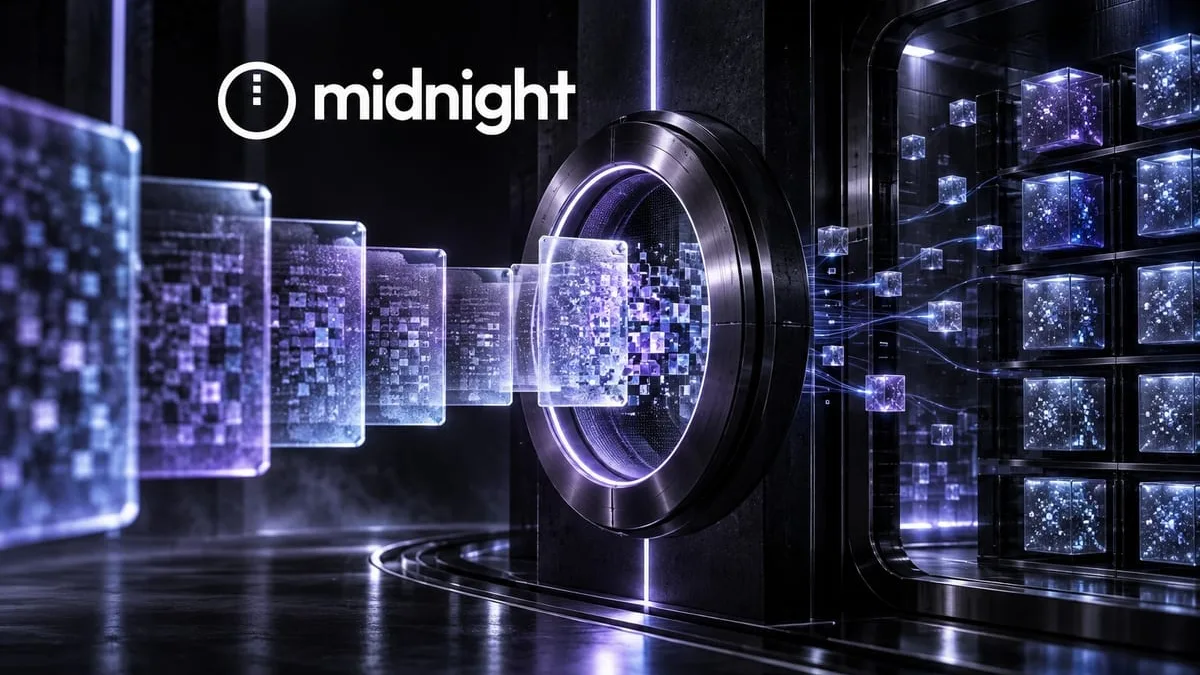
Midnight published a Build Club masterclass focused on Lumera Protocol and its Cascade storage system on September 10. The session demonstrated an architecture in which Midnight manages proofs and selective disclosure while encrypted files are stored outside the Midnight blockchain through Lumera’s SuperNode network.
The workshop followed the partnership announced by Lumera Protocol and the Midnight Foundation on August 5, which introduced Cascade as a storage option for applications in the Midnight ecosystem.
Cascade Connects Private Proofs With Stored Data
Midnight applications can prove a claim without publishing all the information behind it. However, the source document may still need to remain available when a user or application wants to generate another proof.
The model presented during the workshop separates these functions. Midnight can hold a commitment, proof or reference associated with a document, while Cascade stores its encrypted version.
Before upload, the file is hashed so its integrity can be verified later. Cascade then divides the data into fragments and distributes them across Lumera SuperNodes. The network uses redundancy and recovery mechanisms to reconstruct unavailable fragments and redistribute them among active operators.
Cascade is already available on the Lumera mainnet, but it is not built into the Midnight runtime or Compact programming language. Developers access it as a separate service through Lumera’s SDKs and APIs.
Two Storage Models for Midnight Applications
The presentation outlined two approaches for connecting private computation with decentralized storage.
The first, called Storage First, is designed for data that rarely changes, such as diplomas, identity documents or certificates. A file can be encrypted and stored through Cascade, while an application later uses the same document to generate verifiable claims.
The Compute First model applies to information that changes regularly, including credit histories and financial records. An application can store updated encrypted versions and use them to create new proofs as the underlying data changes.
The speakers identified private KYC, healthcare records and DeFi compliance as potential use cases. These were development examples rather than confirmed production products. Encryption key management also remains with the application or user, meaning that a lost key could permanently prevent access to the stored content.
Research Archive Turns the Model Into a Working Prototype
The session included a demonstration of Lumera Research Archive, a publicly accessible prototype for preparing and publishing research papers. Users can connect a wallet, save an encrypted draft, sign its contents and later release it through a public archive.
During the process, the document hash is registered before upload, while Cascade coordinates storage across SuperNodes. A published paper receives an Action ID that can serve as a verifiable reference to the stored material.
Lumera describes Cascade as permanent storage paid for once in LUME.
Continued retention relies on protocol economics, network funding and operators receiving LUME for maintaining data availability.
Research Archive has not been presented as a production Midnight application. Its current role is to demonstrate how a private document, decentralized storage and a blockchain proof can operate as separate but connected layers. The prototype gives Midnight developers a concrete architecture for applications that require continued access to encrypted source data alongside on-chain verification.