Lark Davis Compares Cardano to EOS. Hoskinson Offers to Talk
Davis had previously questioned Cardano’s adoption compared with Solana. His latest post focused on the community’s role in what comes next for the network.
By SongMarketCap
Updated:
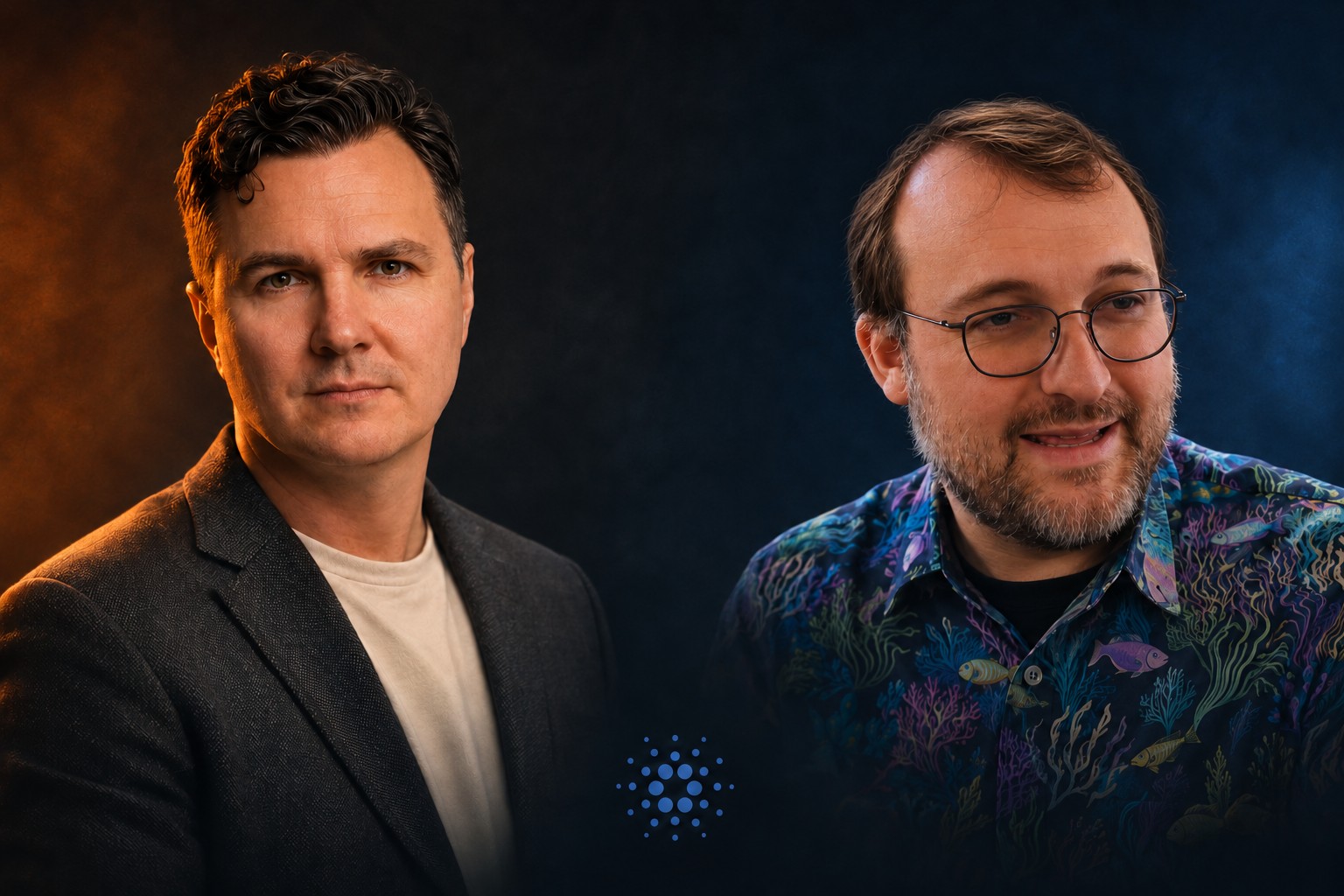
Charles Hoskinson offered to join Lark Davis for a conversation about Cardano and Midnight after Davis wrote on November 27 that Cardano gave him “EOS vibes.” The Cardano co-founder replied directly on X, 42 minutes after Davis posted the comparison.
What Davis Wrote and How Hoskinson Responded
Davis followed the EOS comparison with a line about handing a “completed blockchain” to its community and wishing it luck. He put the line in quotation marks without attributing it to anyone. The post stood on its own and gave no further detail about which similarities with EOS he had in mind.
Hoskinson replied by asking whether Davis wanted him to come on and discuss Cardano and Midnight. His invitation brought Midnight into an exchange that began with a comment about Cardano.
Several days earlier, Davis had questioned how Cardano planned to attract more users, pointing to differences in daily active users and decentralized finance activity compared with Solana. Cardano commentator Crypto Dossier argued that the comparison should account for when developers could begin building DeFi applications on each network. Cardano launched in 2017 and added smart contract support in 2021, giving its developers a later start than the network’s launch date alone would suggest.
What Cardano’s Development Handover Looks Like
Three days before the exchange, Hoskinson outlined how development responsibilities were shifting across the Cardano ecosystem. He put the number of companies working full time on Cardano at more than a dozen and pointed to Daedalus as an example of a product already under independent development. Seven Labs took over the wallet, and Hoskinson credited the team with releasing nearly a dozen updates and cutting synchronization times from days to under an hour.
Hoskinson identified the end of the first quarter of 2027 as the target for the broader handover of core protocol development. He also pointed to work still ahead, including the activation of Ouroboros Leios, a planned upgrade designed to increase the network’s capacity. The handover concerns which teams carry out protocol development, while Leios follows its own development and activation process.
Cardano’s governance system gives the community a role in deciding which work receives treasury funding. Independent teams can submit funding requests, and delegated representatives, known as DReps, vote on those proposals. ADA holders can delegate their voting power to a representative. In practice, an independent team can propose work on the network and seek funding for it through the governance process.
[NEWSBREAK]
How the Community Reacted to the Invitation
Angry Crypto Show described a potential interview as likely to be tense but worth hearing. Lucas, who posts on X as @Lucasdb86, focused on Davis’s remark about leaving the work to the community. He pointed to Cardano’s public development plans and argued that the criticism would carry more weight if teams stopped delivering upgrades.
Intersect’s November 28 development update outlined one of the next decisions on that roadmap. Testing for version 12 of the protocol continued on the Musashi and Dijkstra test networks. On December 1, the Hard Fork Working Group plans to decide whether to submit the sixth draft of CAP-12 for a governance vote on Preview, another Cardano test network. The proposed constitutional amendment would set conditions for changing protocol parameters introduced in the Dijkstra era. The December decision concerns whether to put the proposal forward on Preview.
As of November 28, Davis had yet to respond publicly.