Hoskinson Calls Leios the Final Milestone in Cardano’s Shift Away From IO-Led Development
Charles Hoskinson has linked Leios integration to the final stage of Cardano’s two-year transition away from an Input Output-led development model. He expects third-party development firms, multiple node implementations and decentralized governance institutions to carry a larger share of Cardano’s core infrastructure from 2027.
By SongMarketCap
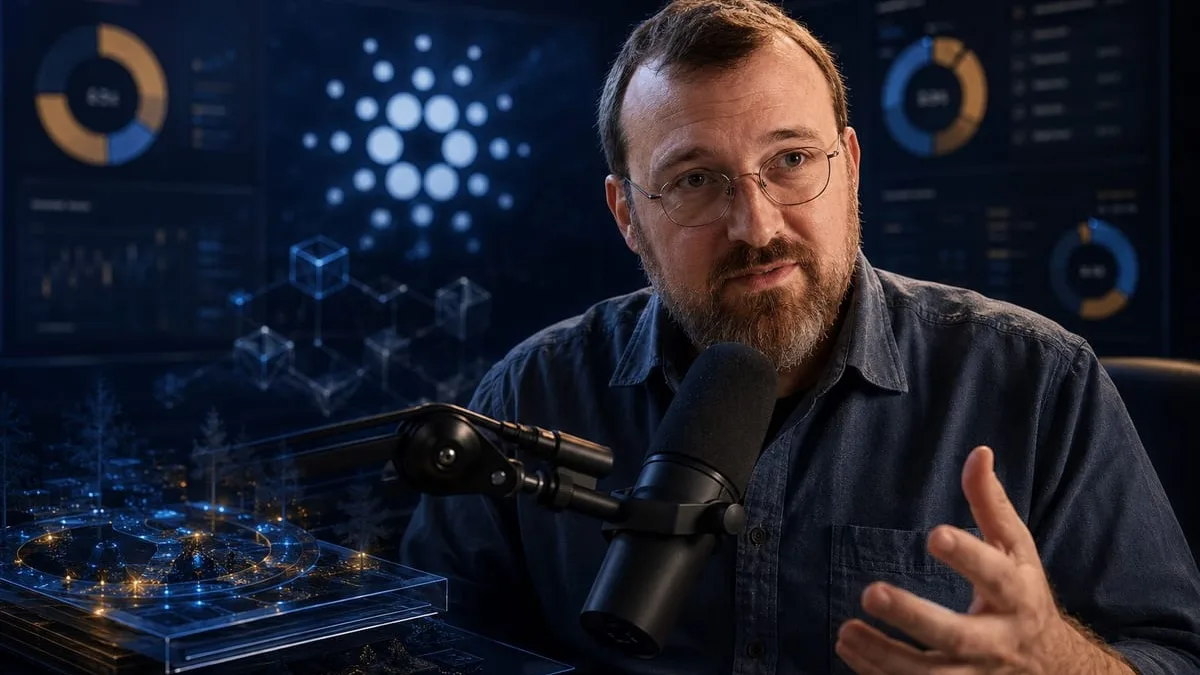
Charles Hoskinson has described getting Leios into the Haskell node as the final milestone in Cardano’s ongoing transition away from IO-led development.
In an August 31 video update, Hoskinson said the process has been underway for roughly two years, with responsibility gradually moving toward Intersect, independent development firms and other organizations across the Cardano ecosystem.
Leios Marks the Final Stage of the Haskell Node Transition
Hoskinson said Input Output has been gradually transitioning developers to third-party firms during 2026, with those firms expected to take over full-time development of the Haskell node next year.
He identified Leios integration as the final milestone in that handoff.
According to Hoskinson, the remaining work involves bringing Leios into the Haskell node, preparing it for Preprod and reaching the point where the upgrade can be activated through a hard fork. He also referenced the Musashi testnet as part of the technical work surrounding that process.
The transition follows Intersect taking a larger role in Cardano’s core infrastructure, including responsibility for repositories and access related to the Haskell node.
Cardano Targets Three Viable Node Implementations
Hoskinson also outlined what he expects Cardano’s development structure to look like by January 1, 2027.
His target includes at least three viable node implementations written in Haskell, Rust and Go, alongside more than ten development firms working across different parts of the Cardano technology stack.
Node diversity has been one of the areas included in Cardano’s broader decentralization effort. Hoskinson said development initiatives over the past two years have focused on independent implementations, funding and separate governance and oversight.
He also pointed to Pragma, a member-based organization involved in Cardano’s open-source infrastructure and node diversity efforts.
His 2027 outlook also includes governance controlled by ADA holders, multiple governance organizations with different mandates, a diverse wallet ecosystem and the continued operation of Cardano’s on-chain treasury.
Governance Still Sits Between Cardano and the Leios Hard Fork
Hoskinson used the same update to call on stake pool operators to vote on the Update Constitutional Committee governance action. At the time of his video, he said the DRep threshold had been reached while SPO approval still needed to cross the required 51% level.
He linked a functioning Constitutional Committee directly to the work required around Leios, including constitutional changes and approval of the eventual hard fork.
Hoskinson also said Cardano’s Voltaire governance system still lacks a sufficiently developed executive function, while legislative and judicial structures are already in place.
His timeline puts the development handoff on a concrete technical milestone: Leios integrated into the Haskell node and ready for activation. If that work is completed as described, the Haskell node enters 2027 with its ongoing development moving to third-party firms rather than remaining primarily inside Input Output.