Charles Hoskinson Prepares December 15 Midnight v3 Reveal as Cardano Shifts Toward Independent Development
The Cardano founder outlined plans for Midnight v3, a new approach to wallet security, and additional privacy technology. He also discussed why Midnight’s commercial adoption matters to Cardano, confirmed an HOSKY integration, and described a major shift in responsibility for Cardano’s core development in 2027.
By SongMarketCap
Updated:
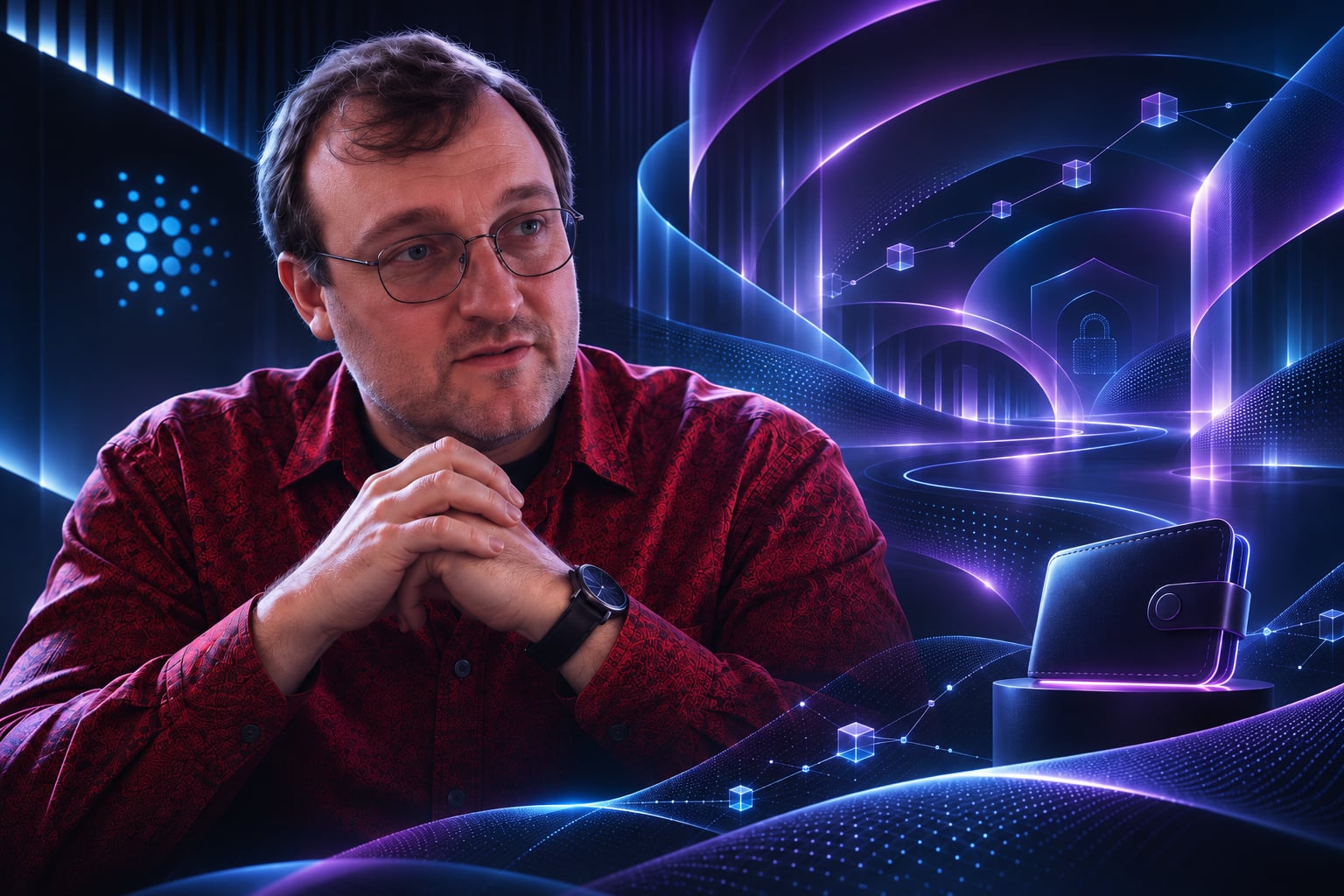
Charles Hoskinson has confirmed that December 15, 2026, will bring a major presentation covering Midnight v3 and new wallet technology, while outlining a broader strategy to make Cardano less dependent on Input Output and more focused on commercial adoption.
During a recent Hangout with Charles X Space, Hoskinson discussed his return to hands-on software development, the growing role of independent engineering teams, and the obstacles he believes continue to prevent cryptocurrency from reaching mainstream users.
The conversation also covered GPU acceleration for Midnight’s zero-knowledge proofs, a new privacy product called Verity, and plans to expand Midnight City through community integrations and AI agents.
Underlying those developments was Hoskinson’s argument that blockchain infrastructure must increasingly be measured by the products and services it supports, rather than technical progress alone.
December 15 Will Bring Midnight v3 and New Wallet Technology
Hoskinson identified December 15 as the next major milestone for Midnight.
He described an upcoming presentation with production standards closer to a major consumer technology launch than his usual unscripted appearances. The event is expected to include several announcements, although he declined to reveal their full technical details during the X Space.
One confirmed subject is Midnight v3.
Hoskinson characterized the upgrade as substantial and indicated that it would be one of several developments presented that day. He did not provide a detailed feature list or establish which capabilities would become publicly available immediately afterward.
The event will also address a new approach to cryptocurrency wallets.
Hoskinson argued that current wallet designs place excessive responsibility on users, particularly through recovery phrases and complicated security procedures. He considers that experience a major obstacle for people unfamiliar with blockchain technology.
After years of working on different wallets, he believes a different model is necessary.
The planned changes build on Midnight Passport, which combines identity-related functionality with access to Midnight applications.
Hoskinson did not disclose the complete design. He indicated, however, that the December presentation would explain how the proposed approach changes wallet interaction and security.
He also connected wallet development to selective disclosure, allowing users to provide specific information to authorized parties without exposing everything associated with their identity or financial activity.
In his view, users should retain control over what they disclose and to whom. That distinction is important for privacy systems intended to serve financial institutions and other organizations with verification requirements.
The presentation is expected to clarify how these principles are implemented in the technologies currently under development.
GPU Acceleration Advances Midnight’s Zero-Knowledge Infrastructure
Hoskinson also described recent work on Midnight’s proving infrastructure.
He identified pull request #667 as his contribution adding NVIDIA CUDA support to the Midnight Prover, while crediting Soonya Noel with work enabling Apple Metal support.
The changes allow graphics processors to accelerate parts of the mathematical computation required to generate zero-knowledge proofs.
These proofs let applications verify that particular conditions have been satisfied without revealing the private information used in the calculation.
Hoskinson reported an approximately fourfold improvement for large circuits with K values above 20. For more typical workloads, he estimated acceleration of approximately 1.5 to two times.
The reported improvements depend on the workload and hardware involved. They do not establish an identical performance increase across all Midnight applications or devices.
The work also remains part of the development process rather than a completed rollout across every wallet and application.
Hoskinson described the implementation as an example of how modern development tools and direct engineering involvement can accelerate progress.
He has returned to writing code, managing products, and working closely with engineering teams after spending previous years primarily overseeing Input Output’s broader organizational activities.
Cardano’s Core Development Is Moving Outside Input Output
One of Hoskinson’s most consequential statements concerned Cardano’s development structure.
He explained that Input Output has been transferring responsibility for parts of the ecosystem to smaller, independent organizations.
According to Hoskinson, approximately 100 employees have moved into companies operating within the broader Cardano development environment.
He expects 2027 to become the first year in which most development of Cardano’s core protocol is performed by engineers outside Input Output.
That would represent a significant change from the network’s earlier development model, in which Input Output was responsible for much of the underlying engineering and delivery.
Hoskinson argued that smaller teams can operate with less administrative overhead and respond more quickly to technical requirements.
He pointed to Daedalus as an example.
After development responsibilities were transferred to 7Lab, Hoskinson reported that the team delivered 12 releases during a period in which Input Output had previously produced two.
The comparison measures release frequency, not the relative complexity or quality of the software delivered. Hoskinson nevertheless presented it as evidence of the potential speed advantages of smaller development teams.
He also addressed the importance of reducing Cardano’s dependence on its founder.
Hoskinson acknowledged that he could design another comprehensive Cardano roadmap, drawing on lessons learned during the network’s development.
But he argued that doing so would reinforce the expectation that Cardano’s direction must continue to come from him.
Instead, he wants the ecosystem to develop the ability to define priorities, maintain infrastructure, and implement upgrades through distributed organizations.
His intended role is increasingly to build new products using that infrastructure rather than personally direct every stage of its evolution.
Why Midnight’s Commercial Success Matters to Cardano
Hoskinson challenged the view that Midnight’s development necessarily creates competition with Cardano.
He presented Midnight as an opportunity to attract users, applications, and businesses that might otherwise have little reason to interact with the Cardano ecosystem.
His argument centers on four capabilities: privacy, AI agents, abstraction, and smart compliance.
Together, these are intended to make blockchain technology useful in applications where confidentiality, regulatory requirements, and straightforward user experiences matter.
Hoskinson emphasized that technical terminology alone does little to attract customers.
A company developing a game, for example, may be interested in identifying genuine users, reducing bot activity, protecting digital assets, or introducing AI functionality without compromising player privacy.
Those problems provide a more concrete starting point for discussing Midnight than explanations of blockchain architecture.
Hoskinson also offered an example involving Sony in Japan.
He claimed that obtaining a listing for Midnight through Sony also required ADA to be listed because of Midnight’s relationship with Cardano.
The statement was part of his argument that Midnight can create additional commercial opportunities for ADA rather than replace it. The X Space did not include the underlying listing documentation or contractual requirements.
More broadly, Hoskinson described Midnight as a practical test of whether the industry can turn years of infrastructure investment into applications capable of attracting substantial demand.
He argued that cryptocurrency still faces three fundamental barriers: many consumers do not understand it, do not trust it, and do not consider it safe.
Improved wallet design, stronger privacy protections, and products that solve recognizable problems are central to his proposed response.
Hoskinson Questions Conference Spending and Cardano’s Adoption Strategy
The commercial discussion extended to how the Cardano ecosystem allocates resources.
Hoskinson criticized the emphasis placed on cryptocurrency conferences where many attendees are already involved in the industry.
He argued that bringing existing participants together does not necessarily create demand from people or businesses that have never used blockchain technology.
Instead, he advocated attending established industry events and demonstrating solutions to problems those industries already recognize.
Game development was one example. Other potential applications could involve identity verification, private financial services, and controlled access to digital information.
His criticism also extended to funding decisions affecting established Cardano projects.
Hoskinson argued that teams with several years of development experience sometimes struggle to secure comparatively modest funding needed to expand their products.
He questioned the value of directing resources toward new initiatives while existing projects remain underfunded.
These comments reflected his broader dissatisfaction with Cardano’s commercialization efforts.
Although he acknowledged the technical work completed across the ecosystem, he argued that successful infrastructure must ultimately support applications that people choose to use.
For Hoskinson, the distinction is between funding activity within the cryptocurrency industry and creating products that bring in customers from outside it.
[NEWSBREAK]
Midnight City Confirms HOSKY Integration and Expands Its Community Strategy
Hoskinson also discussed how Midnight City could support community-driven projects.
He confirmed that an HOSKY integration is underway and indicated that additional integrations are planned.
Through the Midnight Suburb program, he expects the team could eventually support approximately five to ten integrations per quarter, potentially increasing that number as development progresses.
He presented this as an anticipated capacity rather than a confirmed release schedule.
The initiative extends beyond providing a place for community tokens to operate.
Hoskinson described tools intended to preserve the culture, conversations, and shared experiences of online communities.
He noted that communities often develop through X Spaces, group discussions, and informal gatherings, but much of that history disappears when conversations end.
Midnight City is being designed to address that problem through persistent community information and AI agents.
Under the proposed model, agents could learn about different communities, help interested users discover groups aligned with their preferences, and participate in aspects of their ecosystems.
Hoskinson also discussed the possibility of agents engaging directly with token-related activity.
These remain planned capabilities rather than a completed, publicly demonstrated system.
He connected the initiative to what he considers a missed opportunity during Cardano’s earlier development.
The community relied heavily on external platforms, particularly X, without establishing sufficient control over its own gathering spaces.
Hoskinson argued that spam, hostile engagement, and fragmented discussions contributed to the decline of some community activity.
He now wants Midnight City and related initiatives to provide new ways for communities to organize, preserve their identity, and attract participants.
Verity Adds Another Component to Midnight’s Privacy Strategy
Hoskinson introduced Verity as a new product that will receive further attention in December.
The product belongs to the trusted execution component of his broader privacy strategy.
Midnight’s approach involves several technologies with different roles.
Zero-knowledge proofs allow information to be verified without revealing the private inputs used to produce the proof.
Trusted execution environments provide protected computing environments in which sensitive operations can be performed.
Multi-party computation allows participants to jointly calculate results without requiring each participant to reveal all of their underlying information.
Hoskinson identified Midnight’s Kachina technology as part of the zero-knowledge foundation, Verity as the trusted execution component, and an additional unannounced initiative involving multi-party computation.
He described the combination as a foundation for applications that require stronger privacy and controlled verification.
Healthcare was one example.
When asked about Project Galen, Hoskinson explained that the initiative had been deprioritized rather than canceled.
The original work explored how blockchain technology could help manage access to private medical information.
Hoskinson stressed that complete medical records should not be placed directly on a blockchain. Instead, identity systems and access controls could govern who is authorized to retrieve or verify specific information.
He explained that financial applications currently have higher priority because they offer a more immediate route to usage and capital entering the ecosystem.
He cited Monument Bank as an example and claimed that its relationship with Midnight had contributed to the network holding approximately five times Cardano’s total value locked.
That comparison was Hoskinson’s statement during the X Space. He did not provide a breakdown establishing that the figures represented directly comparable measures of on-chain DeFi liquidity.
He indicated that healthcare applications could receive renewed attention in 2027 or 2028, after further development of the underlying privacy infrastructure.
Hoskinson did not announce a launch date for Verity or Project Galen.
AI, Private NFTs and the Return to Direct Community Development
Hoskinson described artificial intelligence as an important factor in his renewed involvement in software engineering.
He attributed part of his increased productivity to AI-assisted development tools and reported completing more than 11,000 code commits during 2026.
He presented that figure as a reflection of his own development activity, although the conversation did not establish how those commits were distributed across repositories or projects.
The discussion also included potential applications of Midnight technology to NFTs.
Hoskinson described a model in which NFTs could contain both publicly accessible and private information.
Private ownership records could be transferred between owners without automatically exposing their complete history.
He also discussed verifiable provenance, identity-related features, and mechanisms for compensating creators when NFTs change ownership.
Those ideas remain exploratory. No completed standard or release date was announced.
Alongside the technical work, Hoskinson wants to increase direct interaction with the community.
He described participating in Nightforce sessions, including a recent gathering with approximately 135 participants, and discussed rebuilding more informal community conversations.
He acknowledged that Cardano had lost some of the social momentum present during earlier periods of its development.
His intended approach combines direct participation, new community infrastructure, and a greater emphasis on products that users can experience rather than technical announcements alone.
The Next Milestones for Cardano and Midnight
Hoskinson’s plans place two developments on different timelines.
The first is the December 15 presentation, which is expected to reveal further details about Midnight v3, the proposed wallet experience, and privacy technologies under development.
The second extends through 2027, when he expects independent engineering teams to take on most of Cardano’s core protocol development while Midnight expands its commercial applications and community integrations.
These objectives are connected by a shift in Hoskinson’s role.
He wants Cardano’s infrastructure to progress through a broader group of developers while concentrating his own efforts on products intended to attract users beyond the existing cryptocurrency industry.
Several specific details remain undisclosed, particularly the technical scope of Midnight v3, the architecture of the new wallet approach, and the timetable for bringing Verity into production.
December 15 is therefore the next concrete point at which Hoskinson’s announced product direction can be compared with the technology he is prepared to demonstrate.