Cardano’s TOKEN2049 Hackathon Targets AI Agent Payments
Developers have 36 hours to build applications that pay for services through x402. The Cardano track offers $27,500 across three winning projects.
By SongMarketCap
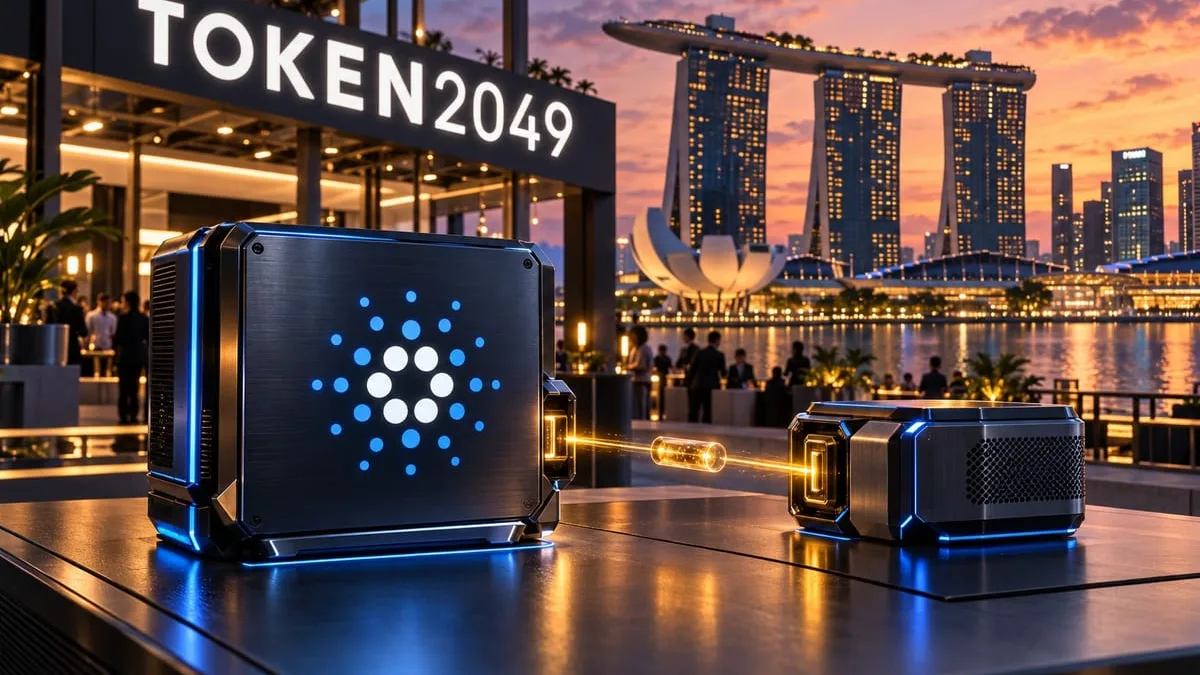
Cardano Foundation’s track at TOKEN2049 Origins focuses on applications that let AI agents purchase online services through x402. The hackathon runs October 6 through 8 at Marina Bay Sands in Singapore, with teams building prototypes for paid APIs, digital content, and transactions between agents.
Cardano Offers $27,500 for Agent Commerce
Participants can build agents that purchase services autonomously, applications that charge for individual requests, or payment flows between agents. An agent buying a dataset for a task is one possible use: it requests the data, handles the payment, and receives the resource through a web interface.
The Foundation allocated $27,500 across three Cardano track winners. TOKEN2049 lists 200 participants and a $150,000 prize pool for Origins as a whole, covering Cardano and the other technology tracks.
Teams can have up to four members and must attend in person. Project work must begin after the official hacking period starts. The organizer schedules demonstrations on the TOKEN2049 stage, while the Foundation’s event website places winner announcements during the conference.
How x402 Connects Services With Cardano Payments
x402 is an open payment standard that uses HTTP’s 402 Payment Required status to return a machine-readable price for a resource. On Cardano, the client builds and signs a complete transaction, then repeats its request with the signed payment attached.
A facilitator checks the transaction, submits it to the blockchain, and observes settlement. When settlement succeeds, the server returns the resource and a payment receipt. The Foundation’s reference demo includes a transaction hash in that receipt, linking the request to its blockchain payment.
The payer authorizes the complete transaction, including its fee. The facilitator holds no signing keys or funds and cannot change the signed payment.
The reference demo documents a message request costing 2 test ADA and a separate route costing 0.10 test USDM. Token payments still need ADA for network fees and the minimum value required in a transaction output.
Building Cardano Agent Payment Prototypes
The track’s builder guide restricts testing to Preprod, Cardano’s public test network, and fixes x402 packages at version 2.26.0 throughout the event. The developer portal lists a Foundation-hosted facilitator and provides templates for both software agents and applications using browser wallets.
Submissions require a working Cardano prototype, an open-source repository with documentation, a demonstration video of up to three minutes, and a short description of the problem, technical approach, and possible deployment or scaling.
Builders can also use Masumi, a Cardano protocol that adds agent identity, service discovery, and escrow. Escrow lets a service receive payment under agreed job terms, with funds locked pending the contract’s release conditions.
In a Masumi payment, the x402 request completes when funds enter escrow.
Delivery of the job result, refunds, and disputes then follow Masumi’s separate lifecycle, extending the payment flow to services whose work continues after the initial request.