Cardano Turns the Post-Quantum Debate Into a Governance Test Bitcoin May Struggle to Pass
In a new IO strategy discussion, Charles Hoskinson argued that the real post-quantum challenge is not only cryptography. It is whether a blockchain can make, legitimize, and execute a painful system-level decision before the risk becomes operational.
By SongMarketCap
Updated:
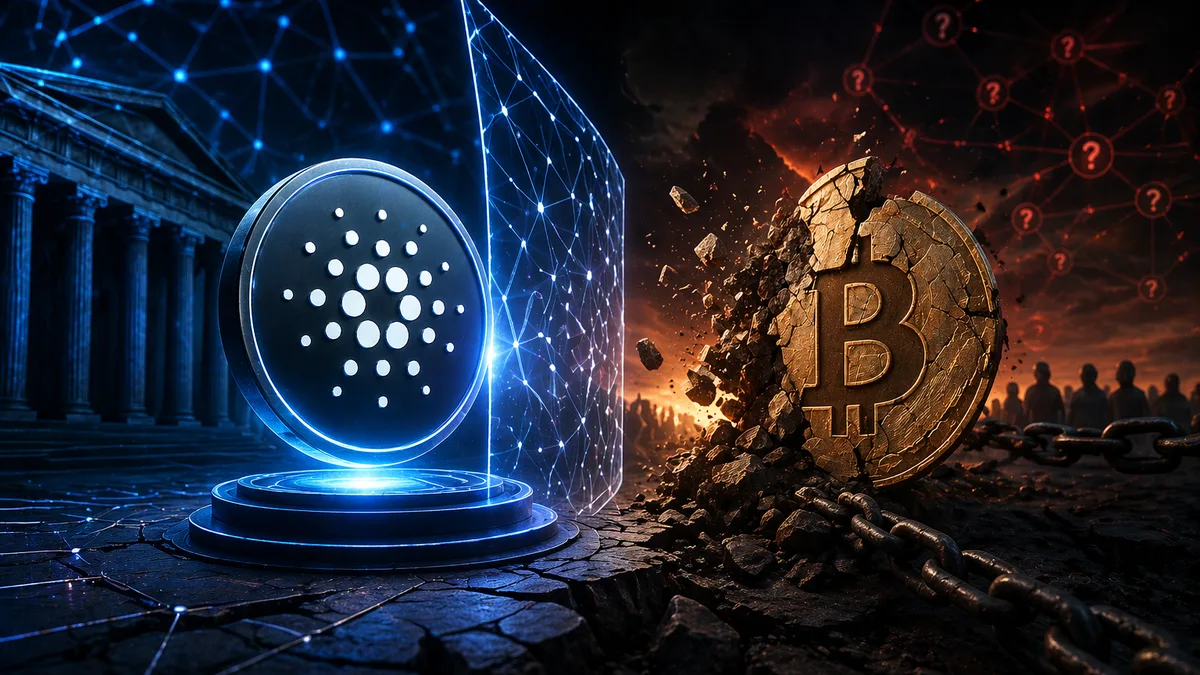
Cardano Says Post-Quantum Security Is Also a Governance Problem
Charles Hoskinson used the latest IO strategy discussion to make a broader point than a routine protocol update. His argument was that the post-quantum era will not test blockchains only at the cryptographic level. It will also test whether they have a credible way to make hard decisions when a security threat stops being theoretical and starts demanding action. In that framing, Cardano is trying to position on-chain governance as part of the network’s security architecture, not as an optional political layer around it.
That is what gives this story real weight. A blockchain can know a threat is coming and still fail to respond cleanly if it lacks a system for debate, coordination, and execution. Cardano’s pitch here is straightforward: governance matters most when the network has to choose between bad options, move capital, change rules, and carry the legitimacy of that decision across the ecosystem.
This is a sharper and more useful Cardano argument than the usual claims about academic rigor or careful engineering. Those things matter, but they do not answer the harder question of who decides what happens when the protocol has to change under pressure. That is the question Cardano is now trying to own.
Why Bitcoin’s Post-Quantum Risk Could Become a Coordination Crisis
Hoskinson’s comparison with Bitcoin is where the argument gets more interesting. He described a problem that is easy to understand even without getting lost in the cryptography. If post-quantum migration becomes necessary, Bitcoin may not only need new technical rules. It may also need agreement on what happens to vulnerable coins, dormant wallets, lost holdings, and any part of the supply that cannot realistically move on command.
That is not just a software update. That is a governance event, whether Bitcoin wants to call it that or not.
Hoskinson outlined the basic dilemma. Add a post-quantum signature path without forcing migration, and some old or inactive holdings may remain exposed. Push toward a stronger migration model, and the network has to answer who gets to impose it, how consent is established, and how the change is legitimized. For a chain that still depends on informal coordination, social pressure, and rough consensus, that could become a drawn-out conflict rather than a clean upgrade.
That does not mean Cardano has already solved the post-quantum problem in production. It has not. But it does mean Cardano is trying to frame the next phase of blockchain competition around something more serious than speed claims or tribal branding. The claim is that a network with built-in governance has a better chance of surviving a difficult protocol transition than a network that has to improvise legitimacy in real time.
Cardano Wants Governance to Look Like Execution Capacity
This is why the theme matters now. It appeared inside a wider IO strategy built around infrastructure, Bitcoin DeFi, off-chain decentralization, and new sources of network activity. In that broader context, post-quantum resilience is not being presented as a standalone research badge. It is being folded into a larger argument that Cardano wants to combine security, coordination, and market utility in one operating model. In the same discussion, IO connected future growth to Bitcoin DeFi flows involving stablecoins such as $USDM and $USDX, showing that the governance narrative is being built alongside a practical adoption and liquidity narrative.
That is the real editorial takeaway. Cardano is not saying that quantum risk is tomorrow’s market crisis, and it is not saying Bitcoin is finished. It is saying something more strategically aggressive: when the industry reaches the point where major chains must execute uncomfortable security migrations, the winners may be the ones that can make binding decisions without tearing themselves apart.
If that argument lands, Cardano’s governance model stops being an abstract philosophical distinction. It becomes a measure of whether the network can actually move when the cost of delay gets too high.