Cardano On-Chain Data Goes Live on Token Terminal With Institutional Analytics Dashboard
IOG and Token Terminal have launched a data partnership that brings Cardano into a standardized analytics framework with 40 tracked metrics, treasury data, active addresses and API access.
By SongMarketCap
Updated:
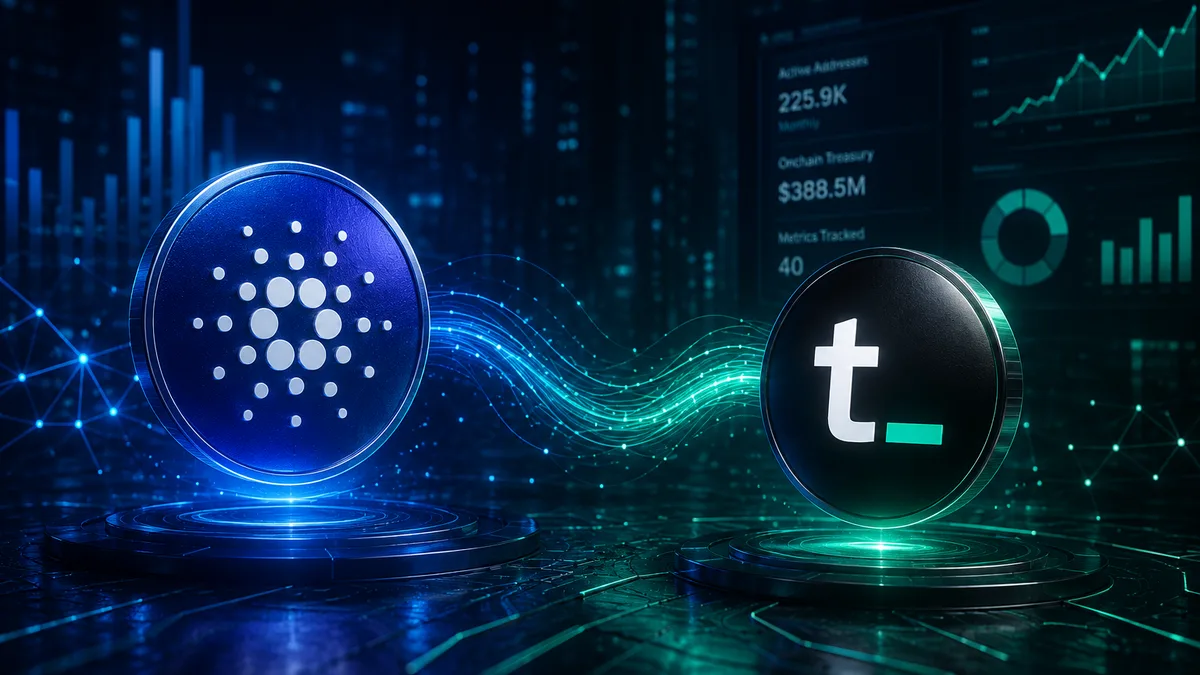
Cardano on-chain data is now live on Token Terminal through a new data partnership between IOG and the institutional analytics platform. The integration gives Cardano a dedicated analytics dashboard with standardized network and financial metrics, API access and daily tracking of key indicators, including the on-chain treasury balance. For the Cardano ecosystem, the move improves how builders, stakeholders, analysts and institutional users can evaluate real network activity.
Cardano Token Terminal Dashboard Tracks 40 Metrics
IOG said the partnership with Token Terminal is designed to bring rigorous, institutional-grade Cardano data to the people who need it most, including builders, stakeholders and users closely following the ecosystem’s development. Token Terminal also confirmed the data partnership with Cardano and said full on-chain data is now live on its platform.
The new Cardano dashboard presents network and financial data in a standardized format. According to the figures shown in IOG’s announcement, Token Terminal now tracks 40 Cardano metrics. The highlighted data includes a $388.5 million on-chain treasury, an $8.77 billion circulating market cap and 4.46 million token holders. Token Terminal’s own announcement also showed 225.9 thousand monthly active addresses for Cardano.
This places Cardano inside a broader analytics framework used to track L1 blockchains, applications and market sectors. Users can now review Cardano through categories such as network activity, financial metrics, tokenized assets, app ecosystem data and datasets.
Token Terminal Makes Cardano Data More Comparable
Token Terminal is built around standardized reporting for blockchain networks, applications and on-chain economies. In practice, that means data from different chains is processed through a common analytics structure, making it easier to compare Cardano with other L1 networks. For researchers and investors, this reduces reliance on isolated community dashboards and manually collected data.
Cardano has long had strong internal infrastructure, research depth and governance activity, but its external analytics visibility has not always matched the size and complexity of the ecosystem. The Token Terminal integration helps close that gap by placing Cardano metrics inside a platform used by analysts, developers and institutional users outside the Cardano community.
Token Terminal also described Cardano as one of the most researched blockchain networks, pointing to more than 190 peer-reviewed papers and a live L1 securing a growing on-chain economy. The platform connected the current data integration with Cardano’s broader roadmap, including Leios, post-quantum cryptography and fast finality as important technical directions for the network.
On-Chain Data Gains Importance for Governance, DeFi and RWA
The integration arrives as Cardano is moving through more active governance decisions, treasury discussions and growing attention around DeFi, stablecoins and tokenized assets. Standardized data can become useful for DReps, delegators and stakeholders because it gives them another public source for tracking network activity, user metrics, treasury data and market indicators.
For developers, the Token Terminal dashboard adds another visibility channel.
Projects building on Cardano can benefit when application activity is presented within a wider ecosystem context. For analysts and investors, API access and datasets create more room for deeper comparisons between Cardano and other networks, especially across stablecoins, tokenized assets and RWA-related activity.
The operational change is clear. Cardano now has a public institutional data layer that extends beyond internal tools and community interpretation. Token Terminal gives the network a place where treasury data, active addresses, holders, market value and other metrics can be tracked through the same framework used across the broader blockchain market. In an ecosystem where governance decisions, DeFi growth and RWA narratives increasingly depend on measurable data, Cardano now has another channel through which its activity can be followed, compared and understood.