Cardano Foundation Backs IBC Move to LF Decentralized Trust
Datachain and OpenZeppelin will join Cosmos Labs as maintainers of the interoperability protocol. Cardano’s implementation remains in preproduction.
By SongMarketCap
Updated:
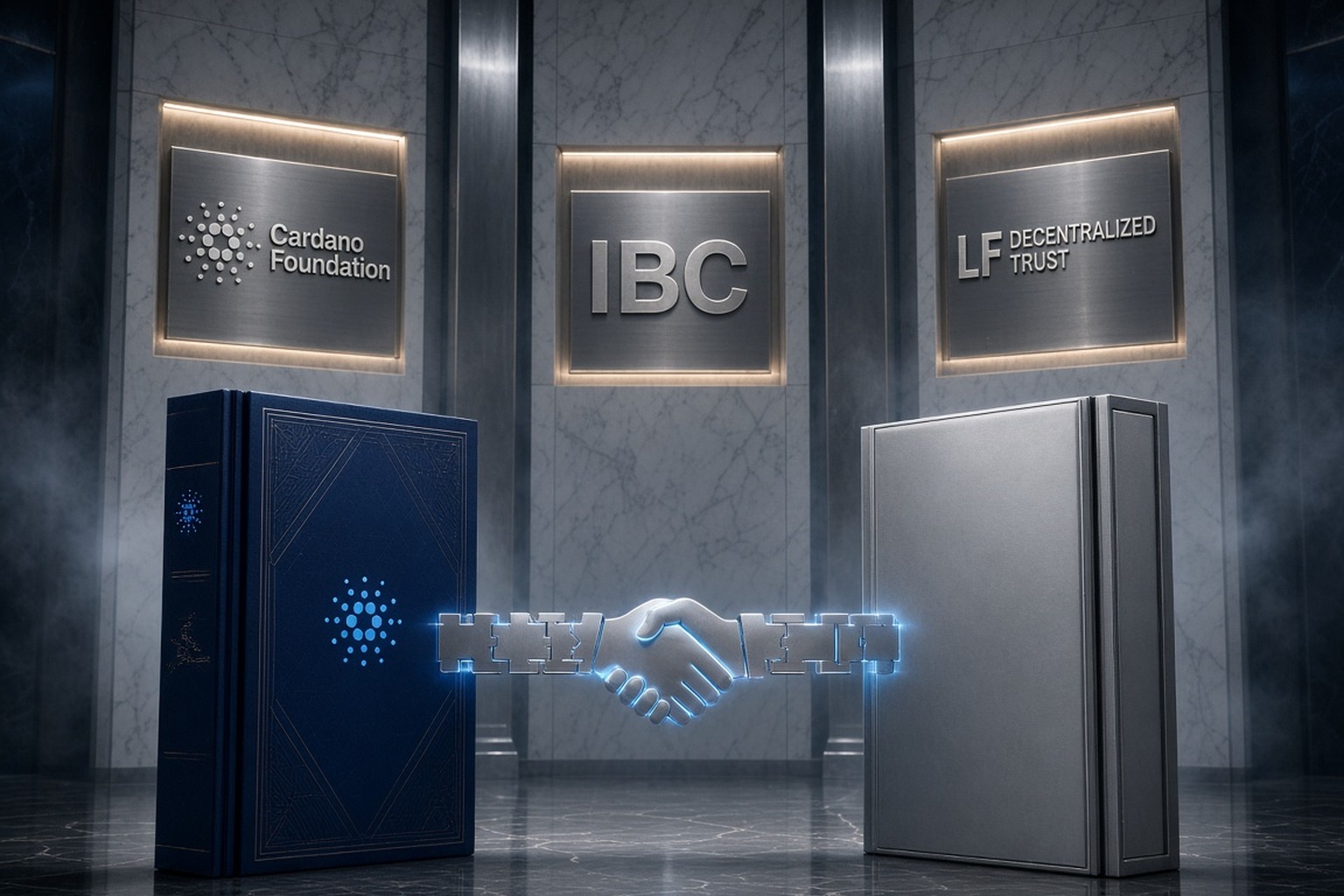
The Cardano Foundation has backed the transfer of the Inter-Blockchain Communication protocol, or IBC, to LF Decentralized Trust, the Linux Foundation’s organization for decentralized technologies. Cosmos and the Interchain Foundation announced the move on November 9. The Cardano Foundation is developing its own implementation of the protocol to connect Cardano with chains in the Cosmos ecosystem.
IBC Gains Two Maintainers
IBC will operate as an open-source project under LF Decentralized Trust, with a public charter and rules for contributors. Cosmos Labs will continue maintaining the protocol alongside two new code maintainers, Datachain and OpenZeppelin.
Google Cloud and individuals from organizations including the Cardano Foundation, Wells Fargo, and Figure Markets supported the move. Individuals from Wells Fargo and Figure Markets also helped sponsor the formation of the project under LF Decentralized Trust.
How Cardano Is Implementing IBC
IBC defines how independent blockchains exchange messages, including instructions to transfer tokens. A relayer carries those messages between chains. A light client lets the receiving chain verify proofs about the sending chain’s state without running a full node for that chain.
The Cardano Foundation’s IBC incubator implements the protocol’s first version for Cardano, including its standard for transferring fungible tokens. The project uses an experimental light client because Cardano does not currently provide the proofs IBC expects to establish that an individual unspent transaction output is part of the ledger state.
[NEWSBREAK]
Public Network Integrations Remain in Preproduction
The experimental client applies confirmation thresholds before accepting a commitment to Cardano’s state. The incubator documentation specifies at least 24 blocks built after the block carrying that commitment. At least five qualifying stake pools must produce blocks in that window, and those pools must collectively represent at least 5.11% of stake.
The Foundation’s repository lists the local development network and core IBC functions as active. It classifies public network integrations as preproduction, with selected routes available for public testnets. The repository also provides a local demo for transferring fungible tokens across chains.