Cardano Content Creator Consortium Seeks Treasury Funding for 850 Videos and Ecosystem Media Coverage
C4, a group of six long standing Cardano creators, is asking the treasury to fund a one year media program focused on education, short form video, project coverage, reporting and narrative response. The proposal turns Cardano’s creator economy into a governance question, whether decentralized funding should also support the media layer that explains the ecosystem to users, builders and outside audiences.
By SongMarketCap
Updated:
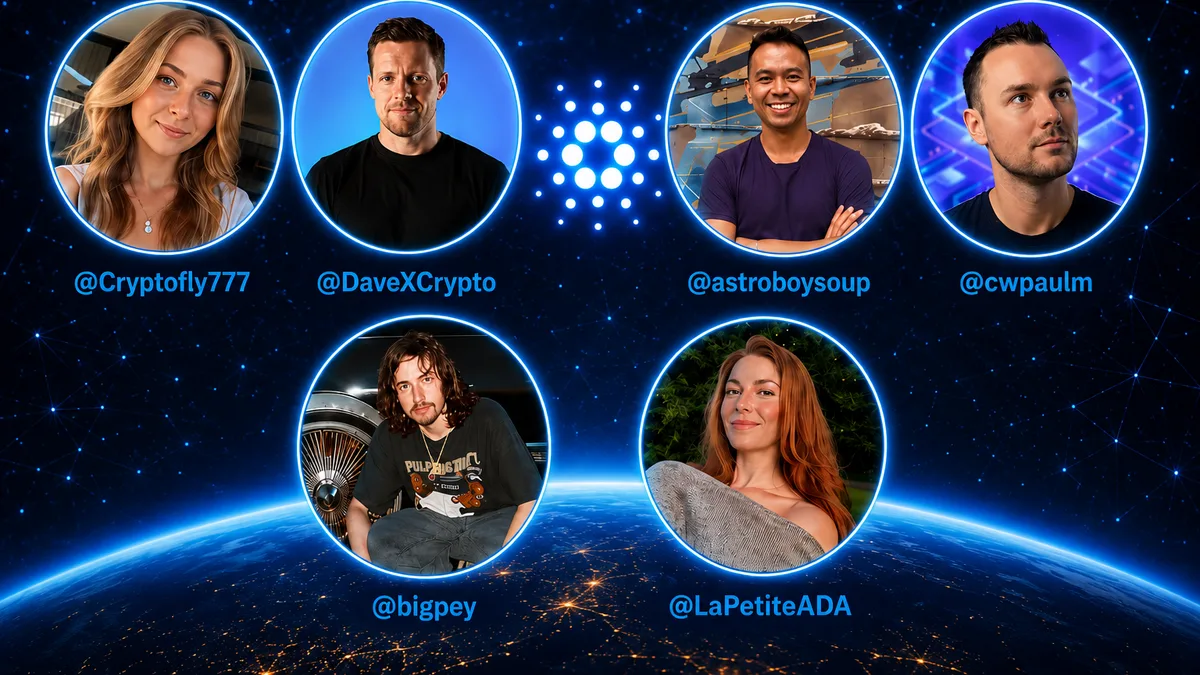
C4 Brings Cardano Creators Into Governance Funding
The Cardano Content Creator Consortium brings together six Cardano creators, Peter Bui from Learn Cardano, @astroboysoup, Linda, @cryptofly777, BigPey, @bigpey, Paul from Cardano With Paul, @cwpaulm, David from David X Crypto, @DaveXCrypto, and Carolina, known as La Petite ADA, @lapetiteada.
The group said it plans to produce more than 850 videos over one year. The content plan includes educational videos, tutorials, short form videos, vertical content and coverage of smaller Cardano projects that often struggle to gain visibility on larger platforms.
The proposal is not limited to traditional YouTube content. C4 wants to expand Cardano’s presence across YouTube Shorts, TikTok, Instagram and other channels where shorter video formats can reach audiences beyond the daily Cardano discussion on X. Pete said during the Cardano Over Coffee conversation that Cardano already has a strong base on YouTube, but vertical video has become an important format for reaching users who are not actively searching for long form ecosystem updates.
The group framed the proposal as a response to a broader sustainability issue for Cardano content creators. Several speakers said many creators have spent years producing educational and community content without treasury compensation, relying instead on personal motivation, community support and limited platform monetization. The discussion also pointed to a pattern of older Cardano creators reducing activity or leaving public coverage because the workload is difficult to sustain alongside regular jobs, weaker market conditions and modest revenue from content platforms.
C4 members also explained that the initial group was larger than the current proposal. Pete said an earlier version involved more interested creators, around nine or ten people, but the number gradually narrowed because some were not interested, could not commit the time or did not agree with the direction. Linda and Carolina added that a wider group of Cardano video creators had been contacted, but the final proposal was built around six people willing to take on the work, public responsibility and criticism that can come with treasury funding.
850 Videos, Monthly Reporting and Earned Media Value
According to the discussion, C4 is requesting approximately 1.52 million ADA, which was described during the Space as roughly $370,000 at the time of the conversation. Pete estimated that the request works out to about $435 per video, while noting that the proposal does not include an additional buffer if the ADA price falls. The group also said the proposal includes an audit budget and that surplus value would return to the treasury if ADA rises significantly above the planned USD cap.
The proposal includes monthly reporting on delivered content. C4 plans a milestone review after six months and another after twelve months, with audits included as an additional accountability layer. The group said creators would not be paid if they failed to meet the required delivery targets, positioning the proposal closer to a structured media operations plan than an open ended community grant.
One of the key measurement points in the proposal is earned media value, or EMV. C4 uses that framework to estimate the value Cardano could receive through organic content reach compared with paid campaigns on platforms such as YouTube, X, TikTok and Instagram. The group argued that its combined existing reach already generates meaningful monthly views and impressions, while the proposal aims to create more value in media exposure than the amount requested from the treasury.
C4 also discussed deeper measurement through a possible YouTube analytics API dashboard. Such a tool could allow DReps and the wider community to track what content was produced, how it performed and which formats generated the strongest reach. If implemented, that reporting layer would make the proposal easier to judge by output, distribution and audience response rather than by creator reputation alone.
Cardano Narrative, Disclosure and Open Questions Around C4
A central argument behind the C4 proposal is that Cardano needs faster and more coordinated responses to inaccurate or hostile narratives. Speakers said Cardano often reacts after negative stories have already spread, whether around technical misunderstandings, ecosystem comparisons, DeFi activity or broader crypto market narratives. C4 wants to function as a distributed content layer that can explain Cardano topics across multiple formats and voices.
Charles Hoskinson supported the proposal during the discussion and said Cardano has a narrative control problem. He argued that the ecosystem is often forced into a reactive position while competitors, critics or outside commentators shape the conversation first. Hoskinson described C4 as a possible starting point for a more professional framework between Cardano and ecosystem content creators.
The discussion also raised questions about the structure of the proposal. One issue is why the first model is limited to six creators. C4 members said they see the proposal as a possible pilot that could later expand, bring in new creators or evolve into a more open structure. Pete said he supports the idea of rotating seats and a more open model if the system proves workable.
Another question is disclosure and potential conflicts of interest. If a creator receives treasury funding and also accepts paid work from a specific project, audiences need to know which content is treasury funded and which content is sponsored. Speakers noted that YouTube already has rules for marking paid content, while C4 members said treasury funded content could be disclosed in video descriptions or through another clear format.
The C4 proposal puts a specific media funding model in front of Cardano governance, with named creators, delivery targets, audits and a defined reporting structure. That makes the vote larger than a simple decision on video production. It asks whether Cardano wants its treasury to fund a coordinated communication layer, and whether that layer can remain transparent, useful and independent enough to earn trust beyond the creators who built it.