Cardano Card Moves Toward Japan Through EMURGO, SecondFi and Slash Partnership
EMURGO, SecondFi and Slash have announced a Japan focused Cardano Card rollout built around stablecoin payments, local payment networks and QR code payment experiences.
By SongMarketCap
Updated:
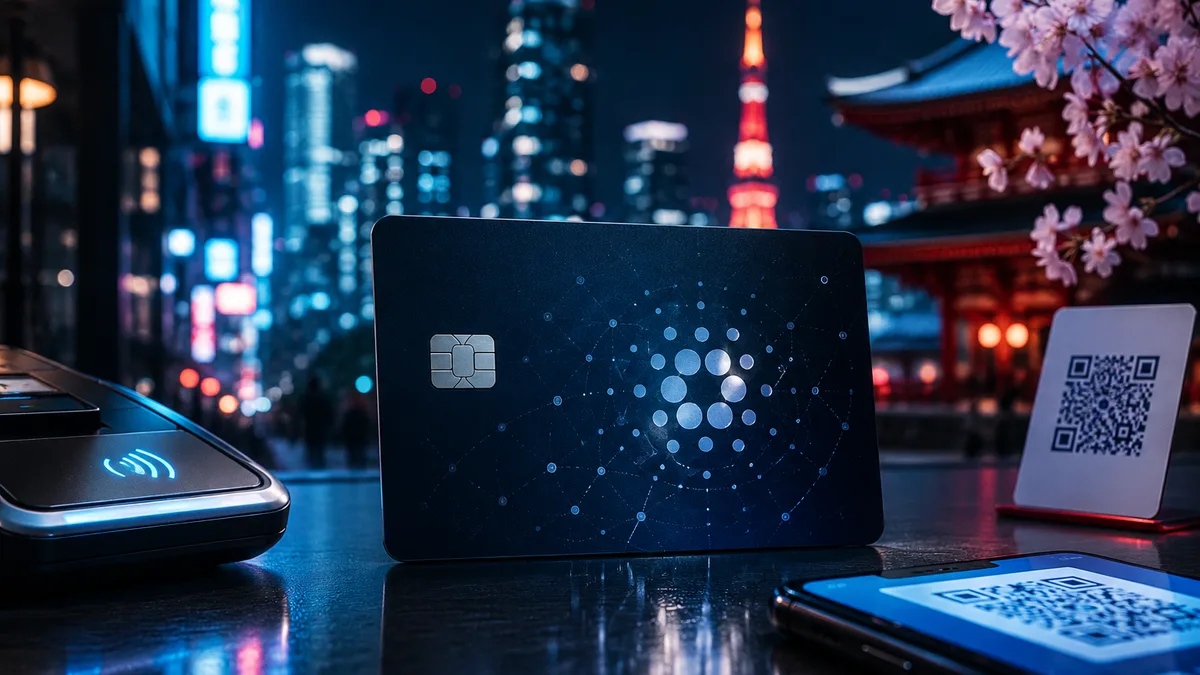
EMURGO has announced a partnership with SecondFi and Japanese fintech company Slash to bring Cardano Card to Japan, opening a waitlist for users in one of Cardano’s most historically important markets. The announcement centers on stablecoin payments and a user experience designed for Japan’s existing payment habits, including QR code based transactions.
The move gives Cardano a practical payments story in a market where digital consumer payments are already part of daily life. Instead of presenting Cardano Card only as a crypto spending product, the Japan rollout links the card to familiar payment behavior, local fintech infrastructure and stablecoin utility.
Cardano Card Japan Connects EMURGO, SecondFi and Slash
According to the announcement, EMURGO, SecondFi and Slash are working to bring Cardano Card to Japan through a model designed around stablecoin payments in everyday payment environments. SecondFi provides the user facing platform where Japanese users can join the waitlist, while Slash brings a local fintech and payment layer built for the Japanese market.
EMURGO enters the announcement as the key Cardano commercial actor, with a focus on expanding real world use of Cardano infrastructure in Japan. Cardano Foundation also shared the announcement, giving the partnership broader visibility across the Cardano ecosystem.
For Japanese users, the waitlist is the first public entry point into a Cardano payment product designed around daily spending rather than passive crypto ownership. That makes the announcement relevant beyond the Cardano community, because the product direction is tied to payments people already understand.
Stablecoin Payments Give Cardano Card a Practical Japan Use Case
The strongest part of the announcement is the stablecoin payment direction. In Japan, where QR code payments are already deeply integrated into consumer behavior, Cardano Card can be positioned around a clearer use case than a standard crypto card built only around spending digital assets.
SecondFi and Slash are targeting one of the main barriers in crypto adoption, users do not want to learn an entirely new financial system just to make everyday payments. If the stablecoin payment experience connects with channels people already understand, Cardano Card gains a more practical path toward use outside crypto native circles.
The announced details currently focus on the partnership, the waitlist and stablecoin payments. Further product information, including supported stablecoins, usage conditions and specific payment networks, is expected in future updates.
Japan Remains an Important Test for Cardano Real World Utility
For the Cardano ecosystem, the Japan announcement matters because it brings together three areas that often remain separate, blockchain infrastructure, stablecoin utility and existing local payment behavior. That combination is important for any ecosystem trying to move from crypto native activity toward broader consumer use.
The partnership also shows how Cardano commercialization can develop regionally, through local fintech partners and market specific payment needs. Japan gives this story additional weight because Cardano already has a long standing connection with the country, making the rollout both a commercial and symbolic test for real world utility.
The next stage will be defined by the product details that turn the waitlist into a working payment experience, especially supported stablecoins, availability and the payment channels SecondFi and Slash connect to the card. If those pieces come together inside familiar Japanese payment flows, Cardano Card can become one of the ecosystem’s clearer examples of stablecoin based utility reaching everyday users.