Bitcoin Quantum Risk dey Test Governance, Hoskinson Point go Cardano
The Cardano founder talk say quantum computing fit force Bitcoin to coordinate deep cryptographic migration, while Cardano don already get formal process to approve protocol‑level change.
By SongMarketCap
Updated:
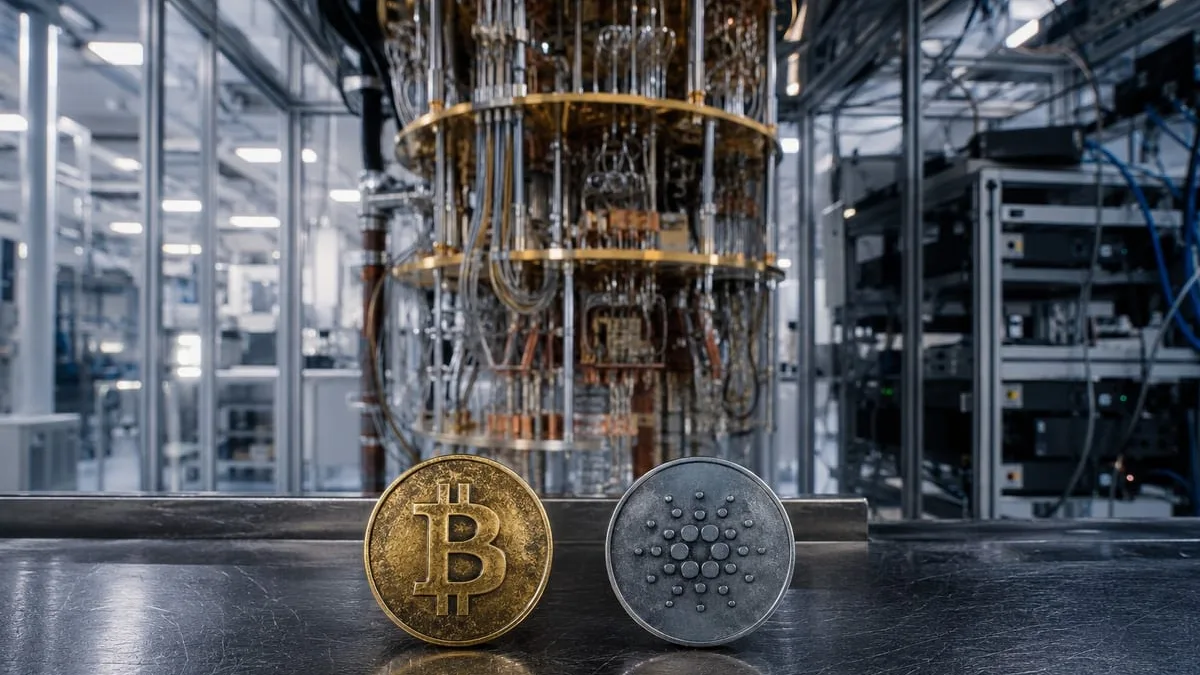
Charles Hoskinson talk say quantum computing fit test Bitcoin ability to coordinate cryptographic migration, no be only the security of im underlying code. For interview with The Block, e describe Bitcoin as “frozen in time” and argue say Cardano on‑chain governance dey give the network clear road to respond to major technical threats.
Hoskinson still call Cardano “spiritual successor” to Bitcoin, put im governance system as extension of Bitcoin decentralization principles, no be replacement.
Bitcoin Quantum Risk Pass Only Cryptography
Bitcoin dey use several cryptographic systems wey quantum computers wey strong well fit affect differently. Bitcoin Optech talk say ECDSA public keys dey vulnerable to Shor’s algorithm and say Schnorr signatures face the same underlying risk. Hash functions like SHA-256 go see reduction for effective security under Grover’s algorithm, but no be the same kind complete break wey dem describe for elliptic‑curve signatures.
Migration go pass just to replace one algorithm. Wallet software, addresses, nodes, exchanges, custodians, hardware devices, applications and long‑inactive UTXOs fit all need coordinated changes.
Bitcoin researchers don already dey develop possible responses. BIP‑361, wey dem title Post Quantum Migration and Legacy Signature Sunset, propose phased transition go post‑quantum script types, followed by tighter restrictions on legacy ECDSA and Schnorr spending.
The proposal currently dey classified as Draft and Informational. Dem never adopt am and e no represent Bitcoin network consensus.
Bitcoin conservative upgrade culture don historically limit unnecessary protocol change. Post‑quantum migration go put that model under different kind pressure because decisions about vulnerable legacy coins, migration deadlines and possible restrictions fit directly affect ownership and Bitcoin monetary assumptions.
Cardano Governance Don Approve Mainnet Hard Fork
Cardano dey use formal on‑chain governance framework wey involve delegated representatives, stake pool operators and the Constitutional Committee.
DReps dey vote on behalf of delegated ADA owners. SPOs dey participate for governance actions wey affect the network, including hard fork initiation actions. The Constitutional Committee dey assess whether proposed actions comply with the Cardano Constitution and im Guardrails.
Dem use that process for the van Rossem hard fork, wey dem enact for Epoch 644 boundary on July 18, 2026.
According to Intersect, the hard fork receive 77.63% DRep support against 60% threshold, 52.7% SPO support against 51% threshold and six Constitutional Committee approvals, with five required. Na Cardano first hard fork wey dem complete through the network full governance‑era process.
Van Rossem no require make the ecosystem replace im cryptographic foundations. Post‑quantum migration go involve much broader transition across wallets, exchanges, custody providers, infrastructure operators and users.
Wetin make am relevant na procedure. Cardano don already use im constitutional system to authorize and enact mainnet protocol upgrade wey involve all three governance bodies. Future quantum‑related action go still require completed specifications, secure implementations, audits and ecosystem adoption, but the approval process no go need to dey created during the migration itself.
Cardano Post‑Quantum Work Still Remain Research Program
Cardano no be quantum‑resistant today. Core components of the network still depend on elliptic‑curve cryptography, and on‑chain governance no fit replace the technical work wey required to introduce secure alternatives.
Input Output Research don establish post‑quantum track inside Cardano Vision 2026. The roadmap include evaluating post‑quantum building blocks, designing post‑quantum verifiable random function, producing new Ouroboros security proof, building prototype and publishing migration strategy. Researchers still dey evaluate wallet address migration methods wey zero‑knowledge proofs support. Input Output
Input Output July mid‑year report talk say post‑quantum security analyses still remain among the priorities for the second half of 2026. The work still dey research‑driven, with timelines and potential protocol features fit change.
Separate Dijkstra‑era initiative dey apply Cardano governance model to upcoming protocol parameters. Input Output dey prepare narrow Constitution amendment so that parameters wey Dijkstra and Ouroboros Leios introduce go dey included inside the constitutional Guardrails before activation. Parameters wey dem omit from those Guardrails no fit later change through governance.
As of July 2026, neither Bitcoin nor Cardano don deploy complete post‑quantum migration. Bitcoin get expanding research discussion and draft migration proposal. Cardano get active research program and formal mainnet process to authorize protocol change.
If quantum risk eventually require network‑wide migration, both networks go face substantial technical and operational burden. The current difference dey for how dem go reach binding decision: Bitcoin through broad social consensus, and Cardano through defined constitutional process wey involve DReps, SPOs and the Constitutional Committee.