75 ADA minPoolCost Returns as Standalone Cardano Vote
The new governance action separates the economic parameter from the Plutus memory changes that caused the previous proposal to require SPO approval.
By SongMarketCap
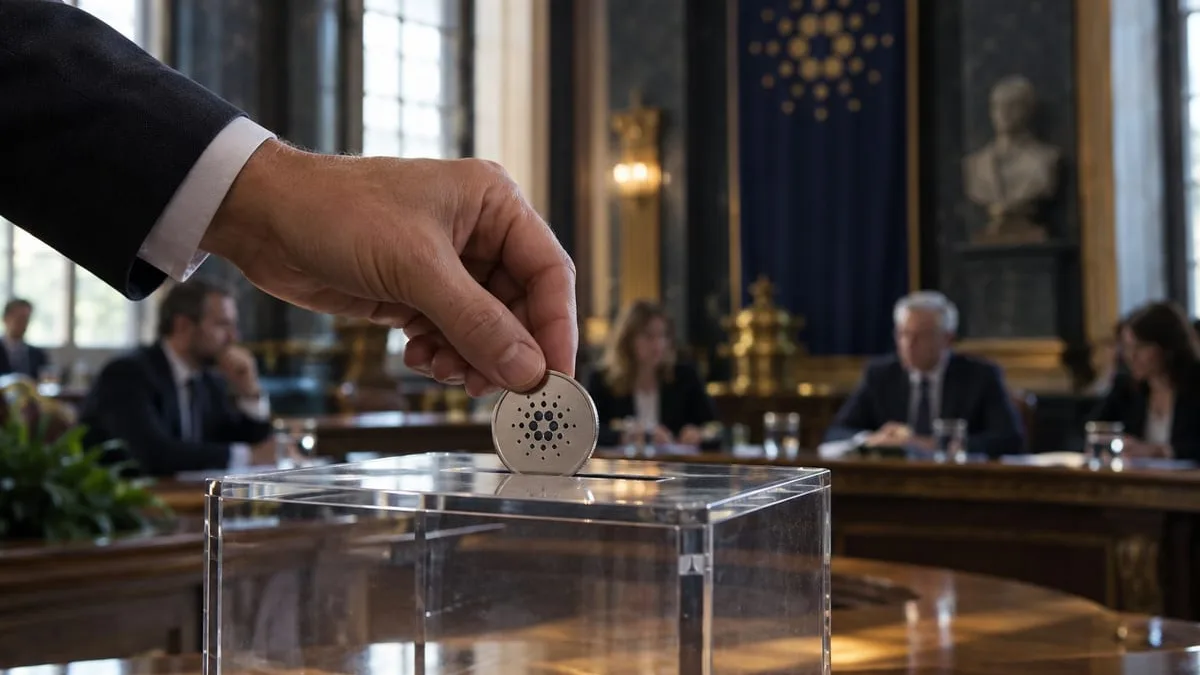
A new Cardano governance action proposes reducing minPoolCost from 170 to 75 ADA. Submitted on September 11, the standalone proposal follows an earlier bundled action that expired without enough stake pool operator support.
New Action Contains One Parameter Change
The active proposal would reduce the minimum fixed cost a stake pool can declare from ₳170 to ₳75. The Plutus transaction and block memory limits included in the previous action have been removed.
Voting closes on October 11, 2026. At the time of review on September 13, ten DReps had voted Yes and three had voted No. Yes votes represented approximately 79.84 million ADA, placing DRep approval at 1.53% against the required 67% threshold.
One of the seven Constitutional Committee members had found the action constitutional. The other six had not yet voted, leaving committee approval at 14.29% against a threshold of 66.67%.

Why SPO Approval No Longer Applies
The previous action combined the minPoolCost reduction with higher Plutus memory limits per transaction and block. Because block memory belongs to a security-relevant parameter group, the entire package required approval from more than 51% of active SPO stake.
That proposal reached 68.57% DRep support but only 34.5% SPO support. It expired on September 1 without ratification.
The new action contains only an economic parameter change. DReps vote on the proposal, while the Constitutional Committee assesses whether it complies with the Cardano Constitution. SPO voting is not available for this action.
Lower Floor Targets Small Pool Economics
MinPoolCost defines the lowest fixed cost a stake pool can deduct from rewards before the remaining amount is distributed between the operator and delegators.
Reducing the parameter would not automatically change the declared cost of every pool. Operators could retain a higher amount, while pools using the current minimum would gain the option to lower it.
The proposal’s rationale states that the 2023 reduction from ₳340 to ₳170 has gradually lost its effect as reserve-funded rewards have declined. For a pool producing one block during an epoch, the current minimum can absorb a large share of the reward and reduce the amount available to delegators.
The accompanying projection estimates that this fixed-cost burden could reach the value of an entire single-block epoch reward around epoch 758, approximately February 2028, if the parameter remains unchanged.
Separating the proposal gives Cardano governance a direct decision on whether the current floor remains compatible with small-pool economics. Ratification now depends on DReps reaching 67% support and at least two-thirds of the Constitutional Committee finding the action constitutional before October 11.